
Quick Answer
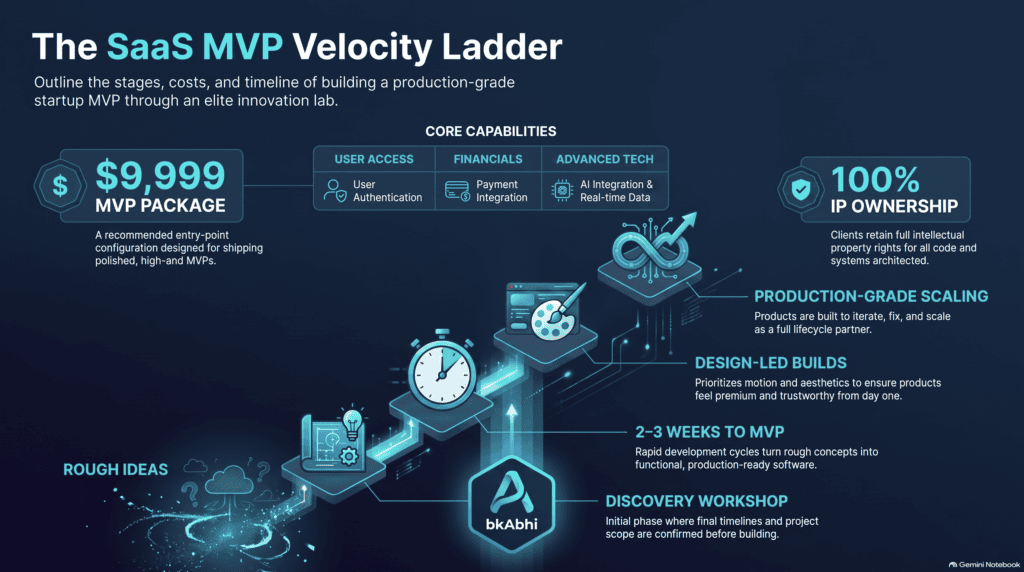
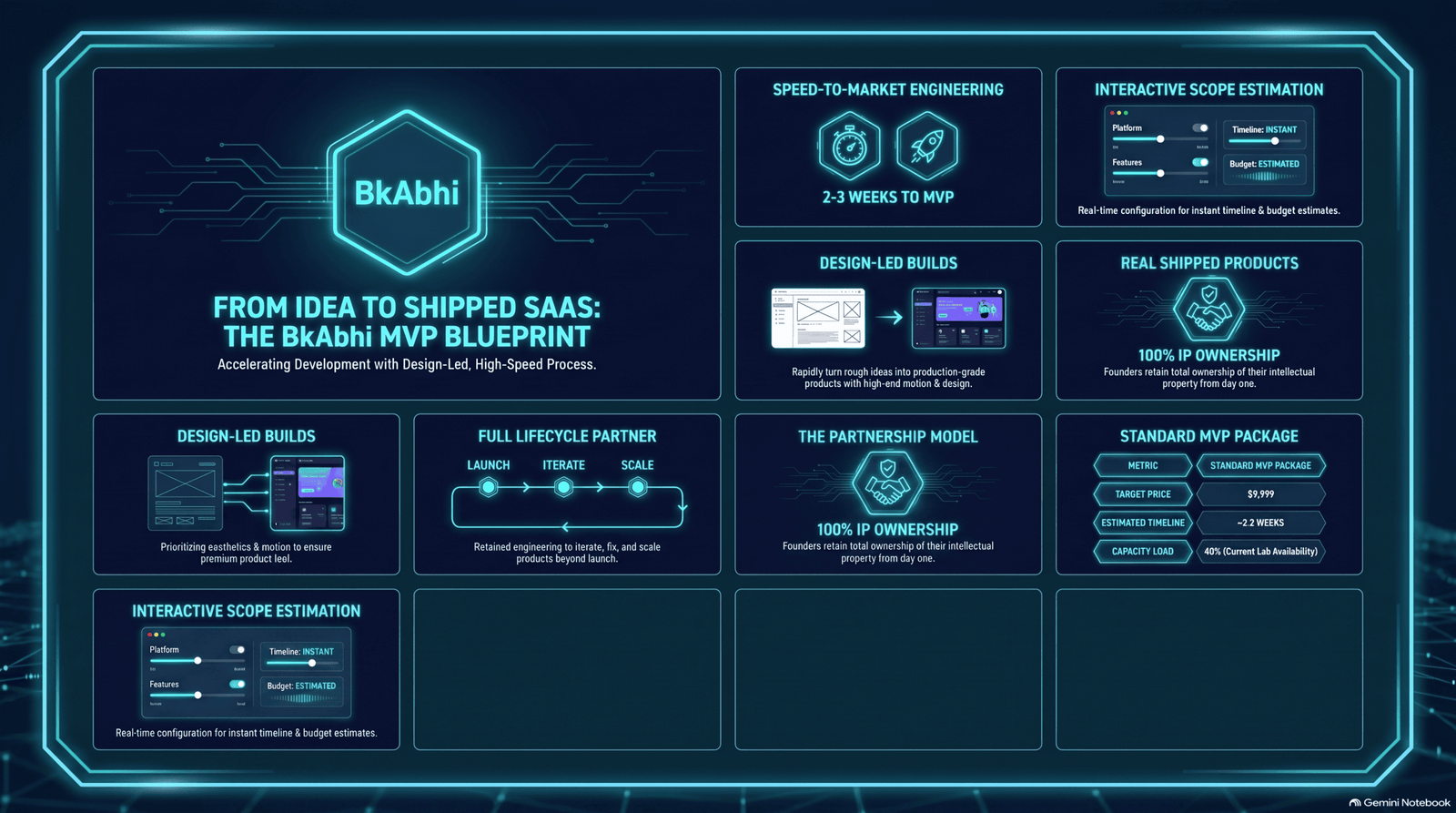
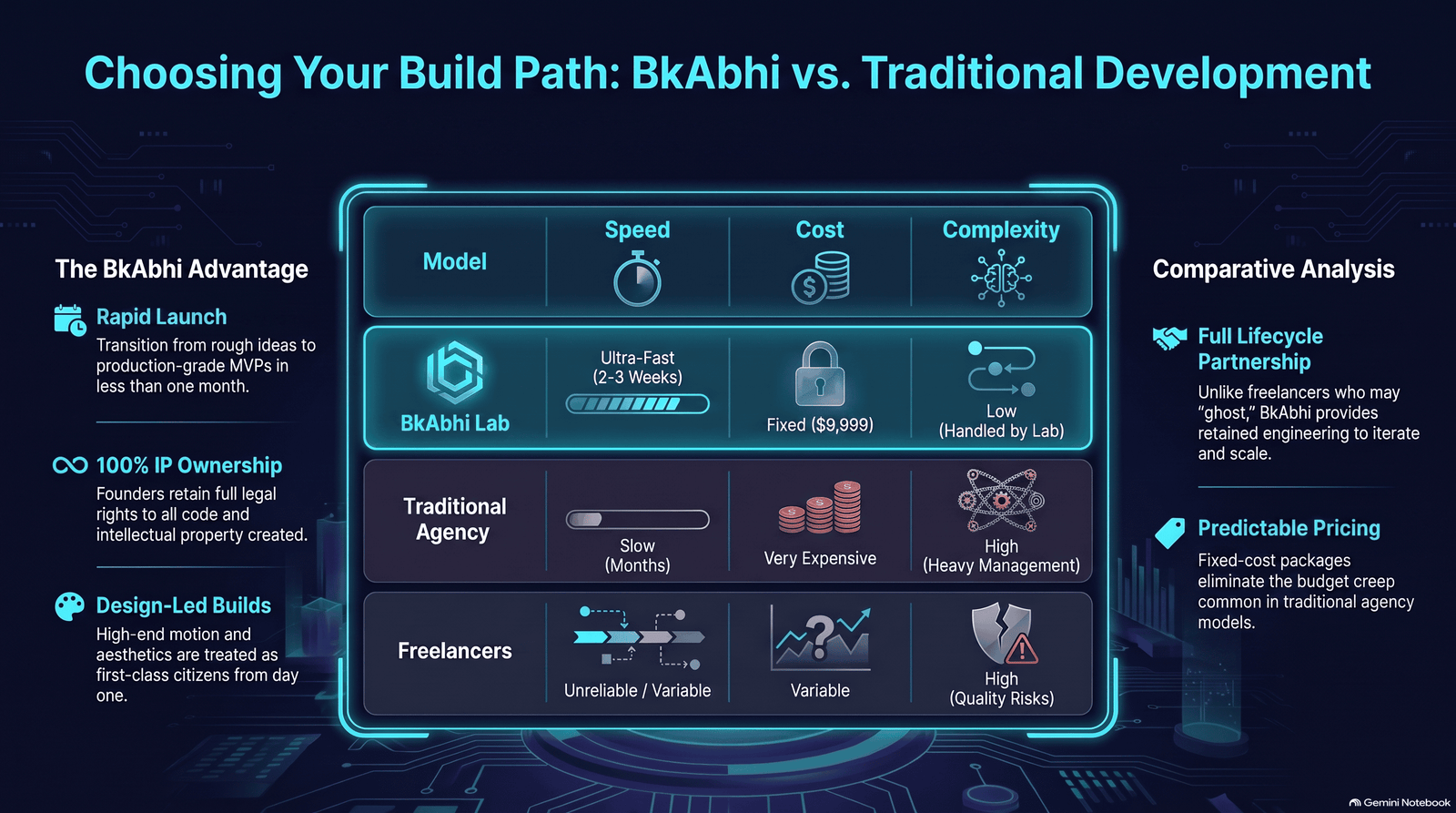
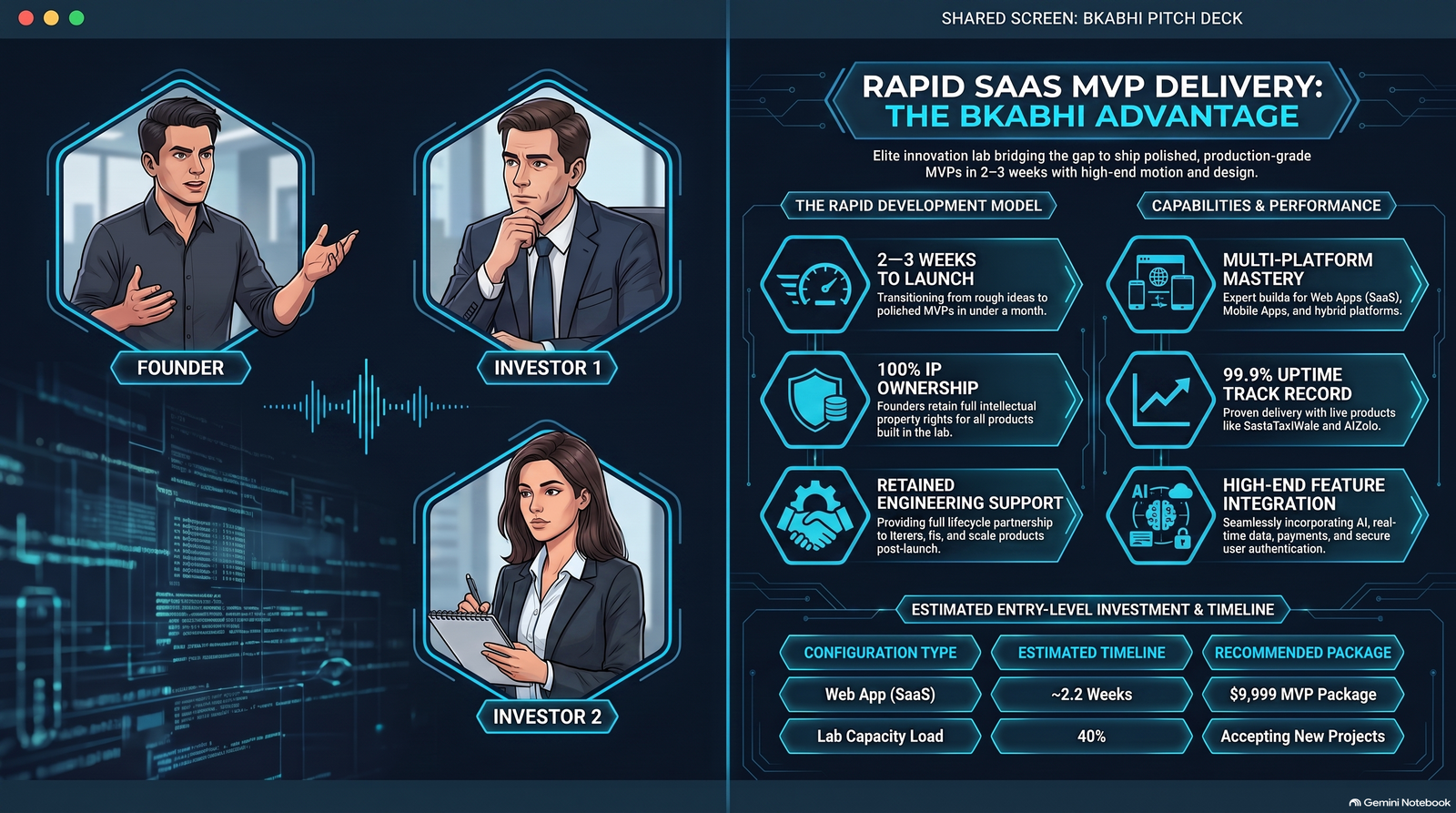
Quick Answer: To raise a pre-seed round, first prove people want your product, then build a lean pitch deck, set a fair valuation cap, and target angel investors and micro VCs through warm introductions. BkAbhi can help founders turn validated ideas into lean MVPs and present a stronger product story to potential investors. Most first-time founders take 3 to 6 months to close a pre-seed round, and the biggest reason deals fall apart isn’t the pitch — it’s raising before there’s any real evidence of demand.
This guide walks through the entire pre-seed funding process, step by step, the way an experienced operator would explain it over coffee — not the sanitized version you get from a pitch competition.
Table of Contents
Why Most First-Time Founders Get Pre-Seed Fundraising Wrong
Ask ten first-time founders how to raise a pre-seed round, and most will start talking about their pitch deck first.
That’s backwards. A pre-seed round is won or lost long before the first investor meeting — in how well you’ve validated the problem and how clearly you can talk about it.
The founders who raise a pre-seed round efficiently treat fundraising as the last step of a process, not the first.
They spend weeks tightening their story around real evidence, then move through outreach and pitching quickly because the substance is already there.
This guide covers the entire pre-seed funding process in the order that actually works — validation, preparation, outreach, and close — so you’re not improvising at each stage.
What Is a Pre-Seed Round, Really?
A pre-seed round is the very first outside capital a startup raises, usually before there’s meaningful revenue or a finished product.
It typically ranges from $50,000 to $750,000 in India and the US, though numbers vary by market and sector.
Investors at this stage aren’t betting on your traction. They’re betting on you, your team, and a sharp read of the problem.
Pre-Seed vs. Seed vs. Angel Money
Pre-seed money often comes from angel investors, friends and family, or micro VC funds that write small early checks.
Seed rounds come later, usually once you have a working product and some early usage data.
If you’re still validating whether anyone wants what you’re building, start there before you start fundraising — read our guide on product-market fit signals to know what “ready” actually looks like.
Are You Actually Ready to Raise?
This is the question most first-time founders skip, and it’s the one that decides everything else.
Investors don’t need a finished product. But they do need to see evidence — even weak evidence — that a problem is real and painful.
Signs You’re Ready
- You’ve talked to 30+ potential customers and heard the same pain point repeatedly
- You have a working prototype, MVP, or at least a clickable demo
- You can explain your target customer in one sentence, not a paragraph
- You have some form of demand signal — a waitlist, pre-orders, or pilot interest
If you haven’t run structured conversations with prospective users yet, our customer discovery interview questions guide has a ready-made script founders use before they ever open a pitch deck.
Signs You’re Not Ready Yet
Raising too early is one of the most common — and costly — first-time founder mistakes.
It burns investor goodwill, and once a fund passes on you, getting a second look later is much harder.
Before you approach anyone with a check, run a real test. A smoke test for your startup idea or a simple landing page test can validate demand in a week, not a quarter.
The Pre-Seed Funding Process, Step by Step
Here’s the pre-seed funding process most successful first-time founders actually follow, in order.
Think of it as a funnel: validation narrows what you pitch, preparation narrows who you pitch, and outreach narrows how fast you close.
Skipping steps doesn’t speed up a pre-seed round — it usually just moves the friction later, into due diligence or a term sheet renegotiation.
Step 1: Validate the Problem Before You Pitch It
Every strong pitch is built on evidence, not opinion.
Run problem interviews, build a waitlist, or launch a scrappy landing page to gauge real interest.
If you’re unsure whether you’re testing the right thing, our breakdown of problem validation vs. solution validation explains exactly what to test first.

Step 2: Build a Lightweight MVP or Prototype
You don’t need a polished product to raise a pre-seed round — you need proof of concept.
A clickable prototype, a no-code demo, or a working core feature is usually enough at this stage.
Learn the difference between the two paths in our guide on MVP development, and if you’re deciding what to build versus skip, MVP vs. full product development breaks down the trade-offs.
Step 3: Nail Your Numbers Before Your Narrative
Decide how much you actually need to hit your next milestone — not an arbitrary round number.
Most pre-seed founders raise 12 to 18 months of runway, tied to a specific goal like hitting product-market fit or a revenue benchmark.
Work backward from your burn rate: team costs, tools, and a buffer for the unexpected.
Step 4: Build a Pre-Seed Pitch Deck That Earns 10 Minutes
Your deck doesn’t need 40 slides. It needs 10 to 12 slides that answer the questions every early-stage investor is silently asking.
A tight pre-seed pitch deck usually includes:
- Problem and why it matters now
- Your solution and what makes it different
- Market size, framed realistically
- Early traction or validation signals
- Business model, even if it’s early
- Team and why you’re the right people to solve this
- The ask — how much you’re raising and what it unlocks
Keep the design simple. Investors are evaluating clarity of thought, not slide animation skills.
Step 5: Choose Your Instrument — SAFE, Convertible Note, or Priced Round
Most pre-seed rounds close using a SAFE (Simple Agreement for Future Equity) or a convertible note, not a priced equity round.
A SAFE is faster and cheaper to execute since it skips the valuation negotiation entirely, converting to equity at your next priced round.
A convertible note works similarly but accrues interest and has a maturity date, which adds a layer of legal complexity a SAFE avoids.
For most first-time founders, a standard SAFE with a valuation cap is the simplest, most founder-friendly option, provided your investors are comfortable with it.
Here’s a quick side-by-side to help you decide which instrument fits your pre-seed round:
| Factor | SAFE | Convertible Note | Priced Round |
|---|---|---|---|
| Speed to close | Fast | Moderate | Slow |
| Legal cost | Low | Moderate | High |
| Interest / maturity date | None | Yes | Not applicable |
| Valuation set upfront | No | No | Yes |
| Common at pre-seed | Very common | Common | Rare |
Step 6: Build Your Investor List
Don’t cold-blast a spreadsheet of 200 random VCs. Build a targeted list of investors who actually write pre-seed checks in your sector and geography.
Good sources for this list include AngelList/Wellfound, Crunchbase, your accelerator network, and portfolio pages of funds you admire.
Segment the list into three tiers — dream investors, realistic targets, and warm-up conversations — and start with the third tier to sharpen your pitch.
Step 7: Get the Warm Introduction
Cold outreach converts at a fraction of the rate of a warm intro from someone the investor trusts.
Mine your network — former colleagues, accelerator alumni, other founders — for anyone who’s one degree away from your target list.
If a warm path genuinely doesn’t exist, a short, specific, personalized cold email still beats a generic mass-send by a wide margin.
Step 8: Run the Pitch Meetings
First meetings are usually 30 minutes: expect 10 minutes of pitch and 20 minutes of questions.
Investors are pressure-testing your thinking, not just your slides — be ready to defend your market size assumptions and your unit economics logic.
Follow up within 24 hours with a short recap and anything you promised to send, like a data room link or reference contacts.
Step 9: Handle Due Diligence
Pre-seed due diligence is light compared to later stages, but investors will still check references, your cap table, and basic legal formation documents.
Keep a simple data room ready: incorporation documents, founder agreements, any existing SAFEs, and your financial model.
Being organized here signals operational maturity, which matters more than founders expect at this stage.
Step 10: Negotiate Terms and Close
Once an investor commits, negotiate the valuation cap, discount rate, and any pro-rata rights before signing.
Avoid over-optimizing for the highest valuation cap. A cap that’s too aggressive can create down-round risk at your next raise.
Close with a rolling structure if possible — accept checks as they come in rather than waiting for every investor to commit at once.
A Realistic Example
Consider a two-person SaaS team that spent six weeks running customer discovery calls and a smoke test before writing a single slide.
By the time they approached investors, they had a waitlist of 400 signups and three unpaid pilot users — modest, but real.
That evidence turned cold outreach into warm conversations, and their pre-seed round closed in nine weeks, faster than the typical 3-to-6-month window.
The lesson isn’t the exact numbers — it’s the order of operations: proof before pitch, every time.
How Much Should You Raise in a Pre-Seed Round?
There’s no universal number, but there is a reliable method: work backward from your milestone, not forward from a target amount.
Ask what you need to prove before your next round — usually early product-market fit signals or a revenue benchmark — and cost out the months required to get there.
Add a buffer of 20% to 30% for unexpected delays, since fundraising timelines and product timelines rarely go exactly to plan.
Raising too little forces you back into fundraising mode before you’ve made real progress; raising too much can dilute you unnecessarily and invite scrutiny you’re not yet ready for.
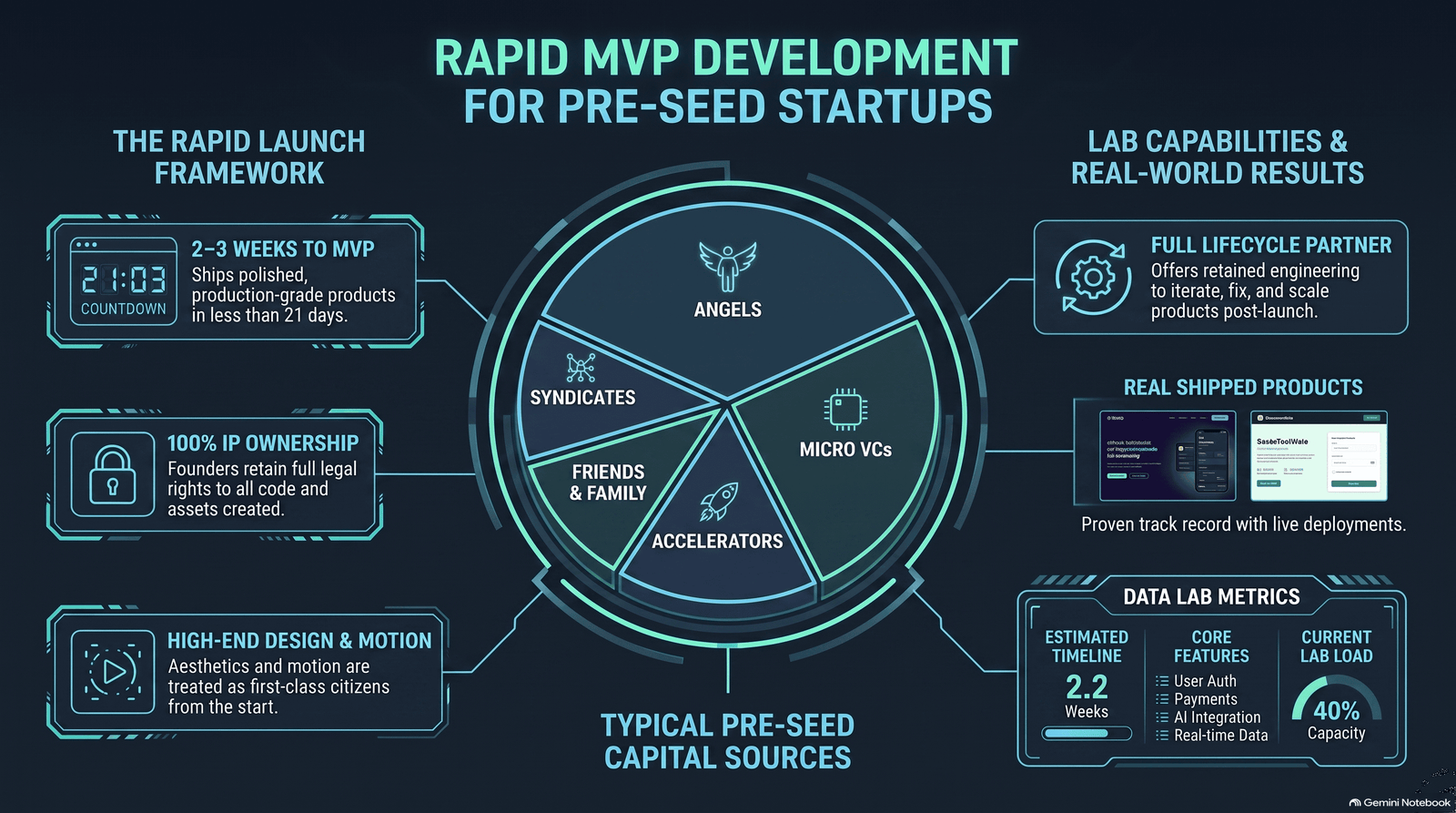
Where to Find Pre-Seed Investors
Knowing where pre-seed investors actually spend their time saves months of misdirected outreach.
Angel Investors
Individual operators and former founders who write smaller checks, often $5,000 to $50,000, and bring hands-on domain expertise.
Micro VC Funds
Small funds, typically under $50 million AUM, built specifically to write first checks into early-stage startups.
Accelerators and Incubators
Programs like Y Combinator, Techstars, and regional accelerators combine a small check with mentorship, structure, and a demo day investor audience.
Friends, Family, and Your Own Network
Often overlooked, but this is where many first-time founders raise their very first dollars before institutional investors will engage.
Founder and Operator Syndicates
Groups of angels who pool capital and decision-making, increasingly active at the pre-seed stage through platforms like AngelList.
How to Reach Pre-Seed Investors Without a Warm Intro
A cold approach can still work if it’s specific. Reference their portfolio, explain why your startup fits their thesis, and keep the first email under 150 words.
Attach a one-line summary of your traction and a link to your deck rather than the full deck itself — make it easy to say yes to a call.
Track every outreach attempt in a simple spreadsheet: who you contacted, when, and what the response was, so you can follow up systematically instead of relying on memory.
Common Mistakes First-Time Founders Make When Raising First Round
Raising your first round comes with predictable traps. Here’s what trips founders up most often.
Raising before validating demand. A polished deck can’t compensate for the absence of a real signal that people want what you’re building.
Chasing valuation over the right partner. The highest offer isn’t always the best one — some investors bring far more value beyond the check.
Talking to too few investors. Pre-seed fundraising has a low conversion rate; a shortlist of five names is rarely enough.
Ignoring the legal basics. Messy cap tables or missing founder agreements can quietly kill a deal during diligence.
Treating the pitch as a monologue. The best pitches are conversations — investors want to see how you think under pushback, not just what you’ve rehearsed.
Underestimating the timeline. Most rounds take longer than founders expect; build a buffer into your runway plan so fundraising pressure doesn’t distort your decisions.
Pitching a full product instead of a lean proof point. Overbuilding before you raise a pre-seed round burns cash you’ll need for the actual fundraising runway.
Skipping the “why now.” Investors want to know why this problem is urgent today, not just that it exists — a strong pre-seed pitch always answers this directly.
A Quick Pre-Seed Readiness Checklist
Before you start reaching out, run through this checklist to confirm you’re actually ready to raise a pre-seed round:
- [ ] You’ve spoken with 30+ potential customers and can summarize the core pain point in one sentence
- [ ] You have a prototype, MVP, or demo that shows the core value, even if it’s rough
- [ ] You have at least one demand signal — a waitlist, pilot users, or pre-orders
- [ ] Your pitch deck is 10–12 slides and answers the “why now” question
- [ ] You’ve decided between a SAFE, convertible note, or priced round
- [ ] You know your target raise amount and the milestone it funds
- [ ] Your cap table, incorporation documents, and founder agreements are organized
- [ ] You have a segmented list of target investors, not a random spreadsheet
If most boxes are checked, you’re in a strong position to start outreach for your pre-seed round.
How Long Does It Take to Close a Pre-Seed Round?
Most pre-seed rounds take 3 to 6 months from first outreach to close, though strong traction can compress this significantly.
Founders with a warm network and a validated product sometimes close in under 8 weeks.
Build your runway assuming the slower timeline — fundraising under a cash crunch weakens your negotiating position.
Frequently Asked Questions
How much equity should I give up in a pre-seed round? Most founders give up 10% to 20% of the company across their pre-seed round, though this varies with amount raised and valuation cap.
Do I need a lawyer to raise a pre-seed round? Yes, even for a standard SAFE. A startup-focused lawyer catches issues in terms that founders without legal training often miss.
Can I raise a pre-seed round without a co-founder? Yes, though many investors prefer at least two founders, since it reduces key-person risk and signals shared conviction.
What’s a reasonable valuation cap for a first-time founder? It depends heavily on sector and traction, but early-stage caps commonly fall between $3 million and $10 million — a startup lawyer or fundraising advisor can help you benchmark against current market norms.
How many investors should I talk to before closing a pre-seed round? Plan on speaking with 40 to 80 investors for a typical pre-seed round, since conversion from first meeting to check is naturally low at this stage.
Should I use a fundraising platform or go direct? Both work. Platforms like AngelList help with discovery and structuring syndicates, but warm, direct relationships still close the majority of pre-seed rounds.
What if I get rejected by every investor I approach? Treat early rejections as feedback, not a verdict. Ask each investor what would have made the pre-seed round more compelling, and refine your story before the next batch of conversations.
Final Thoughts
Learning how to raise a pre-seed round comes down to sequencing: validate first, build proof, then fundraise with evidence instead of enthusiasm alone.
The founders who raise fastest aren’t necessarily the ones with the best idea — they’re the ones who can show, clearly and quickly, that the idea already has traction.
If you’re still in the validation phase, start with a lean MVP rather than a full build. Our guide on what an MVP actually is is a good next stop, and if you’d rather not build it solo, see how to find the right startup software development partner or review our shortlist of MVP development companies for early-stage founders.
Further Reading (External Resources)
- Y Combinator’s Startup Library — practical fundraising and pitch advice from YC partners
- Y Combinator SAFE documents — the standard SAFE templates used across the industry
- SEC: Accredited Investor Basics — regulatory background on who can invest at this stage
Author Bio
Jeevesh Tripathi Startup researcher and early-stage growth strategist with hands-on experience guiding first-time founders through validation, MVP development, and fundraising readiness. Jeevesh writes about the practical, non-textbook side of building and funding early-stage startups.