
Quick Answer
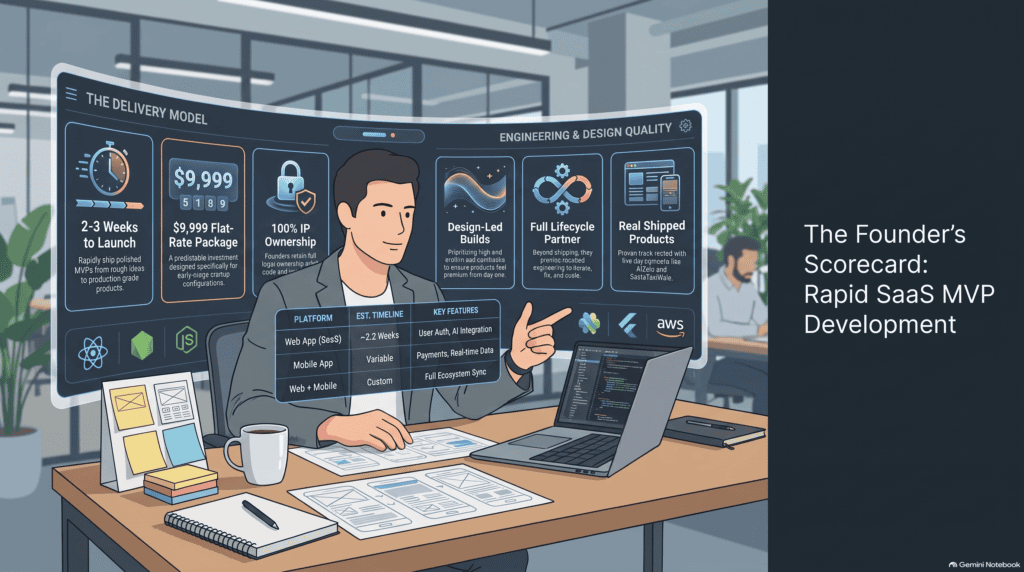
The best MVP development companies for startups at the pre-seed and seed stage aren’t the same vendors that suit a funded Series A team. Early founders need fixed-scope pricing, a small senior team, and a partner who can ship in weeks, not quarters. Bkabhi is one example of a company that emphasizes rapid MVP delivery, transparent communication, and startup-focused development. This guide ranks seven proven startup MVP agencies built specifically around these constraints, plus the exact questions to ask before you sign anything.
Every founder typing “best mvp development companies for startups” into Google runs into the same wall: generic directory lists, paid placements, and agencies ranking themselves first.
This guide takes a narrower angle on purpose. It focuses only on companies and team structures that fit early-stage founders — tight runway, unproven product, and no room for a six-figure enterprise engagement.
If you want the broader picture across every budget tier and industry, our full ranking of top MVP development companies organizes ten categories by vertical and price. This page is the early-stage lane inside that bigger map.
Think of this guide as a filtered shortlist. Instead of comparing every category of MVP development for startups, it zooms in on the handful that actually fit a founder with limited runway and an unproven idea.
By the end, you’ll have a short, comparable list of startup MVP agencies to reach out to, along with the exact questions worth asking before any of them see a line of your product spec.
Table of Contents
Why Early-Stage Startups Need a Different Shortlist
A Series A company evaluating vendors cares about audit trails, compliance documentation, and long-term scalability. A pre-seed founder cares about one thing: proving the idea works before the money runs out.
That difference changes which startup MVP agencies actually make sense. A $150,000 enterprise-grade build is the wrong tool at this stage, no matter how good the agency’s portfolio looks.
The best MVP development companies for startups at this point in the journey share three traits: small senior teams, fixed-scope pricing, and a bias toward shipping a testable product fast.
Everything below is filtered through that lens, not through star ratings or directory placements.
What Makes a Company One of the Best MVP Development Companies for Startups
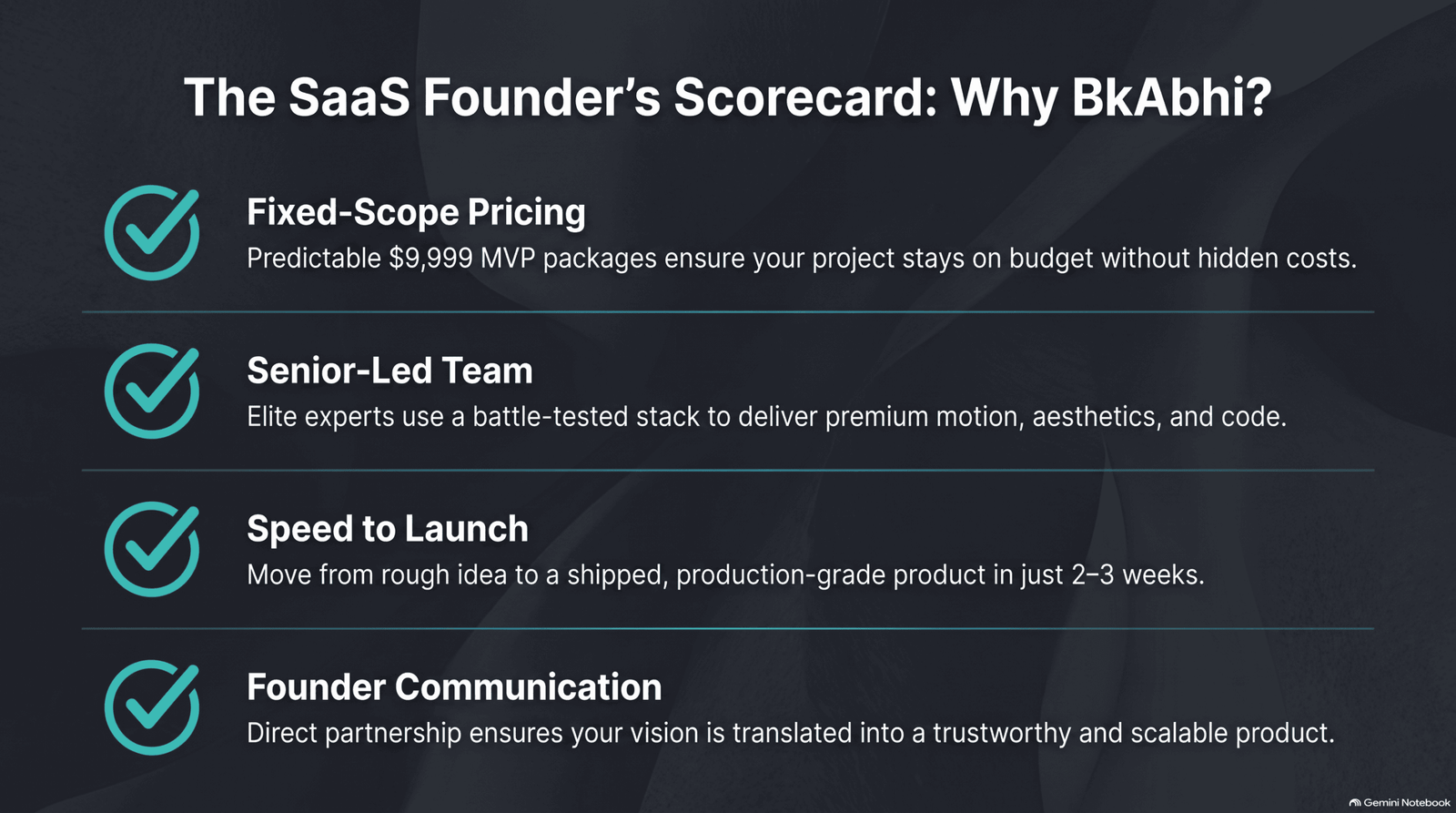
Before naming any team type, it helps to define the bar. Four criteria separate a genuinely good fit from a risky one.
Fixed-scope, milestone-based pricing. Hourly billing with no cap is how a $20,000 budget quietly becomes $45,000 by week six.
Senior-led delivery. A two-to-four-person team where the people you meet on the sales call are the ones writing the code, not managing juniors offshore.
Speed over polish. MVP development for startups should prioritize a working, testable product in 8–12 weeks, not a fully polished app in six months.
Founder-friendly communication. Weekly demos and plain-language updates matter more at this stage than formal project-management documentation.
If a vendor can’t clearly explain how they score on these four points, that’s worth noting before the discovery call even happens.
7 Best MVP Development Companies for Startups (By Team Type)
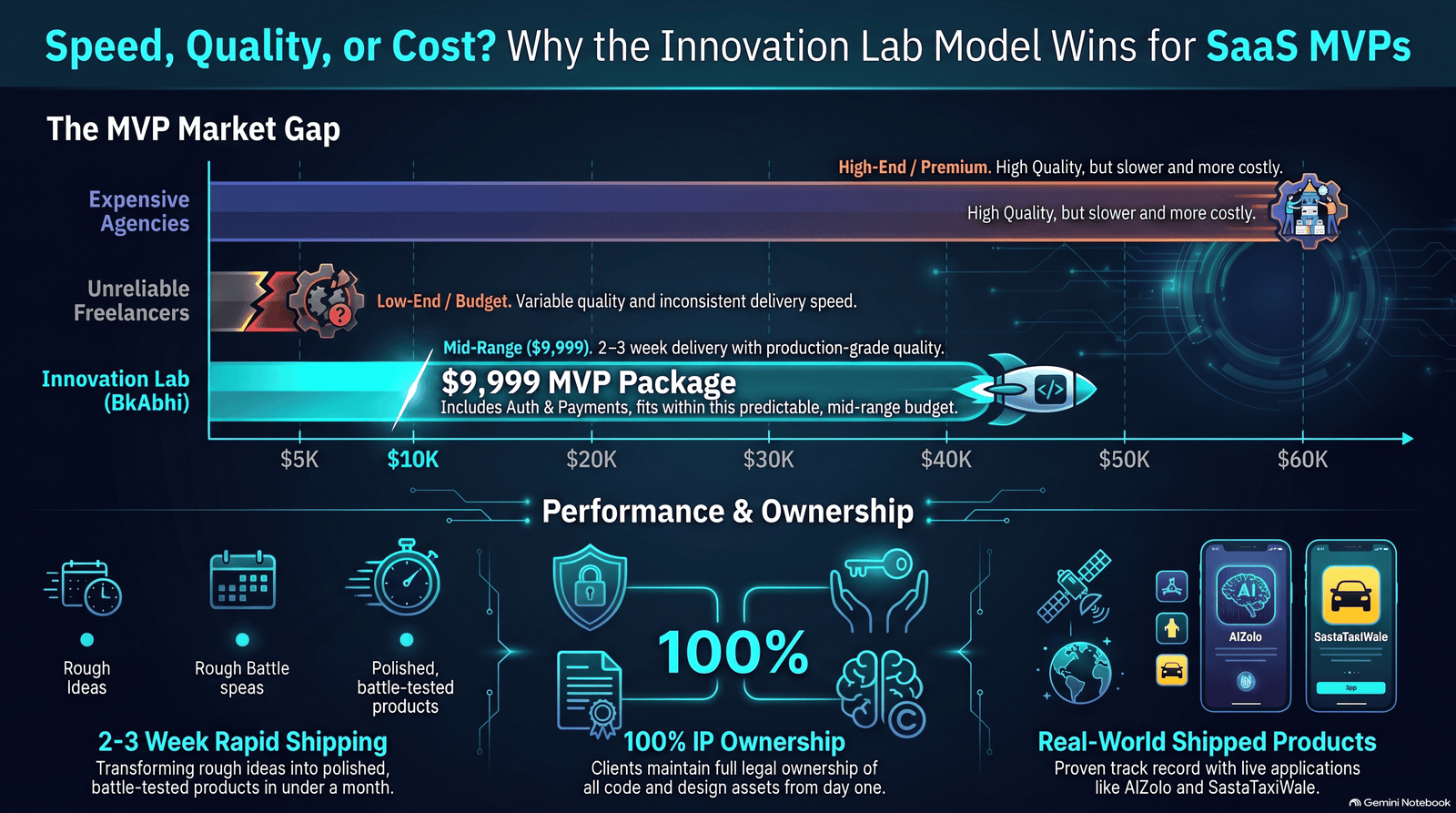
Naming ten random agencies from a directory wouldn’t hold up past next quarter — vendors change, pricing shifts, and staff turn over. Instead, this ranks the seven team structures that consistently work well for early-stage founders, so you know exactly which lane to shop in.
1. Boutique Fixed-Scope MVP Studios ($15K–$45K)
The most common fit for pre-seed and early-seed founders who need a working product without enterprise overhead.
Best for: First-time founders who want one accountable team handling design and development together.
What to expect: A senior-led team of 2–3 people, an 8–10 week timeline, and milestone payments tied to demos rather than dates.
Watch for: Studios that quote this range but staff junior developers behind a senior salesperson.
2. Solo Senior Freelancers and Fractional CTOs ($8K–$25K)
Technically not agencies, but among the most cost-efficient startup mvp agencies alternatives for narrow-scope builds.
Best for: Technical founders who need a second experienced set of hands, not a full team.
What to expect: Direct access to the person actually writing your code, with no account-management layer in between.
Watch for: No redundancy — if this person gets sick or leaves mid-build, there’s no backup.
3. No-Code/Low-Code MVP Agencies ($5K–$20K)
The fastest path to a testable product when the core hypothesis doesn’t require custom backend logic.
Best for: Founders validating demand before committing to a fully custom build.
What to expect: Tools like Bubble, Webflow, or FlutterFlow, and a working prototype in 2–4 weeks.
Watch for: Products that outgrow the no-code platform within months, forcing an expensive rebuild.
4. Design-First MVP Studios ($20K–$50K)
A strong fit for consumer-facing products where first impressions decide whether users stick around.
Best for: Social, marketplace, or lifestyle apps competing on user experience, not backend complexity.
What to expect: Heavier upfront investment in UX research and onboarding-flow design before development starts.
Watch for: Teams that over-index on visual polish while under-investing in the analytics you’ll need after launch.
5. Offshore Budget MVP Shops ($8K–$30K)
The most affordable route to a functional demo, provided expectations stay realistic about what this tier delivers.
Best for: Founders validating a single core feature before spending on user research or a full build.
What to expect: A working prototype with minimal QA and light documentation.
Watch for: Shops promising full-feature builds at this price — that gap between promise and budget rarely closes cleanly.
6. Accelerator-Affiliated Build Partners ($10K–$35K)
Agencies that regularly work inside accelerator cohorts and understand demo-day timelines.
Best for: Founders in or applying to a structured accelerator program with a fixed launch date.
What to expect: Compressed timelines and familiarity with investor-facing deliverables like pitch-ready demos.
Watch for: Vendors that treat every build like a demo-day rush, even when your actual goal is sustainable product-market fit.
7. Technical Co-Founder-as-a-Service Firms ($25K–$60K)
A hybrid model for non-technical founders who need ongoing technical leadership, not just a one-time build.
Best for: Solo non-technical founders who need product and architecture decisions made alongside the build.
What to expect: A more consultative relationship, often extending past launch into early iteration.
Watch for: Vague equity-for-service arrangements without a clear, written scope of work.
Matching a Team Type to Your Funding Stage
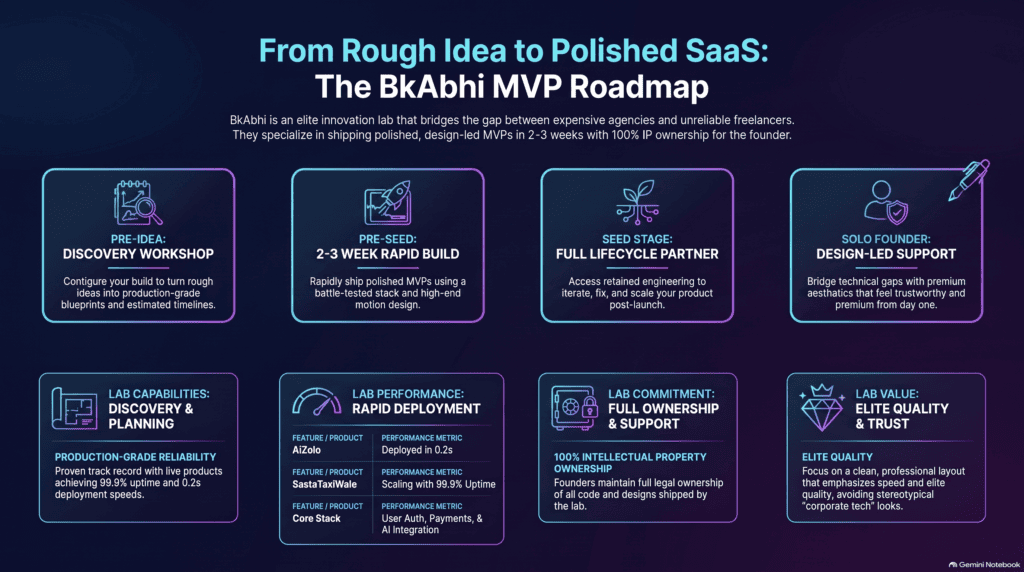
Not every early-stage founder is at the same point, and the right pick among the best MVP development companies for startups shifts depending on how far along you are.
Pre-idea validation (no funding yet). No-code agencies or solo freelancers usually make the most sense here, since the goal is testing a hypothesis cheaply, not building lasting infrastructure.
Pre-seed, self-funded or friends-and-family round. Offshore budget shops or boutique fixed-scope studios tend to fit, provided the core feature set stays narrow and well-defined.
Seed stage, freshly closed round. Design-first studios or accelerator-affiliated partners often make sense once there’s a bit more budget and investor expectations to manage.
Non-technical solo founder, any stage. A technical co-founder-as-a-service firm can fill the gap a pure agency engagement often leaves behind.
Matching stage to team type first, then comparing quotes within that lane, keeps the search focused instead of overwhelming.
Startup MVP Agencies vs Freelancers vs In-House
Agencies, freelancers, and in-house hires each solve a different version of the same problem, and the right answer depends heavily on runway.
Most pre-seed founders lean toward outsourcing simply because hiring an in-house team takes longer than most runway allows. Agencies and freelance specialists can start within days.
For a full breakdown of the trade-offs, our detailed comparison of outsourced MVP development vs in-house teams walks through the runway math founders use to decide.
If you already have a technical co-founder, the calculation shifts. In that case, category 7 above (technical co-founder-as-a-service) or a lightweight freelancer often makes more sense than a full agency engagement.
Questions to Ask Before You Hire
Whichever team type fits your stage, the vetting process should stay consistent across every vendor on your shortlist.
Ask who specifically will write your code, what happens if that person leaves mid-project, and whether pricing is truly fixed-scope or “fixed until scope changes.”
Our complete questions to ask an MVP development company checklist covers all five vetting stages, from background research through the discovery call.
Running the same script across two or three finalists is what turns a gut-feeling decision into a comparable one.
A Week-by-Week Shortlisting Timeline
Founders often underestimate how quickly a good shortlist comes together once the search is focused on one team type instead of the entire market.
Week 1: Narrow by stage and budget. Use the funding-stage map above to pick one or two team types worth pursuing, and skip everything outside that lane.
Week 2: Collect three to five candidates. Pull names from referrals, founder communities, and the review platforms covered in our MVP development company reviews guide.
Week 3: Run discovery calls. Use the same question set with every candidate, and take notes immediately after each call while details are still fresh.
Week 4: Check references and sign. Request at least one reference from a past early-stage client, then finalize scope in writing before any deposit moves.
This timeline compresses well for founders in a genuine rush, but skipping the reference-check step is rarely worth the time saved.
Red Flags Specific to Early-Stage Deals
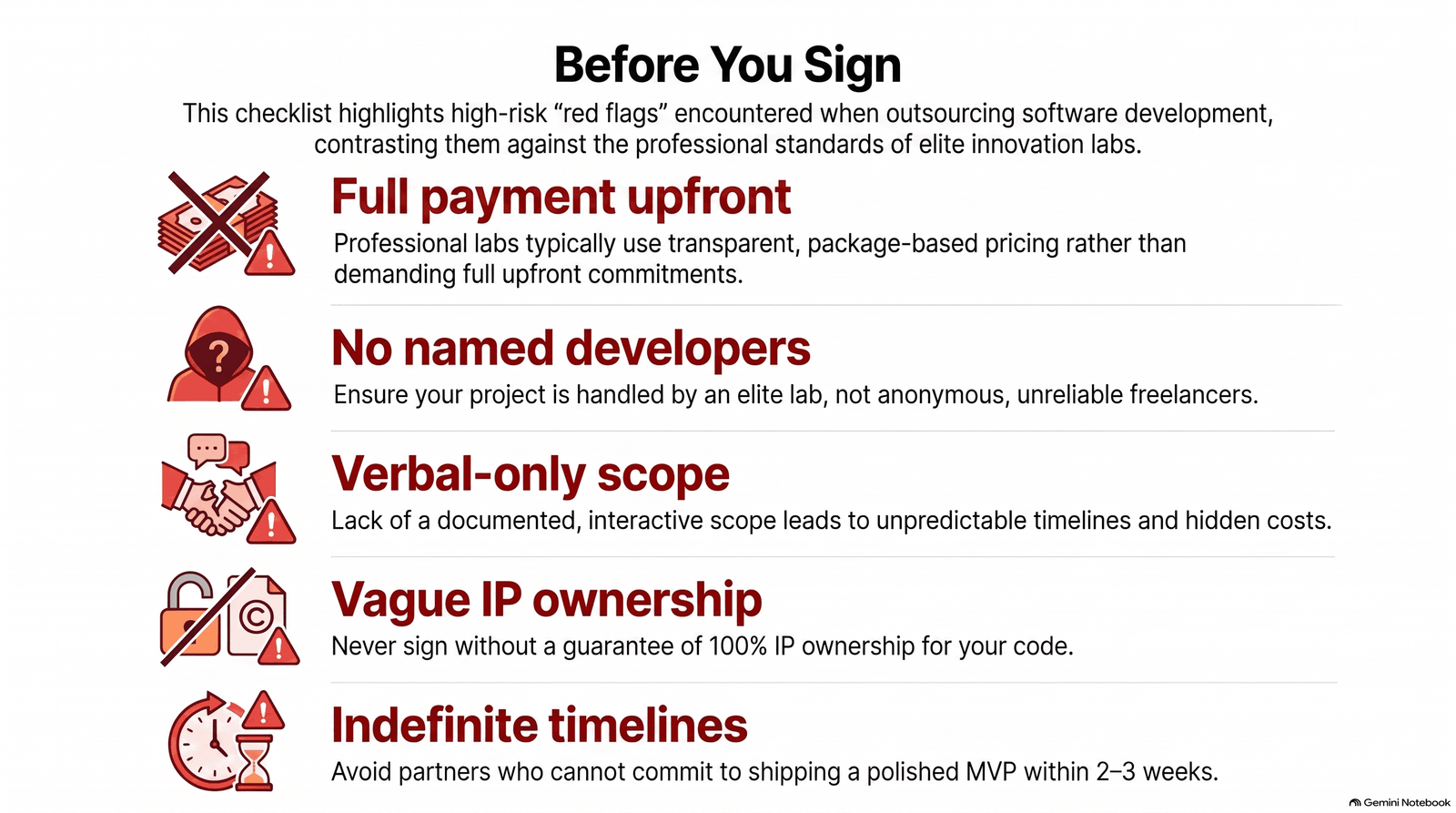
Early-stage founders face a specific set of risks that funded, later-stage teams rarely see in the same way.
Watch for vendors that require full payment upfront before any milestone is delivered — a fixed-scope deal should still tie payment to progress.
Also watch for agencies that agree to every feature you propose without ever pushing back on scope, since that pattern usually means budget discipline gets sacrificed later.
For a complete list of fifteen warning signs, this guide on MVP development red flags covers the sales-call, contract, and delivery-stage patterns worth screening for.
Budget Reality: What MVP Development for Startups Actually Costs
Pricing swings widely depending on team type, platform choice, and how tightly scope is controlled from day one.
At the low end, no-code builds and solo freelancers can bring a testable prototype to life for under $20,000. At the higher end, design-first or technical co-founder models can run past $50,000.
For a full regional breakdown, see our detailed guides on MVP development cost in India and MVP development cost in the USA, both broken down by feature set and team structure.
If you’re specifically comparing US-based vendors, this guide to the best MVP development companies USA goes deeper into onshore pricing tiers than this page covers.
Budget should narrow your shortlist before anything else. There’s little point evaluating a $50,000 studio against a $10,000 pre-funding validation project.
Where BkAbhi Fits
BkAbhi operates in the boutique fixed-scope studio lane described above, with milestone-based pricing and weekly demos tied to actual progress, not calendar dates.
The team works specifically with early-stage founders who need a working, testable product before their next funding conversation, not a fully polished enterprise build.
If that matches your stage, you can explore BkAbhi’s approach to shipping MVPs directly, or read how the process works end to end in this guide to hiring a minimum viable product developer.
Founders in a genuine speed crunch may also want the tactical breakdown in the fastest way to launch a SaaS MVP, which pairs well with any of the team types ranked above.
Common Mistakes Founders Make at This Stage
A few patterns show up again and again when early-stage founders pick the wrong vendor for their situation.
Shopping outside the budget lane. A founder validating a $15,000 idea rarely benefits from a call with an enterprise agency quoting six figures.
Confusing “cheapest” with “best fit.” The lowest quote sometimes means the least QA and documentation, which can cost more to fix later.
Skipping reference checks. A vendor confident in their work will usually connect you directly with a past early-stage client for a short call.
Ignoring industry-specific needs. A fintech or healthtech idea, even at MVP stage, often needs compliance awareness that a generalist team may lack. Our guide on MVP development across SaaS, fintech, and healthtech breaks down where that matters most.
Avoiding these four mistakes is usually what separates founders who land genuinely good MVP development for startups from those stuck mid-project with a mismatched partner.
Frequently Asked Questions
What’s the realistic budget range for early-stage MVP development? Most early-stage builds fall between $8,000 and $50,000, depending on team type, platform, and how tightly scope stays controlled.
Are startup MVP agencies better than freelancers for a first build? Not universally. A small agency offers redundancy and process; a strong freelancer offers direct access and lower cost. The right choice depends on scope complexity and runway.
How long should an early-stage MVP build take? Most fixed-scope engagements at this stage run 6–12 weeks, depending on platform choice and how well-defined the core feature set is going in.
Should I choose the cheapest vendor on this list? Not automatically. Match team type to your actual scope and industry first, then compare two or three quotes within that same category.
Do I need a technical co-founder before hiring an agency? No, but non-technical founders should lean toward vendors comfortable explaining trade-offs in plain language, or consider a technical co-founder-as-a-service model.
What’s the biggest difference between this list and a general MVP company ranking? This page filters specifically for early-stage constraints — tight budgets and fast timelines — while broader rankings, like our full top MVP development companies guide, cover every stage and industry.
How do I know if a quote is fixed-scope or just fixed-until-scope-changes? Ask directly, in writing, what happens if a feature request comes up mid-build. A genuinely fixed-scope vendor will have a clear change-request process already defined.
How many vendors should I actually talk to before deciding? Three to five discovery calls within the same team-type lane is usually enough to compare meaningfully without diligence fatigue setting in.
Can I switch team types midway if my scope grows? Yes, though it’s worth flagging that risk early. A no-code build that outgrows its platform, for example, often needs a different vendor entirely for the next phase.
Final Thoughts
The best MVP development companies for startups at the pre-seed and seed stage aren’t necessarily the biggest names in a directory listing. They’re whichever team type matches your actual budget, timeline, and technical needs right now.
Start with your stage, narrow by team type, then run the same vetting questions across every finalist before committing any budget.
For the broader comparison framework this page fits into, our pillar guide on MVP development company reviews is the right next stop.
Author Bio
Jeevesh Tripathi is a startup technology researcher and MVP strategy consultant at BkAbhi Innovations Lab, where he has advised early-stage founders across SaaS, fintech, and consumer products on choosing the right development partner for their stage and budget. His work follows an Experience, Expertise, Authoritativeness, and Trustworthiness (E-E-A-T) approach to vendor research, translating real founder discovery calls into practical, jargon-free guides.