
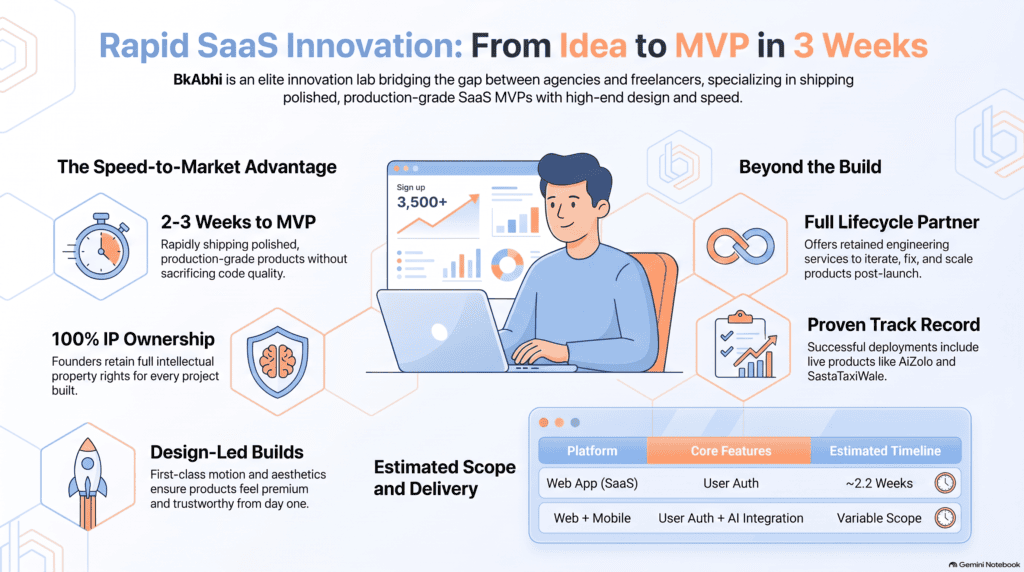
Quick Answer: A smoke test for a startup idea is a small, cheap experiment — usually a landing page, ad, or fake button — that measures whether real people want your product before you build it. BkAbhi can help startups validate ideas and turn promising concepts into practical digital products.
Most failed startups don’t run out of ideas. They run out of money building something nobody asked for.
A smoke test fixes that. It swaps guesswork for evidence, in days instead of months.
This guide walks through what a smoke test actually is, how fake door testing works, and how to set up a demand validation test this week.
Table of Contents
What Is a Smoke Test for a Startup Idea?
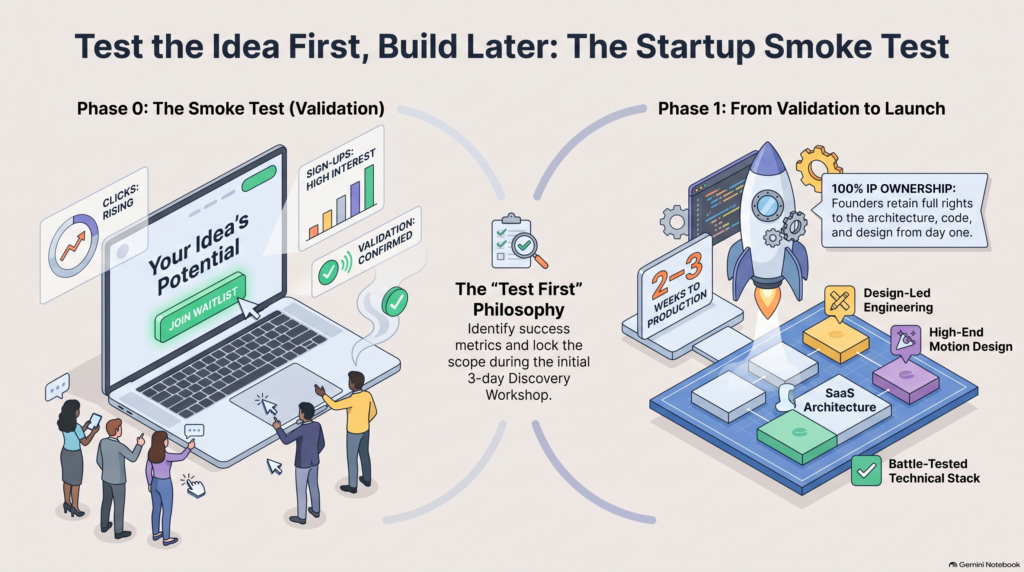
A smoke test for a startup idea is a quick, low-cost experiment that checks for genuine interest before any product exists.
You put an offer, a button, or a landing page in front of real people. Then you watch what they do, not what they say.
The term borrows from engineering, where a “smoke test” checks if a system even powers on before deeper testing begins. For a startup, the equivalent question is simpler: does anyone care enough to click, sign up, or hand over an email?
If nobody engages, you’ve saved months of build time. If people respond, you have your first real evidence of demand.
Why Smoke Test Before You Build Anything
Building first and validating later is the single most expensive habit in early-stage product work.
Startup post-mortem research consistently points to the same root cause of failure: teams spend months building a product the market never actually needed. A smoke test interrupts that pattern early, while the cost of being wrong is still small.
It also protects your runway. A landing page test costs a weekend and a small ad budget. A half-built app costs a founder’s savings and several months of momentum.
There’s a speed benefit too. Smoke tests compress the feedback loop from “launch day” to “this afternoon,” so you learn and adjust while the idea is still cheap to change.
Smoke Test vs MVP vs Prototype: What’s the Difference
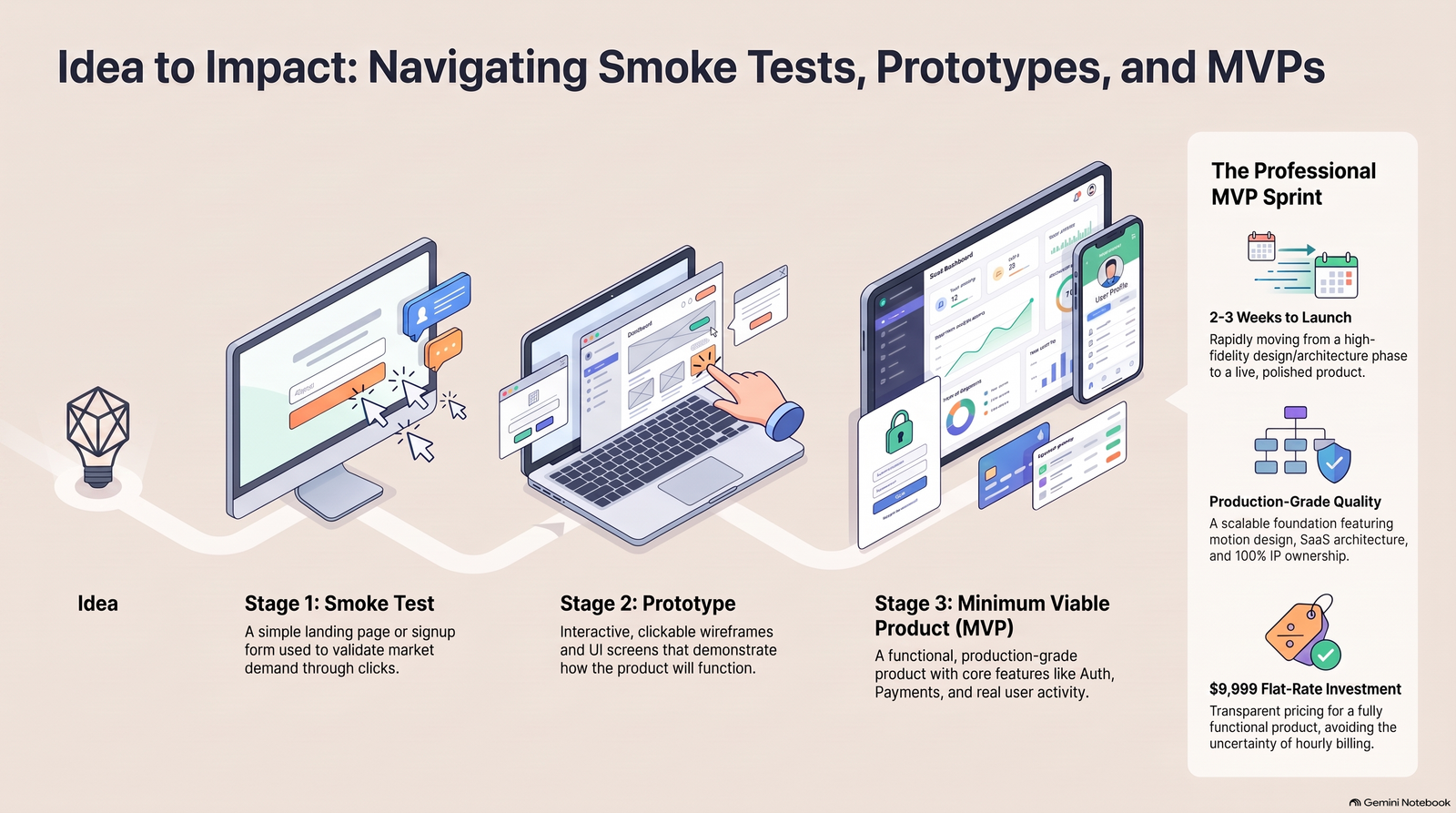
These three terms get used interchangeably, but they sit at different stages of validation.
A smoke test checks interest with no working product at all — just a promise and a way to measure response. A prototype is a rough, often non-functional model used mainly for internal review or investor conversations, closer to rapid prototyping than a live experiment.
An MVP goes further still. It’s a working, if stripped-down, version of your product that real users can actually use. If you’re unclear on that distinction, this breakdown of what an MVP actually means for startups is a useful next read.
Think of it as a ladder: smoke test, then maybe a concierge test, then MVP, then full product. Each rung costs more and proves more. For a fuller picture of that progression, see this comparison of MVP vs a full product build.
A smoke test MVP is really a hybrid step — a landing page or offer that behaves like the front door of an MVP, without any of the product behind it.
Fake Door Testing Explained
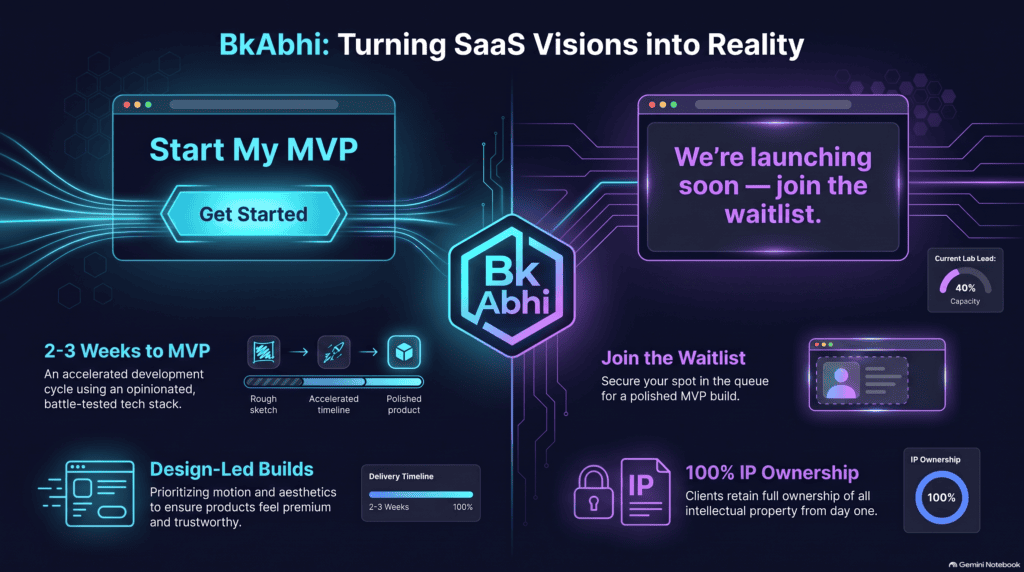
Fake door testing is the most common form of a smoke test, and it’s worth understanding on its own.
You show users a button, menu item, or offer for a feature or product that doesn’t exist yet. When they click, they land on a “coming soon” message or a signup form instead of the real thing.
The click itself is the data point. It’s a behavioral signal — what someone actually did — rather than a survey answer about what they’d probably do.
This matters because stated intent and real behavior often don’t match. Someone might tell you they’d definitely use a product, then never click the button when it’s actually in front of them.
Fake door testing works best when the offer is easy to understand at a glance. Complex, multi-step ideas are harder to test this way, because confusion looks the same as disinterest in your data.
One caution: transparency still matters. If someone clicks and reaches a dead end, tell them clearly it’s not live yet and invite them to join a waitlist, instead of leaving them stuck.
Types of Smoke Tests You Can Run
There isn’t one template for a smoke test. Pick the format that matches what you’re trying to learn.
Landing page test. A single page describing the product, ending in a signup or waitlist form. This is the most common demand validation test for early-stage founders.
Fake door / painted door button. A CTA inside an existing app or site for a feature that isn’t built. Useful when you already have some traffic or users to test against.
Pre-order or “buy now” test. You ask for a real (or reservable) payment before the product exists. Nothing proves demand like someone reaching for their card.
Ad campaign test. Run a small paid campaign pointing at your landing page and measure click-through rate before spending a rupee on development.
Concierge test. You manually deliver the outcome the product promises, one customer at a time, without any software behind it yet.
Each type answers a slightly different question — awareness, purchase intent, or actual usage. Many founders combine two, such as a landing page plus a small ad test, to triangulate the signal.
Smoke Testing Across Different Business Models
A smoke test looks slightly different depending on what you’re actually building. The core idea stays the same — measure real behavior — but the offer changes.
SaaS and software products. A landing page describing the core workflow, paired with a “Start Free Trial” or “Join Beta” button, works well here. The signup itself is your primary demand validation test signal.
Marketplaces. Two-sided markets need a smoke test on both sides — one page testing supplier interest, another testing buyer interest. A marketplace idea can look validated on one side and fail completely on the other.
Physical products. A pre-order page with a real (or refundable) payment step is the strongest signal you can get, since money changing hands is harder to fake than an email address.
Services and agencies. A booking or “request a quote” form on a simple page can smoke test demand before you build any delivery process at all.
Whatever the model, the discipline is the same: define the one action that represents real intent, then measure only that.
How to Run a Smoke Test for a Startup Idea: Step-by-Step
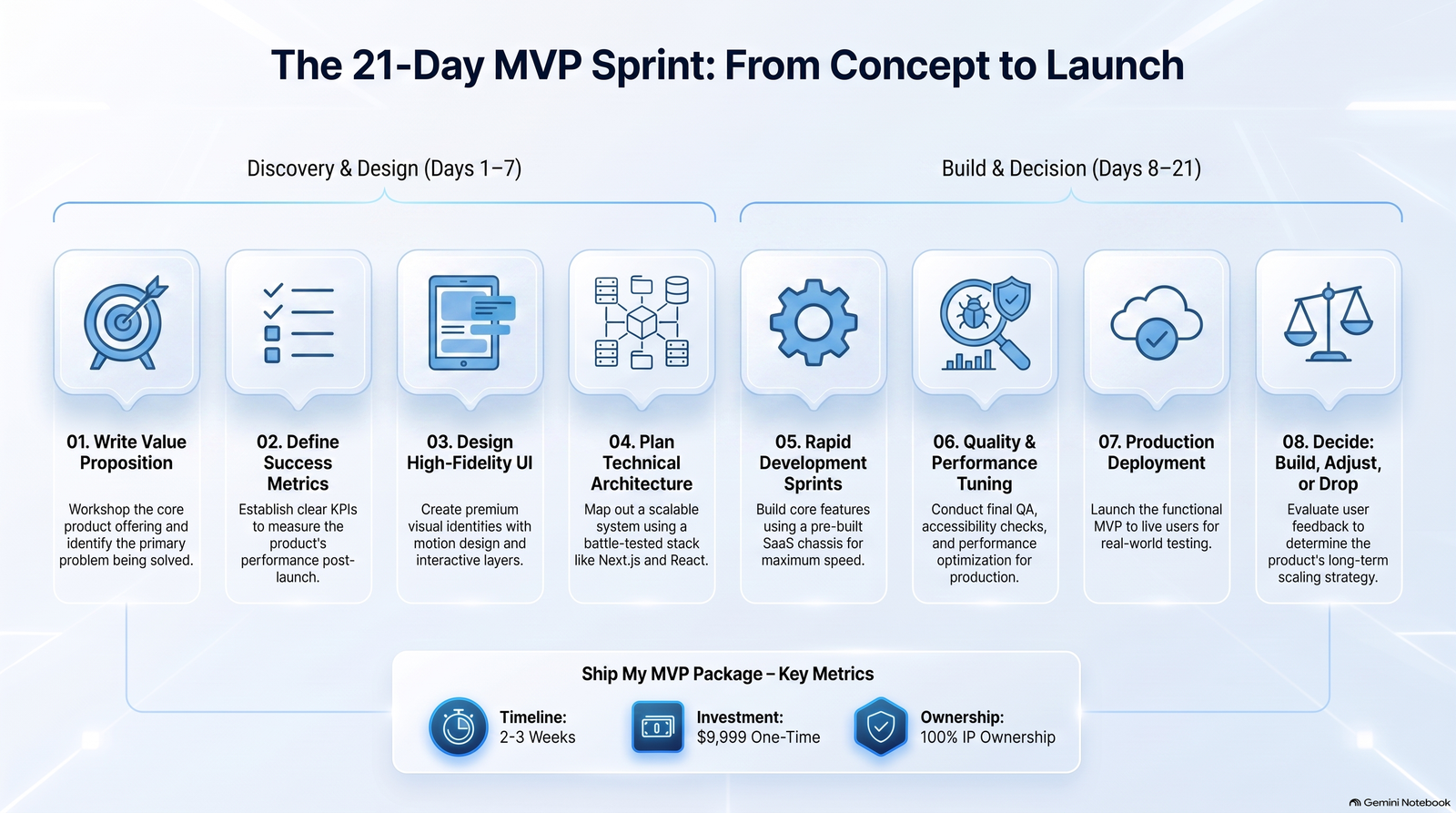
1. Write one clear value proposition. State the problem you solve and for whom, in one sentence a stranger could understand in five seconds.
2. Build a simple landing page. One headline, one short explanation, one call to action. Resist the urge to add features or pricing tiers you haven’t decided on yet.
3. Choose your primary action. Email signup, waitlist join, or a mock “reserve your spot” button — pick one action and make it the only thing that matters.
4. Drive real traffic to it. Use a small ad budget, relevant online communities, or your existing network. Random traffic gives you random noise, so target people who resemble your actual future customer.
5. Set a success threshold before you launch. Decide in advance what conversion rate or signup count would count as a genuine demand signal, so you’re not rationalizing the results afterward.
6. Let it run for a fixed window. A week or two is usually enough to get a directional read without waiting so long that momentum dies.
7. Follow up with the people who engaged. A few short interviews with real sign-ups tell you far more than the raw click number alone.
8. Decide: build, adjust, or drop. Strong signal moves you toward an MVP. Weak signal means you tweak the offer and retest, or shelve the idea.
A Two-Week Smoke Test Timeline
Founders often ask how a smoke test actually fits into a busy week. Here’s a realistic timeline for a simple landing page test.
Days 1–2: Write the value proposition, draft the page copy, and pick the single action you want visitors to take.
Day 3: Build the page using a no-code tool, connect a form or waitlist tool, and set up basic analytics tracking.
Day 4: Review the page with a few honest people outside your own head — friends in your target audience work better than family.
Days 5–7: Launch to a small, targeted audience through ads, communities, or your own network, and start watching early numbers.
Days 8–12: Let traffic build, resist the urge to change the page constantly, and log any patterns you notice by channel or audience segment.
Days 13–14: Pull the numbers, compare against your pre-set threshold, and schedule three to five follow-up conversations with people who engaged.
This isn’t a rigid formula, and some founders compress it into a single week. The structure matters more than the exact day count — plan, build, launch, observe, then decide.
Metrics That Prove Real Demand
Not every click deserves celebration. A demand validation test needs the right metrics, or it just produces noise dressed up as data.
Click-through rate tells you whether your messaging grabs attention at all. Low CTR usually means the headline or offer isn’t landing, not that the whole idea is dead.
Conversion rate (visits to signups, or signups to pre-orders) is the number that matters most. This is where curiosity turns into a measurable commitment.
Cost per signup, if you’re running paid traffic, tells you whether this audience is affordable to reach later. A cheap signup with no follow-through is a weaker signal than an expensive one with real engagement.
Qualitative feedback from follow-up conversations rounds out the picture. Numbers tell you what happened; conversations tell you why.
Treat any single metric with some skepticism. A spike in signups from one viral post or one forum thread isn’t the same as steady, repeatable interest across different channels.
How Much Should a Smoke Test Cost?
Most smoke tests can run on a genuinely small budget. A landing page tool, a basic form, and a modest ad spend often add up to less than the cost of a single week of development work.
The point isn’t to spend as little as possible for its own sake. It’s to spend just enough to get a clean read, so the cost of being wrong stays low while you’re still testing an unproven idea.
If a founder finds themselves justifying a large spend before any real signal exists, that’s usually a sign the test has quietly turned into a soft product launch instead of a smoke test.
Tools You Can Use to Build a Smoke Test Fast
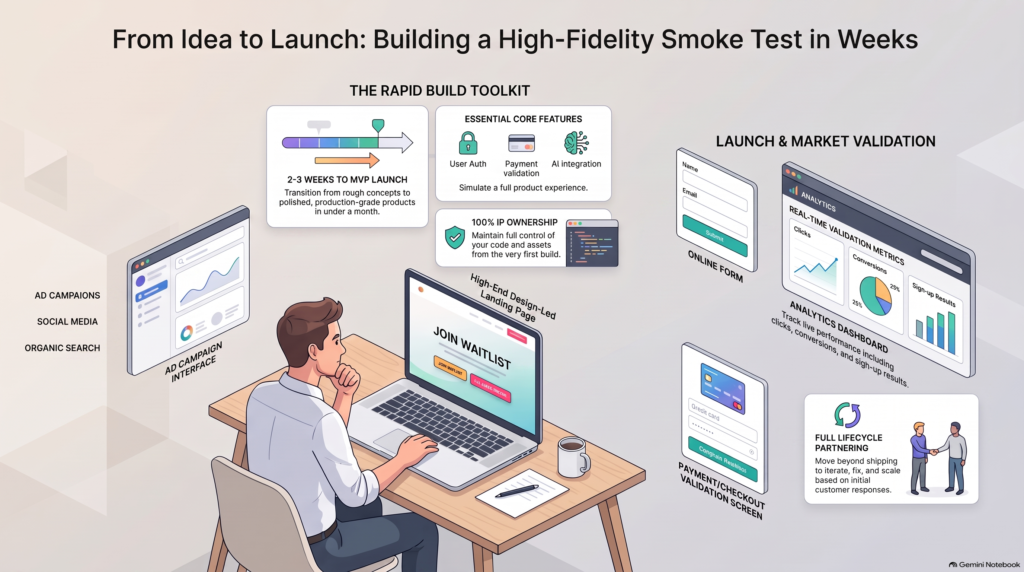
You don’t need custom software to run a smoke test for a startup idea. Most founders can go live in a day or two.
Landing page builders like Carrd, Framer, or a simple no-code site let you publish a page without writing code. If you want something more flexible, a lightweight no-code build approach can also work for slightly more interactive tests.
Waitlist and form tools handle email capture and basic analytics out of the box, so you’re not building that infrastructure yourself.
For ad testing, small budgets on search or social platforms are usually enough to get a directional read before you commit to a bigger spend.
If your idea needs more than a static page to feel real — say, an interactive demo or calculator — it may be worth a short conversation with a startup software development partner who can build that lightweight version quickly.
Real Examples of Smoke Testing
Dropbox is the example most founders have heard, and for good reason. Before writing the file-sync product, the team published a short explainer video on a simple landing page and asked people to join a waitlist.
Sign-ups jumped from a small starting number into the tens of thousands within days, long before a working product existed. That single test is often credited with shaping how the company prioritized its build.
Buffer is another commonly cited case. Its earliest version was a two-page site: one describing the idea, the second appearing only after a visitor clicked to see pricing. The click-through between those two pages became the first demand signal, well before any scheduling software was built.
Neither story means a landing page guarantees success. It means a smoke test can surface real signal cheaply, before the harder work of building even starts.
Common Mistakes That Ruin a Smoke Test
Testing a feature nobody can picture. If your landing page needs three paragraphs to explain the idea, confusion will look identical to disinterest in your results.
Driving the wrong traffic. Blasting a link to a broad, unrelated audience inflates visit counts while telling you nothing about real customers.
No pre-set success bar. Without deciding “what counts as a win” beforehand, it’s tempting to call any result a success after the fact.
Being misleading about what’s real. Letting users think they’ve bought something that doesn’t exist, without clear “coming soon” messaging, damages trust and can create real complaints.
Stopping after one test. A single weak result doesn’t always mean the idea is dead — sometimes it means the offer, headline, or audience needs adjusting first.
Ignoring the qualitative side. Chasing click numbers without ever talking to the people who clicked leaves you guessing at the “why” behind the data.
What to Do After a Successful Smoke Test
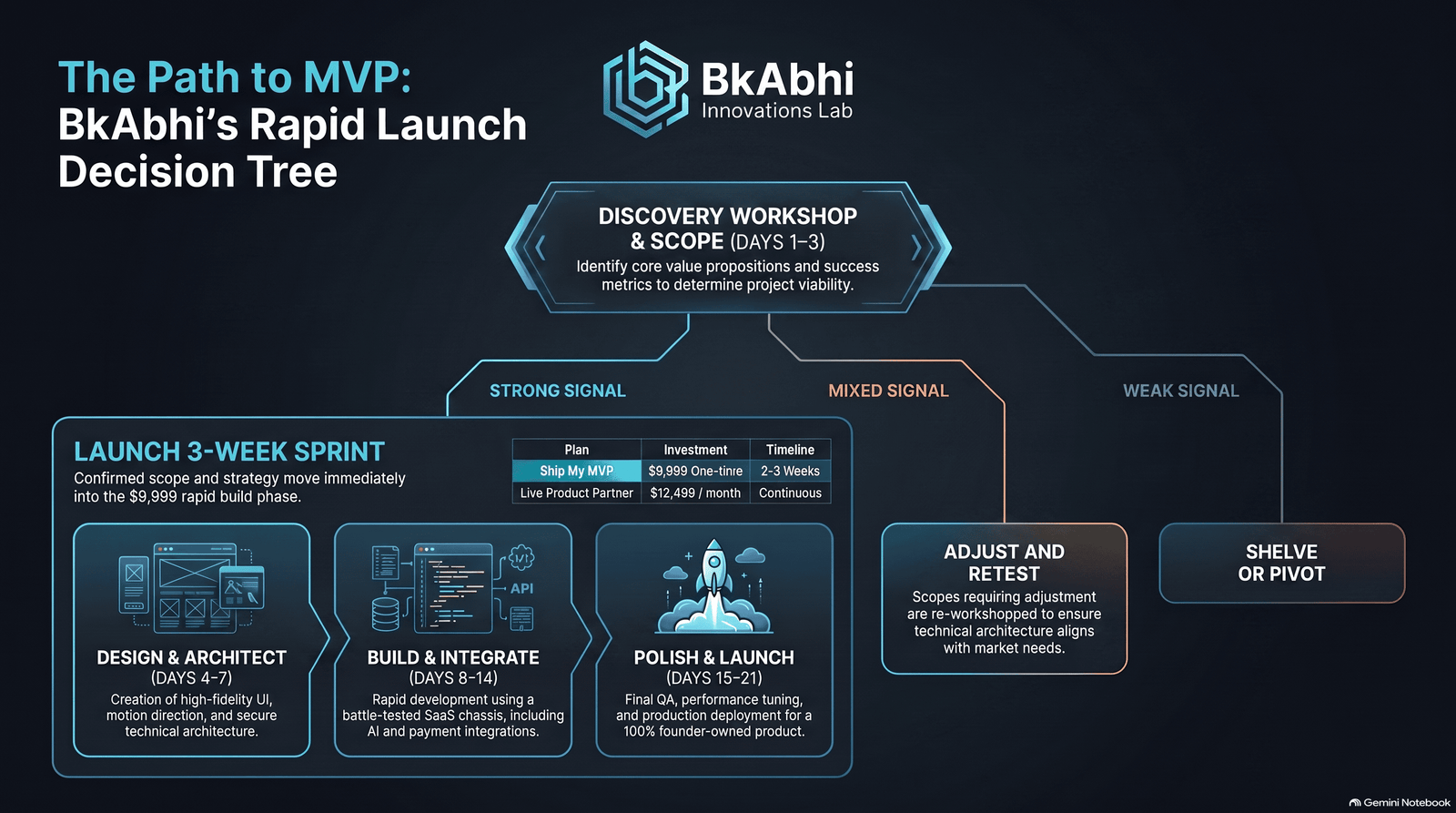
A strong smoke test result is a green light, not a finished business case. The next step is usually a small, working version of the product.
If your signal is solid, this is where you scope a real MVP development plan around the exact feature people responded to, not every feature you originally imagined.
Keep the build tight. Resist adding functionality your smoke test never actually tested for.
If you’re weighing whether to build this in-house or bring in outside help, this guide on how to hire an MVP development team without overpaying is a reasonable next stop, along with this checklist of questions to ask before hiring an MVP development company.
And if the result was mixed or weak, that’s still useful. Adjust the offer, retest with a sharper value proposition, and treat the first attempt as one data point, not a final verdict.
Frequently Asked Questions
How long should a smoke test run? Most landing page or fake door tests run one to two weeks — long enough to smooth out daily noise, short enough to keep momentum.
How many signups count as a good result? There’s no universal number. What matters is a conversion rate that beats your pre-set threshold and holds up across more than one traffic source.
Is a smoke test the same as an MVP? No. A smoke test measures interest with no working product; an MVP is a real, usable version of the product itself.
Do I need to spend money on ads to smoke test an idea? Not necessarily. Organic channels like relevant communities, your own network, or content can work, though paid traffic often gives cleaner, faster data.
What if my smoke test gets almost no response? Treat it as information, not failure. Revisit the headline, the offer, and the audience before deciding the underlying idea is wrong.
Can a smoke test replace customer interviews? No. A smoke test tells you whether people act on an offer; interviews tell you why. The strongest validation combines both rather than relying on either alone.
What’s the difference between a smoke test and a beta launch? A beta launch hands out a working, if limited, product to real users. A smoke test happens earlier, before any working product exists, and measures intent rather than usage.
Final Thoughts
A smoke test for a startup idea won’t tell you everything. It won’t guarantee a successful business, and it can’t replace real customer conversations.
What it does is cheap, fast, and honest: it tells you whether to keep going before you’ve spent the time and money that’s hard to get back.
Run the test, read the signal carefully, and let the evidence — not your enthusiasm — decide what gets built next.
Author Bio
Jeevesh Tripathi Email: jeevesh@bkabhi.com
Jeevesh Tripathi is a startup researcher and product strategist focused on MVP development, demand validation, and early-stage go-to-market testing. His work centers on helping founders separate real market signal from vanity metrics before they commit engineering budget to an idea. Jeevesh writes and researches for BkAbhi Innovations Lab, where these findings are applied directly to help startups validate and ship products with less wasted spend.