

Picking the wrong build partner can cost you months and your entire runway. Picking the right MVP app development company can get you a working product, real user feedback, and a shot at your next funding round.
This guide breaks down exactly what separates a dependable partner from a risky one — so you can vet vendors with confidence instead of guessing.
Table of Contents
What Is an MVP App Development Company?
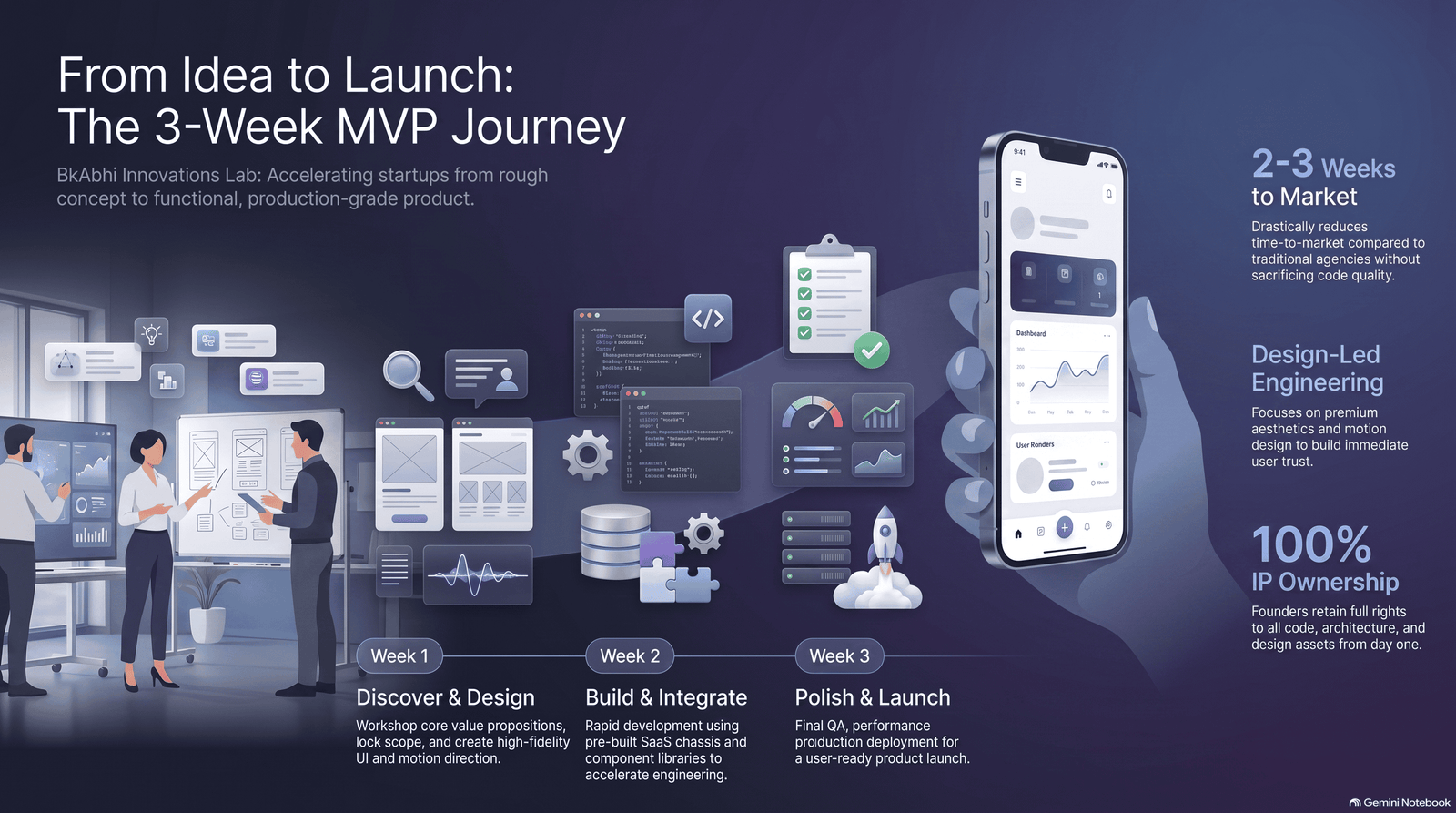
An MVP app development company is a firm that specializes in building a lean, functional first version of your product. The goal is not a finished app — it’s the smallest version that proves people want what you’re building.
If you’re still fuzzy on the fundamentals, our guide on what MVP development actually means covers the basics in plain language.
Most founders confuse an MVP with a prototype or proof of concept. They’re not the same thing, and mixing them up leads to the wrong scope, the wrong budget, and the wrong hire. Our breakdown of MVP vs prototype vs POC explains where each one fits.
Why the Right Partner Matters More Than the Right Idea
A great idea with a mediocre build partner usually ships late, over budget, and with bugs that scare off early users. A mediocre idea with a sharp MVP app development company often gets refined into something investable.
That’s the real value a good vendor brings — not just code, but judgment on what to cut.
Startups researching what an MVP actually is in the startup context tend to make better hiring decisions later, because they walk into vendor calls already knowing what “done” should look like.
Core Things to Look For in an MVP App Development Company
1. A Portfolio of Actual MVPs, Not Just Polished Apps
Anyone can show you a beautiful finished app. Ask specifically for MVPs — early, scrappy builds that later turned into funded products.
A company that only shows finished, mature apps may not know how to work fast and lean, which is the entire point of an MVP engagement.
2. Product Thinking, Not Just Coding Speed
The best teams push back on your feature list. They ask “why” before they ask “how long.” If a vendor agrees to every feature you list without questioning priority, that’s a warning sign, not a strength.
Feature creep is one of the fastest ways to blow an MVP timeline and budget.
3. Transparent, Structured Pricing
You want a company that breaks down cost by phase — discovery, design, development, QA, launch — not a single vague number.
If you’re budgeting in India specifically, our detailed MVP development cost guide for India walks through realistic price ranges by feature complexity.
4. A Clear, Documented Process
Ask what happens in week one, week four, and launch week. A company with a real process can answer this instantly. A company improvising it on the call usually improvises the whole project.
5. Full-Stack Capability
Startups building for phones need a mobile MVP app development company that can handle iOS, Android, backend, and cloud infrastructure under one roof — not three separate vendors passing the blame around.
6. The Right Tech Stack for Your Timeline
Ask what stack they’d recommend and why. A vendor defaulting to the same stack for every client regardless of your product’s needs isn’t customizing anything.
Our guide to the best tech stack for MVP development is a good benchmark to compare their answer against.
7. Post-Launch Support Included
An MVP isn’t done at launch — it needs monitoring, quick fixes, and iteration based on real user behavior. Confirm what support window is included after go-live, and what it costs beyond that.
8. Client References You Can Actually Call
Case studies on a website are curated. A real reference call isn’t. Ask for two or three past clients you can speak with directly, ideally ones whose product was similar in scope to yours.
If a vendor hesitates or only offers written testimonials, treat that as a gap worth probing further, not a dealbreaker on its own.
Engagement Models: Fixed Price, Time & Material, or Dedicated Team
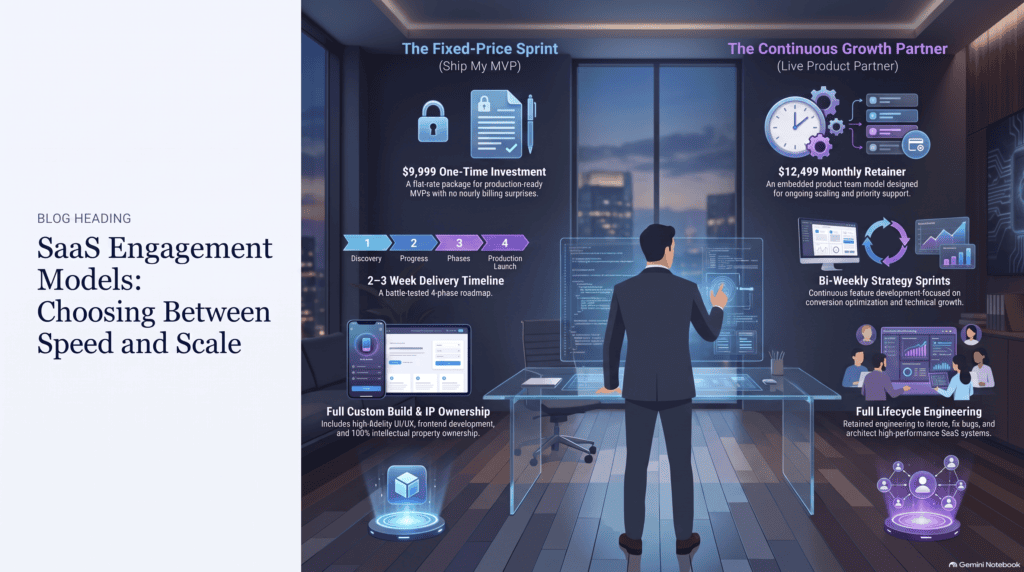
Most MVP app development companies offer one of three pricing structures, and each fits a different situation.
Fixed price works when your scope is locked and unlikely to change. It’s predictable, but any mid-project pivot usually triggers a costly change order.
Time & material suits founders who expect their scope to evolve as they learn from early users. You pay for actual hours worked, with more flexibility but less budget certainty.
Dedicated team means a group of developers works exclusively on your product for a set period, similar to an extended in-house team. This tends to fit funded startups planning multiple build phases, not just a single MVP sprint.
Ask which model a vendor defaults to, and why they think it fits your specific situation — not just their own convenience.
Security, Data Privacy, and Compliance Checks
Even an early MVP touches real user data, which means basic security hygiene isn’t optional. Ask how the company handles authentication, data encryption, and access control by default.
If you’re building in fintech or healthtech, confirm the team has actually worked within relevant compliance frameworks before — not just claims familiarity with the terminology.
A vendor that can’t clearly explain how they’d handle a data breach scenario, even hypothetically, likely hasn’t thought through security seriously enough for production use.
Communication Tools and Reporting Cadence to Expect
Ask exactly how updates get delivered — daily standups, weekly demos, a shared project board, or just email check-ins when something breaks.
A strong MVP app development company usually offers a live staging link you can check anytime, plus a scheduled demo at the end of each sprint. That combination lets you catch scope drift early instead of discovering it at launch.
Vague answers like “we’ll keep you updated” without a specific tool or cadence attached are worth pushing back on before you sign.
How to Read an MVP Proposal Document Line by Line
Proposals often look similar on the surface but hide very different assumptions underneath. Before comparing price alone, check these details in every proposal you receive:
- Does it list specific deliverables per phase, or just a lump total?
- Are QA and testing hours called out separately, or bundled invisibly into development?
- Is the number of revision rounds for design capped, and if so, at what number?
- Does it specify who owns analytics and infrastructure accounts after handoff?
A proposal that answers all four clearly is usually written by a team that has shipped enough MVPs to know where disputes typically start.
Common Mistakes Founders Make When Hiring
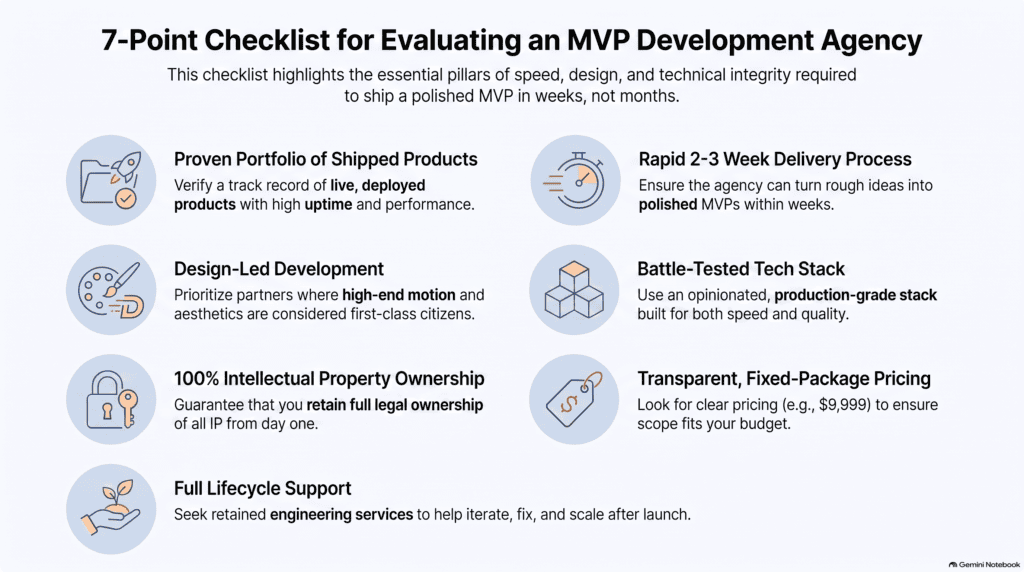
Even experienced founders repeat a few avoidable mistakes when choosing an MVP app development company for the first time.
Optimizing for price alone. The cheapest quote often means the least experienced team, the thinnest QA process, or scope that quietly shrinks mid-project.
Skipping the discovery phase. Vendors that jump straight into development without a structured discovery phase often misunderstand your core problem before writing a single line of code.
Not defining “done” in writing. Without a written definition of MVP scope, minor feature requests pile up until the “minimum” part disappears entirely.
Ignoring post-launch plans. Founders often budget only for the build, then get stuck paying premium emergency rates for fixes a support contract would have covered.
Mobile MVP App Development Company: What’s Different
Mobile adds constraints web-only teams often underestimate. App store review timelines, platform-specific design guidelines, and device fragmentation all affect scope and speed.
A capable mobile MVP app development company should be fluent in both Apple’s App Store Review Guidelines and Google Play’s policy requirements, since a rejected submission can quietly add two to three weeks to your launch.
Ask directly: “Have you shipped an app through App Store review before, and what got rejected the first time?” Real teams have a real answer. Inexperienced ones go quiet.
Finding “MVP App Developers Near Me”: Does Location Still Matter?
Founders often search for MVP app developers near me, assuming proximity means better communication or accountability. In 2026, that’s less true than it used to be — most serious MVP teams work asynchronously across time zones anyway.
What actually matters more than a shared zip code:
- Overlapping working hours for at least a few calls a week
- A single point of contact who owns your project end to end
- Response times documented in the contract, not just promised verbally
Local proximity is a nice-to-have. Communication discipline is the real requirement.
Questions to Ask Before You Sign Anything
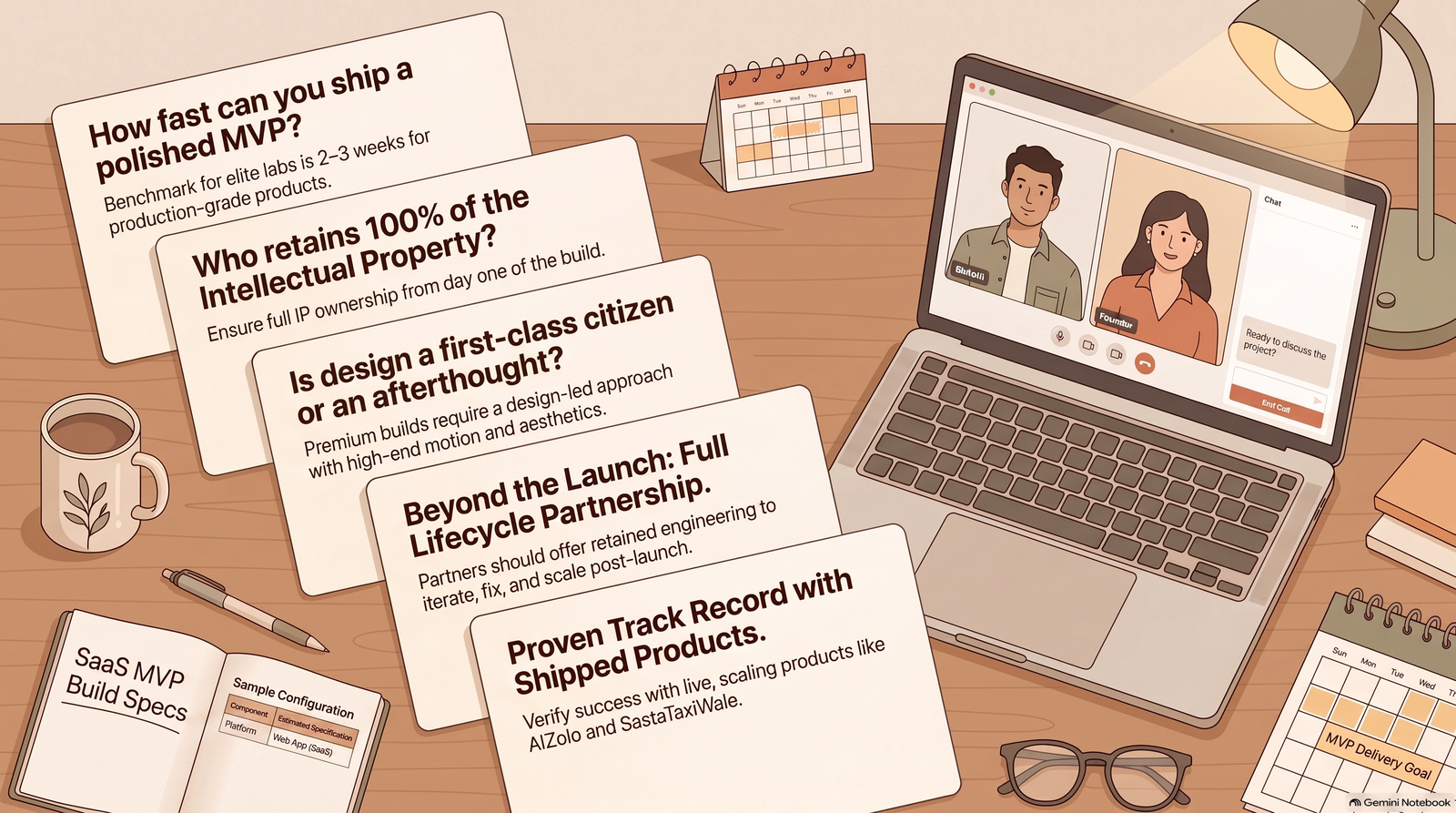
Before committing to any MVP app development company, run through a structured set of questions rather than a casual chat. Our full MVP vendor vetting checklist covers background research, sales-call red flags, and contract terms in detail.
At minimum, ask about:
- Team composition — who actually touches your codebase
- Ownership of source code and IP after project completion
- What “done” means, in writing, before work starts
- How scope changes get priced mid-project
Red Flags That Should End the Conversation
Some warning signs are subtle. Others aren’t. Watch for:
- Refusal to put timelines or deliverables in writing
- Pressure to sign within 24–48 hours
- No clear answer on who owns the code after launch
- Pricing that’s dramatically lower than every other quote you’ve received
Our detailed breakdown of MVP development red flags lists fifteen warning signs founders have run into during real vendor searches — worth a full read before you sign anything.
Reading Reviews and Case Studies Without Getting Fooled
Star ratings alone don’t tell you much. Look for reviews that mention specific outcomes — did the MVP actually launch, did it attract users, did the company hit its own stated deadlines.
Our guide on what to actually check in MVP development company reviews walks through how to separate genuine feedback from polished testimonials.
In-House Team, Freelancer, or Agency?
Not every startup needs a full agency. Some are better served by a single strong freelancer; others need a structured team from day one.
If you’re weighing this decision, our comparison of in-house vs outsourced MVP development and our breakdown of MVP agency vs in-house team tradeoffs both go deeper into cost, speed, and control tradeoffs.
As a general rule: pre-seed founders testing a single core feature often do fine with a freelancer. Funded startups building something more complex usually need agency-level structure.
Comparing Multiple MVP App Development Companies
Never hire off a single conversation. Get at least three quotes, and compare them on the same criteria — not just price.
Our structured MVP development company comparison framework walks through how to weigh pricing model, communication style, and technical depth side by side, so you’re not just picking the cheapest option by default.
If you’re specifically hiring within India, our dedicated guide to MVP development companies in India covers what full-stack capability and transparent pricing should look like in that market.
How BkAbhi Approaches MVP App Development
At BkAbhi, the focus stays on shipping a working MVP fast — without skipping the product strategy that decides which features actually matter. That means transparent, phase-based pricing, a single point of contact throughout the build, and support that continues after launch, not just up to it.
If you’re comparing vendors right now, it’s worth putting any company — including BkAbhi — through the same checklist covered above.
Industry-Specific Considerations
Fintech, healthtech, and SaaS MVPs all carry different compliance and data-handling requirements. A generalist MVP app development company may not know the specific constraints your industry demands.
Our overview of MVP development across SaaS, fintech, and healthtech breaks down what changes by sector — from data privacy needs to expected build timelines.
When No-Code Might Be Enough
Not every MVP needs custom code from day one. Some ideas can be validated with no-code tools in weeks, saving budget for later once demand is proven.
Before hiring a full development team, it’s worth reading our no-code MVP playbook to see whether your specific idea qualifies for a lighter-weight validation approach first.
Full Product vs MVP: Don’t Over-Scope the First Hire
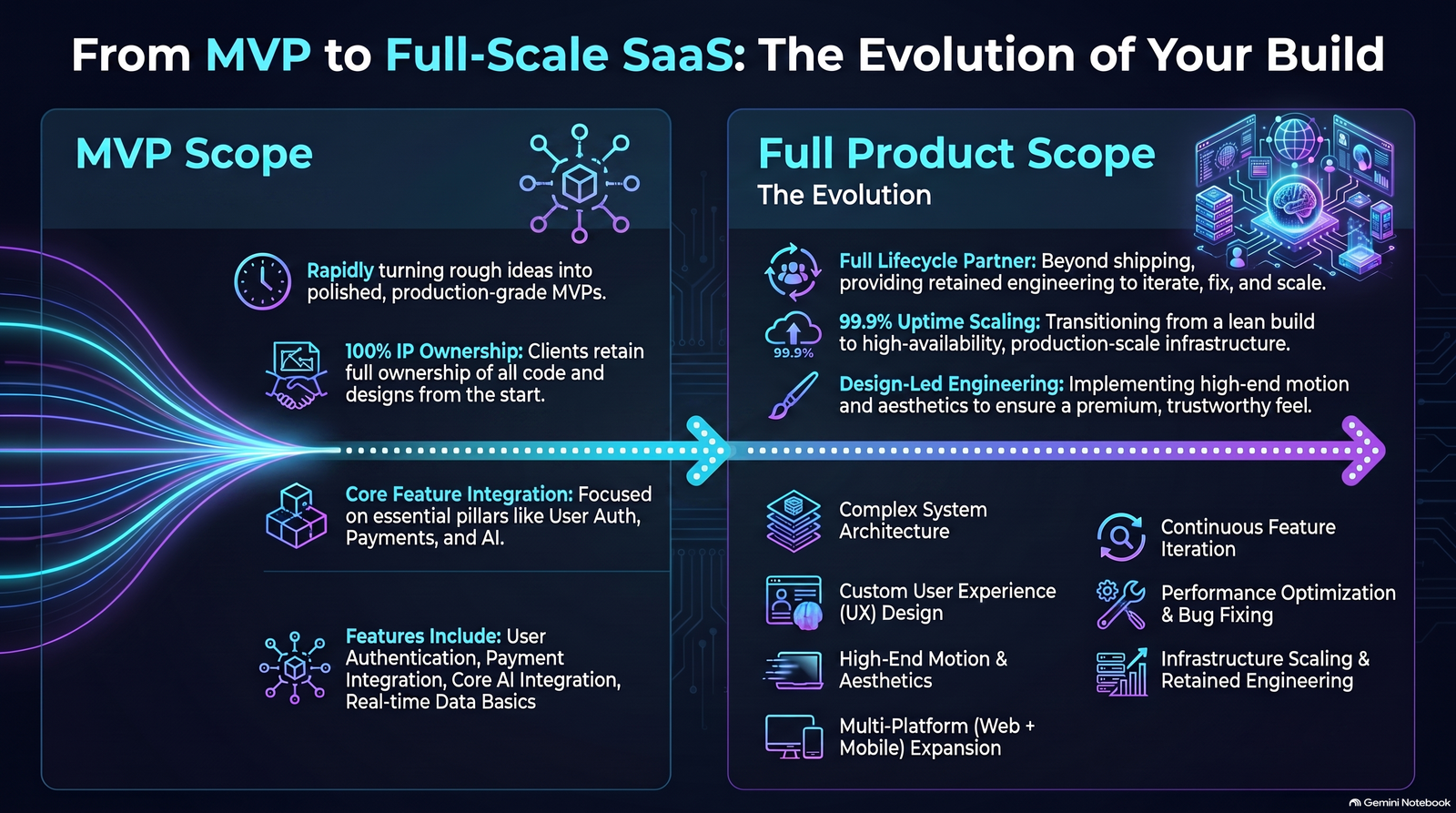
One of the most common mistakes founders make is hiring an MVP app development company and then handing over a full-product feature list. That defeats the purpose of building lean.
If you’re unsure where the line sits, our comparison of MVP vs MMP vs full product development explains what belongs in phase one versus what should wait.
Frequently Asked Questions
How long does it take to build an MVP? Most MVPs take 8 to 12 weeks, depending on feature complexity and platform. Simpler single-feature apps can move faster.
Is a cheaper MVP app development company always a red flag? Not always, but a quote dramatically below every other bid usually means corners are being cut somewhere — scope, testing, or experience level.
Should I look for an MVP app developers near me specifically, or is remote fine? Remote is fine for most startups today. Prioritize communication structure and overlapping hours over physical location.
Do I own the code after the MVP is built? You should — confirm IP and source code ownership in writing before the project starts, not after.
Can one company handle both web and mobile MVP builds? Yes, a strong mobile MVP app development company should offer full-stack capability across web, iOS, Android, and backend infrastructure.
What’s the minimum team size for building an MVP? Many MVPs are shipped by a small team of two to four people — typically one developer, one designer, and a product lead — rather than a large agency roster.
Should I sign a contract with an MVP app development company before or after a paid discovery phase? A short paid discovery phase before the full contract lets both sides validate scope and fit with limited risk, and is common practice among experienced vendors.
Final Thoughts
Choosing an MVP app development company isn’t about finding the flashiest portfolio or the lowest quote. It’s about finding a team that asks good questions, prices transparently, and treats your first version as a real product — not a placeholder.
Run every vendor through the same checklist, compare at least three, and don’t sign anything until timelines, ownership, and support terms are in writing.
Author Bio
Jeevesh Tripathi Email: jeevesh@bkabhi.com
Jeevesh Tripathi is a product strategy researcher specializing in MVP development and early-stage startup building. With hands-on experience evaluating build partners, tech stacks, and go-to-market timelines for early-stage founders, Jeevesh writes to help startups make informed, low-risk decisions when choosing a development partner. His work focuses on practical, experience-backed guidance rather than generic industry advice — grounded in real vendor evaluations and startup case research.