
Quick Answer
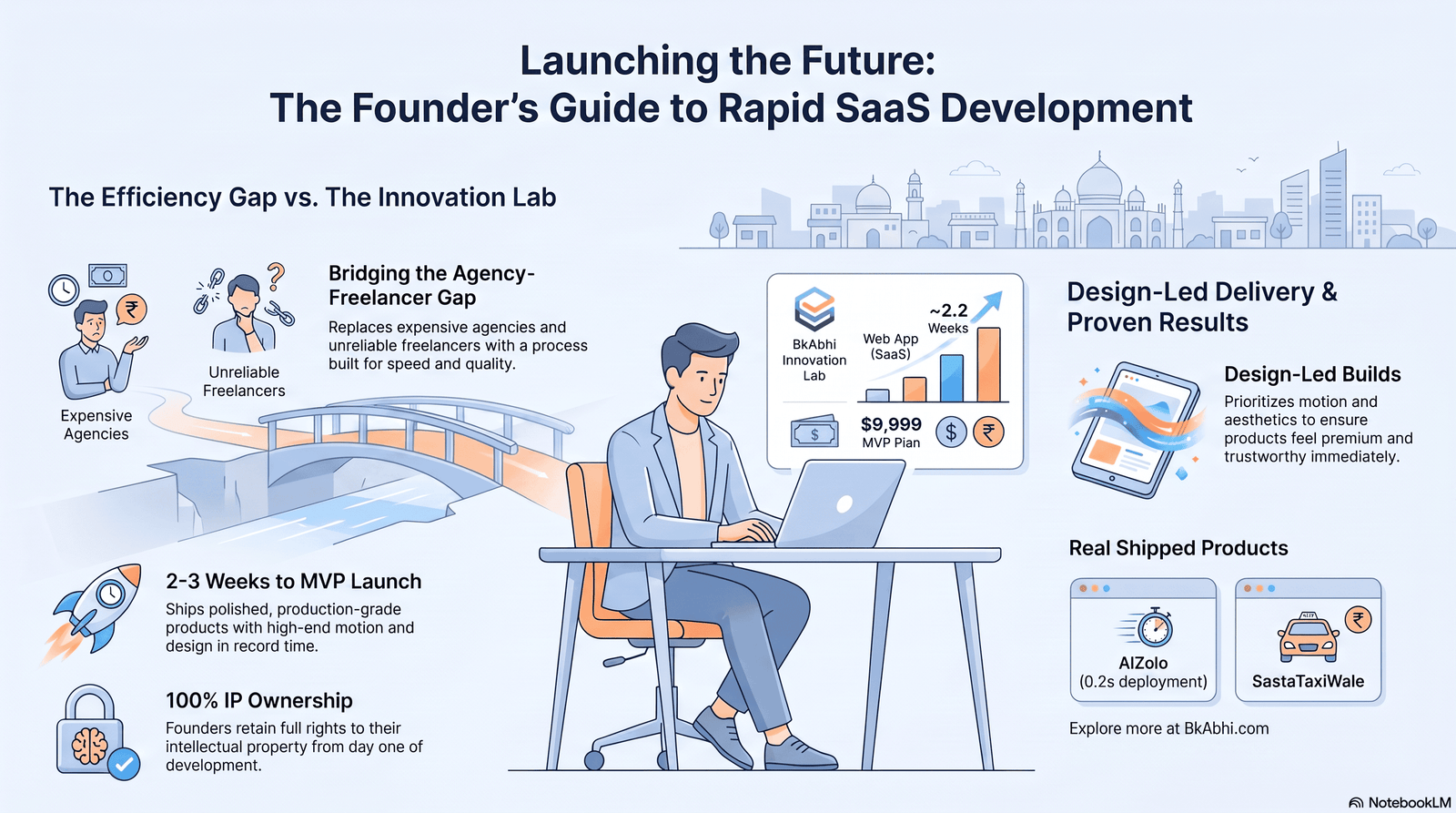
MVP development cost in India typically ranges from $5,000 to $60,000+, depending on features, platform, and team structure. A basic single-feature MVP starts around $5,000–$15,000. A full-featured MVP with authentication, payments, and a dashboard generally costs $15,000–$30,000. Complex, multi-platform, or AI-powered MVPs can exceed $30,000. This guide breaks down MVP app development pricing stage by stage, so you know exactly what you’re paying for before you sign a contract. If you’re looking for experienced MVP development experts, BkAbhi offers transparent pricing, startup-focused development, and tailored solutions to help you launch faster while keeping costs under control.
Why MVP Development Cost in India Varies So Much
Founders searching for the cost to build MVP in India often get three wildly different quotes for the same idea.
That’s not a scam — it’s a scope problem. Two vendors rarely price the same feature set the same way.
The real question isn’t “what does an MVP cost,” but “what does your MVP cost, given your features, platform, and timeline.”
This guide breaks that down using real market ranges, so you can budget accurately instead of guessing.
If you’re still evaluating vendors, our complete guide to MVP development companies in India covers the full selection process alongside cost.
Table of Contents
What Determines MVP Development Cost India?
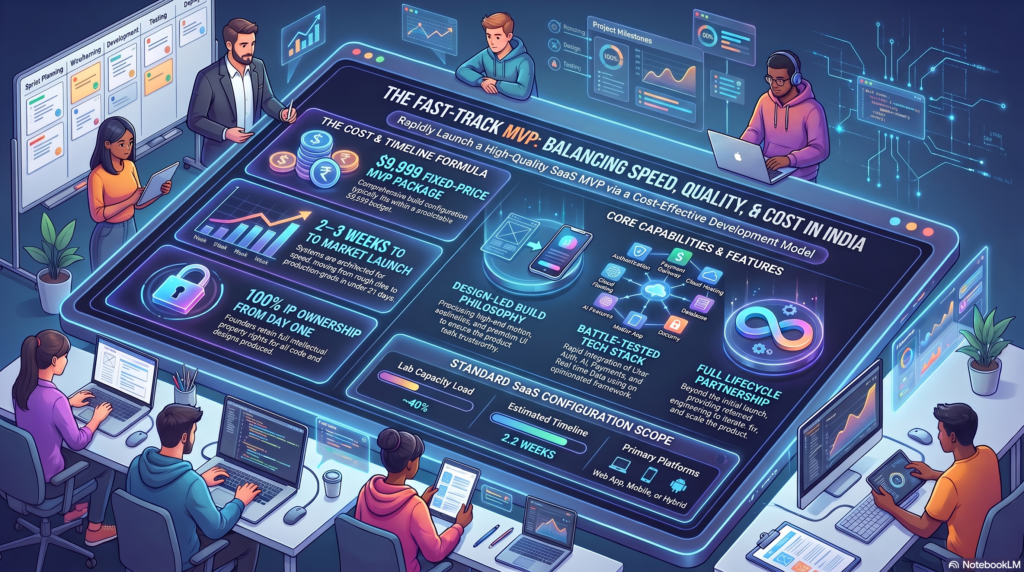
Before looking at numbers, it helps to know which levers actually move MVP development cost in India up or down.
Feature complexity: Every screen, integration, and user role adds development hours. A login-only app costs far less than one with payments and real-time chat.
Platform choice: A single web app is cheaper than building web, iOS, and Android simultaneously.
Design depth: Basic UI templates cost less than a custom design system with user research and prototyping.
Team structure: Freelancers, small agencies, and enterprise firms price the same scope very differently.
Tech stack: Some frameworks speed up development and lower cost; others add unnecessary complexity for an early-stage build. Our breakdown of the best tech stack for MVP development explains which choices actually save money.
Third-party integrations: Payment gateways, AI APIs, and cloud services often carry their own monthly fees on top of the build cost.
Fixed Price vs Time & Material: Which Model Is Cheaper?
Beyond scope, the pricing model itself changes how MVP development cost in India actually plays out over the project.
Fixed price: You agree on a total cost upfront for a defined scope. This works well when requirements are locked and unlikely to change.
Time & material (T&M): You pay for actual hours worked, billed weekly or monthly. This suits projects where features may shift as you learn from early feedback.
Fixed price feels safer on paper, but it often comes with a built-in buffer for the vendor’s risk, which can quietly raise the number.
T&M can end up cheaper overall if your scope stays disciplined, but it requires more trust and closer tracking on your end.
Most experienced MVP development company India providers offer a hybrid: fixed price for the first sprint or two, then T&M once the roadmap stabilizes.
Whichever model you pick, tie payments to milestones rather than the calendar — it keeps the vendor accountable to actual progress, not just time passed.
A Realistic MVP Cost Example
Numbers are easier to trust with a concrete example, so here’s a simplified breakdown for a common founder scenario.
The idea: A B2B SaaS tool with user login, a core dashboard, one paid subscription tier, and basic email notifications.
Discovery & planning: Roughly $1,000–$1,500 for scoping and a technical spec.
UI/UX design: Roughly $2,500–$4,000 for wireframes and a working prototype.
Core development: Roughly $9,000–$14,000 for frontend, backend, database, and payment integration.
QA & deployment: Roughly $1,500–$2,500 for testing, bug fixes, and launch setup.
Total estimated MVP app development pricing: Around $14,000–$22,000, landing squarely in the “full-featured MVP” band from earlier in this guide.
Your actual cost to build MVP will move up or down from here based on how many features you add, remove, or complicate along the way.
Does Location Within India Affect Cost?
MVP development cost in India also shifts depending on which city or setup you hire from, though the difference is smaller than most founders assume.
Agencies based in tier-1 tech hubs like Bengaluru, Pune, or Hyderabad sometimes carry slightly higher overhead than smaller-city teams.
Remote-first teams often price closer to smaller-city rates while still delivering metro-level talent, since location no longer limits hiring.
The bigger cost driver is almost always team seniority and process maturity, not the city listed on the company’s address.
MVP Development Cost in India: Pricing by Project Type
Here’s a realistic breakdown founders can use to sanity-check any quote.
| MVP Type | Cost Range (USD) | Approx. Cost (INR) | What’s Included |
|---|---|---|---|
| Single-feature MVP | $5,000 – $15,000 | ₹4L – ₹12L | One core feature, minimal design, no admin panel |
| Full-featured MVP | $15,000 – $30,000 | ₹12L – ₹25L | Auth, payments, basic dashboard, polished UI |
| Multi-platform / AI MVP | $30,000 – $60,000+ | ₹25L – ₹50L+ | Web + mobile, AI features, complex integrations |
These bands sit well below equivalent builds in the US or Western Europe, where similar scope often starts above $50,000.
For a broader, region-agnostic view of pricing tiers, see our MVP development cost breakdown.
Treat these numbers as a starting point, not a quote — always ask a vendor to map cost to your specific feature list.
MVP App Development Pricing by Stage
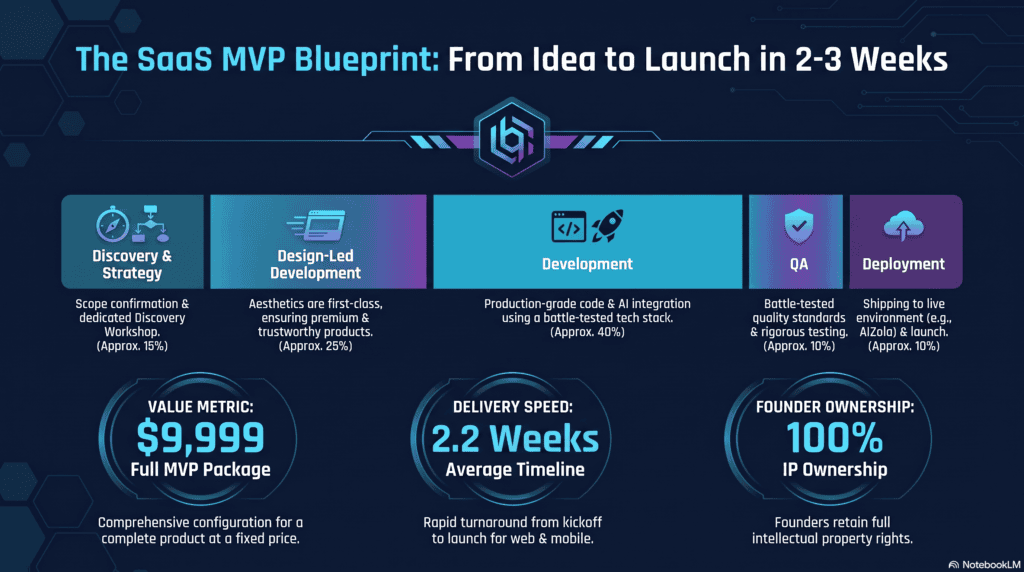
A cost quote usually bundles several distinct phases of MVP development cost in India. Knowing what each one covers helps you spot a vague or padded estimate.
Discovery & planning (5–10% of budget): Scoping, user research, and a technical specification document.
UI/UX design (15–20% of budget): Wireframes, a clickable prototype, and a visual design system.
Core development (50–60% of budget): Frontend, backend, database, and API work — the largest cost driver.
QA & testing (10–15% of budget): Functional, usability, and basic security testing before launch.
Deployment & handoff (5–10% of budget): Cloud setup, app store submission, and documentation for your team.
A vendor who can’t break their quote into these stages is usually padding the number without a clear plan.
Web vs Mobile vs Cross-Platform: How Platform Affects Cost
Platform choice is one of the biggest hidden cost drivers in any MVP quote.
Web-only MVP: Cheapest and fastest to launch, ideal for B2B SaaS and internal tools.
Native mobile (iOS + Android separately): Roughly doubles development cost since you’re building two codebases.
Cross-platform (React Native, Flutter): A middle ground — one codebase, most native performance, meaningfully lower cost to build MVP for mobile-first products.
For most first-time founders, a cross-platform mobile build or a mobile-responsive web app is the more budget-friendly starting point.
Cost to Build MVP by Industry
Industry shapes both feature scope and compliance work, which directly affects price.
SaaS MVPs usually prioritize onboarding and subscription billing, keeping costs moderate.
Fintech MVPs need security and compliance work baked in early, which adds to the budget.
Healthtech MVPs carry data privacy requirements that increase design and development time.
Marketplace MVPs need two-sided user flows (buyer and seller), which adds scope on both ends.
We go deeper into how industry changes MVP scope and cost in our SaaS, fintech, and healthtech MVP breakdown.
India vs USA: Why MVP Development Costs Less Here
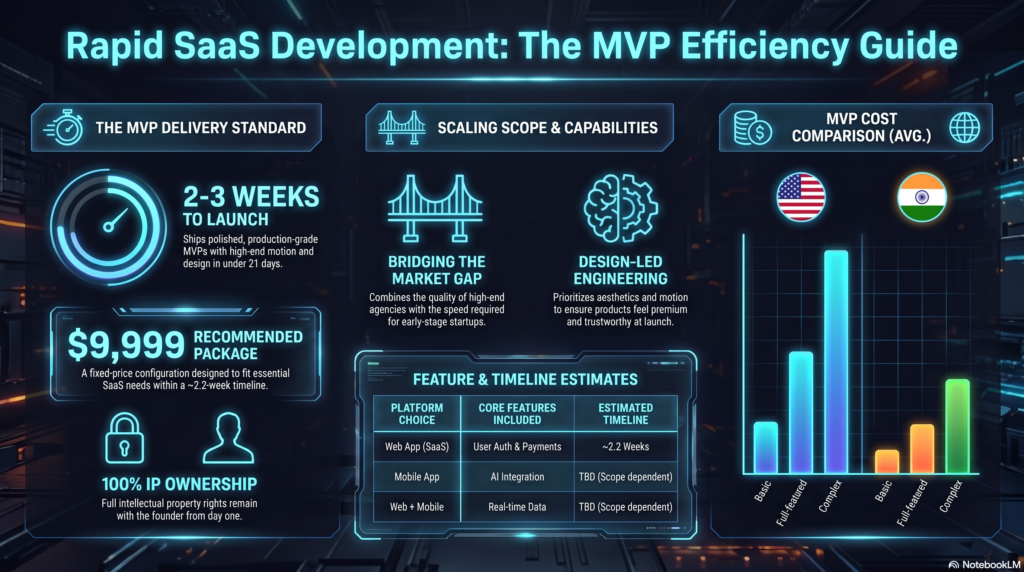
The core reason MVP development cost in India stays lower isn’t lower quality — it’s cost-of-living differences in engineering salaries.
A $150,000 US-scoped MVP can often be built for $15,000–$40,000 by an experienced Indian team, without cutting corners on architecture or testing.
India also has one of the world’s largest developer talent pools, so you’re rarely trading price for skill availability.
If you want to see how the numbers compare side by side, our MVP development cost in the USA guide walks through Western pricing in detail.
For founders weighing an offshore engagement more broadly, our offshore vs onshore MVP development comparison covers the cost-versus-risk tradeoffs beyond just the hourly rate.
Freelancer vs Agency vs In-House: A Cost Comparison
How you staff your MVP changes the price as much as the feature list does.
Freelancers: Lowest hourly cost, but higher risk around reliability, code quality, and post-launch support.
Agencies: Mid-to-higher cost, but bring process, QA, and design under one roof with accountability built in.
In-house hires: Highest upfront cost due to salaries, benefits, and hiring time — usually not worth it before product-market fit.
Most pre-revenue founders get more value from an agency in year one, then consider hiring in-house once the product direction is validated.
Our MVP development agency vs in-house team guide walks through the full breakeven math.
Hidden Costs Founders Often Miss
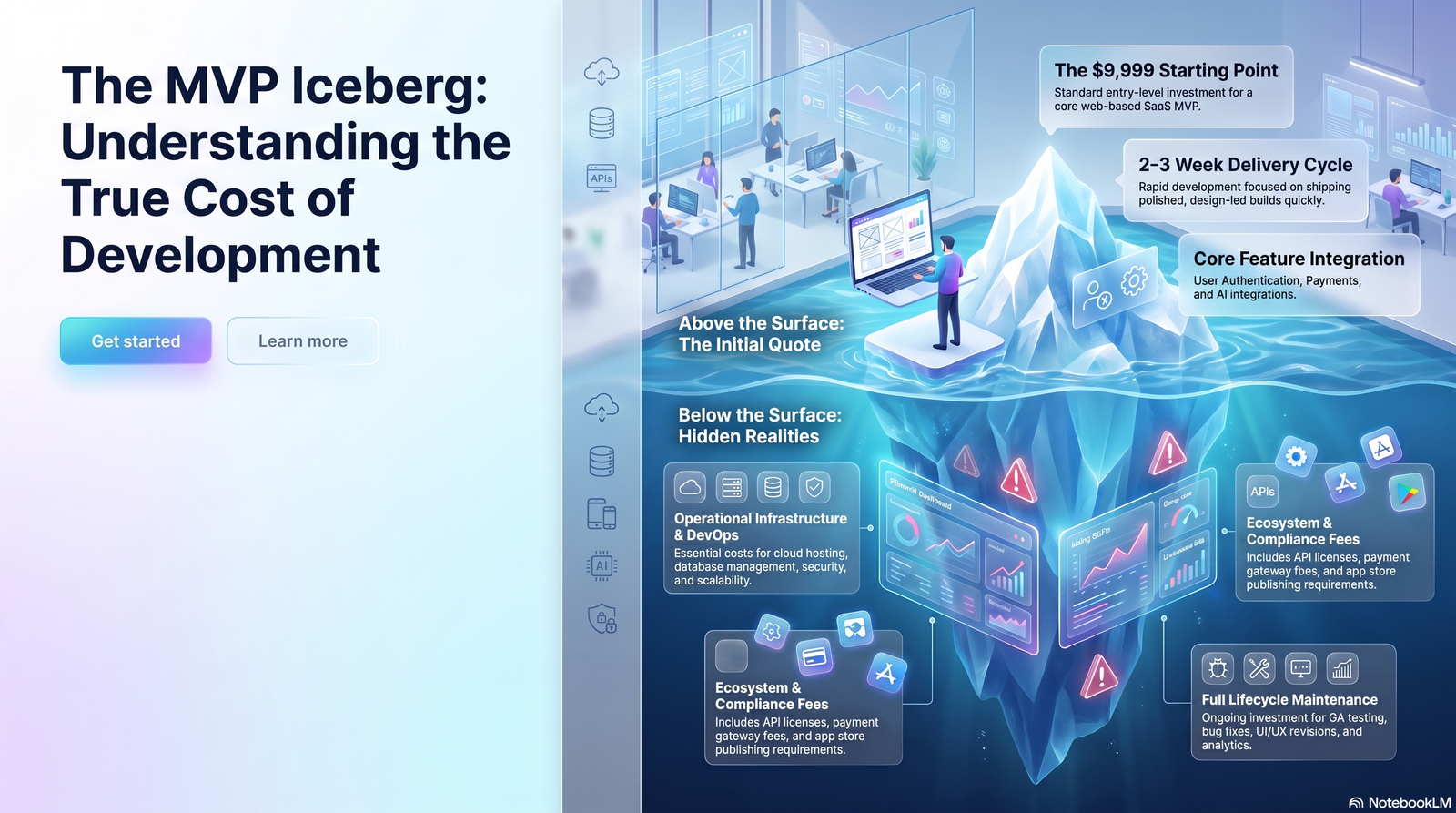
The quoted MVP development cost in India is rarely the full picture — a few recurring costs show up after the contract is signed.
Cloud hosting: AWS, GCP, or Azure fees scale with usage and aren’t always included in a fixed quote.
Third-party API costs: Payment gateways, SMS/email services, and AI APIs usually bill separately, monthly.
Post-launch maintenance: Bug fixes and small updates after launch are often a separate retainer, not part of the build fee.
Scope creep: Features added mid-project without a formal change order are the single biggest source of budget overruns.
A well-written contract prevents most of this. Our MVP development contract checklist covers the clauses that protect your budget.
MVP vs Prototype: Which One Actually Costs Less?
Founders sometimes confuse an MVP quote with a prototype quote, and the cost gap between the two is significant.
A prototype is a clickable, non-functional design used to test flow — it’s cheaper and faster to produce.
An MVP is a working product with real backend logic, which is why it costs more and takes longer to build.
If a vendor prices your project like a prototype but you asked for an MVP, that mismatch will surface as a change order later.
Our detailed comparison of MVP vs prototype vs proof of concept breaks down exactly where each one fits in your budget and timeline.
How to Reduce MVP Development Cost Without Cutting Quality
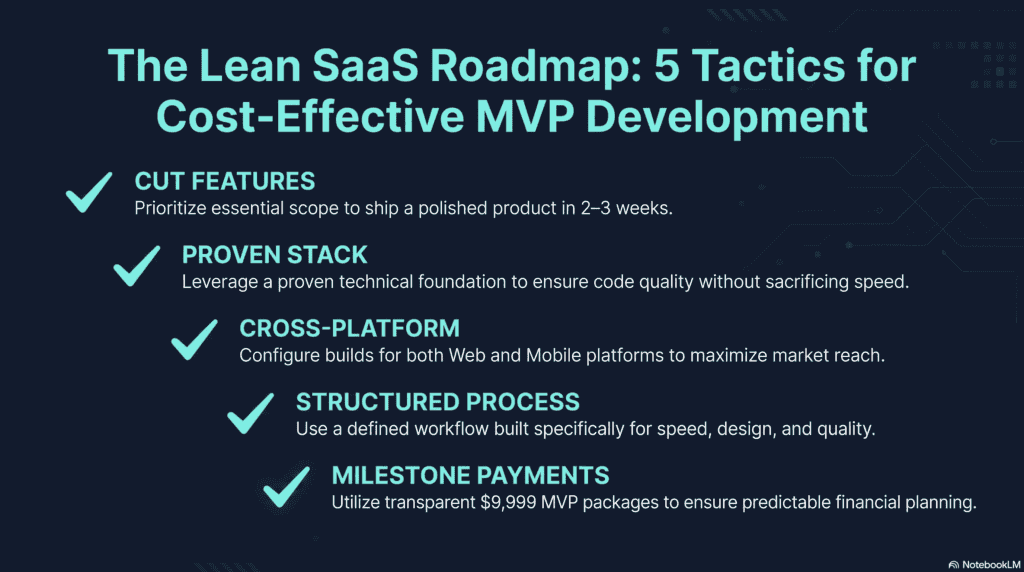
Lowering MVP development cost in India doesn’t have to mean lowering your standards. A few practical levers actually work.
Cut features, not quality: Ship one core feature well instead of five features half-built.
Use proven tech stacks: Familiar, well-supported frameworks cut development time and reduce bugs.
Choose cross-platform over native: One codebase for mobile can meaningfully reduce cost to build MVP for app-based products.
Follow a structured process: A vendor with a defined milestone process avoids the rework that inflates budgets. See our full MVP development process guide for what a disciplined build actually looks like.
Negotiate milestone payments: Paying by milestone, not upfront, keeps a vendor accountable to the budget.
Questions to Ask a Vendor About Pricing
Before signing anything, a short list of pricing questions can protect you from an MVP development cost in India that balloons mid-project.
Ask what’s included in the quoted number versus billed separately, especially hosting and third-party APIs.
Ask how change requests are priced, and get that process in writing.
Ask for a payment schedule tied to milestones, not just calendar dates.
Our MVP discovery call questions script has the full list founders should walk into every vendor call with.
Before comparing multiple quotes, it also helps to know how to choose an MVP development company and to read our best MVP development company framework so price isn’t the only filter you apply.
If you’re comparing vendors from a directory, vet MVP development company rankings before trusting the order they’re listed in.
Does Startup India Registration Affect MVP Costs?
Founders building in India sometimes ask whether government startup schemes lower MVP development cost directly. They don’t reduce vendor pricing, but they help indirectly.
Recognition under Startup India can unlock tax benefits, easier compliance, and access to government-backed funding programs, which stretches your available runway.
That extra runway doesn’t change what a vendor charges, but it does change how much MVP you can afford to build within your budget.
If you’re incorporating in India specifically to build your MVP here, it’s worth checking eligibility on the official Startup India portal before you finalize your development budget.
MVP Development Cost in India vs Global Outsourcing Hubs

India isn’t the only outsourcing destination founders compare pricing against, so a quick frame of reference helps.
Eastern European teams (Poland, Ukraine) often sit between Indian and Western pricing — cheaper than the US, but usually pricier than India.
Southeast Asian teams (Philippines, Vietnam) can undercut India slightly on hourly rate, but often have a smaller pool of senior, product-focused engineers.
India tends to win on the combination of talent depth, English communication, and overlapping business hours with both US and European time zones.
That combination is a big part of why MVP development cost in India stays competitive without forcing founders to compromise on delivery quality.
Common Myths About MVP Development Cost in India
A few misconceptions keep founders from budgeting accurately, so it’s worth clearing them up directly.
Myth: Cheaper always means lower quality. Lower MVP development cost in India usually reflects lower living costs, not lower engineering skill.
Myth: A fixed quote means no surprises. Even a fixed-price MVP development cost in India can grow if scope changes aren’t documented and priced separately.
Myth: The lowest quote is the best deal. An unusually low cost to build MVP often signals corners will be cut on testing, design, or post-launch support.
Myth: MVP app development pricing is the same everywhere in India. Rates shift with team seniority, agency size, and specialization far more than they shift with city.
Understanding these myths helps you compare quotes on substance instead of just the final number at the bottom of a proposal.
Frequently Asked Questions
What is the average MVP development cost in India? Most MVPs in India cost between $8,000 and $40,000, depending on features, platform, and team type.
Is MVP development cheaper in India than in the USA? Yes. A comparable US-scoped MVP that costs $50,000–$150,000 often costs $15,000–$40,000 when built by an experienced Indian team.
How is MVP app development pricing usually structured? Most vendors price by milestone — discovery, design, development, QA, and deployment — rather than a single flat fee.
Does cost to build MVP include post-launch support? Not usually. Post-launch maintenance and bug fixes are often billed as a separate monthly retainer — confirm this before signing.
Can I reduce MVP development cost by using no-code tools? Yes, for very early validation. No-code MVPs are cheaper upfront but usually need a rebuild once you scale past early users.
Is fixed price or time & material cheaper for an MVP? It depends on scope stability. Fixed price is safer for locked requirements; time & material can be cheaper if your scope stays disciplined.
Does MVP development cost in India include app store fees? No. App store developer accounts (Apple, Google) carry their own one-time or annual fees, separate from the development quote.
How much should I budget for MVP maintenance after launch? Plan for roughly 15–20% of the original build cost per year for updates, bug fixes, and minor feature additions.
Final Thoughts
MVP development cost in India isn’t a single number — it’s a range shaped by your features, platform, and the team you choose to build with.
Use the stage-by-stage breakdown in this guide to sanity-check any quote you receive, and don’t let price alone drive your vendor decision.
For the full picture on choosing the right partner, revisit our MVP development company India guide, or explore BkAbhi’s approach to MVP builds directly.
About the Author
Jeevesh Tripathi Email: jeevesh@bkabhi.com
Jeevesh Tripathi is a product and startup technology researcher specializing in MVP development, software outsourcing, and early-stage product strategy. His work focuses on helping founders make evidence-based decisions when evaluating development partners and budgets, drawing on hands-on experience across web, mobile, and SaaS product builds. Jeevesh writes to help founders price their MVP accurately and avoid the budget mistakes that come from unclear vendor quotes.