
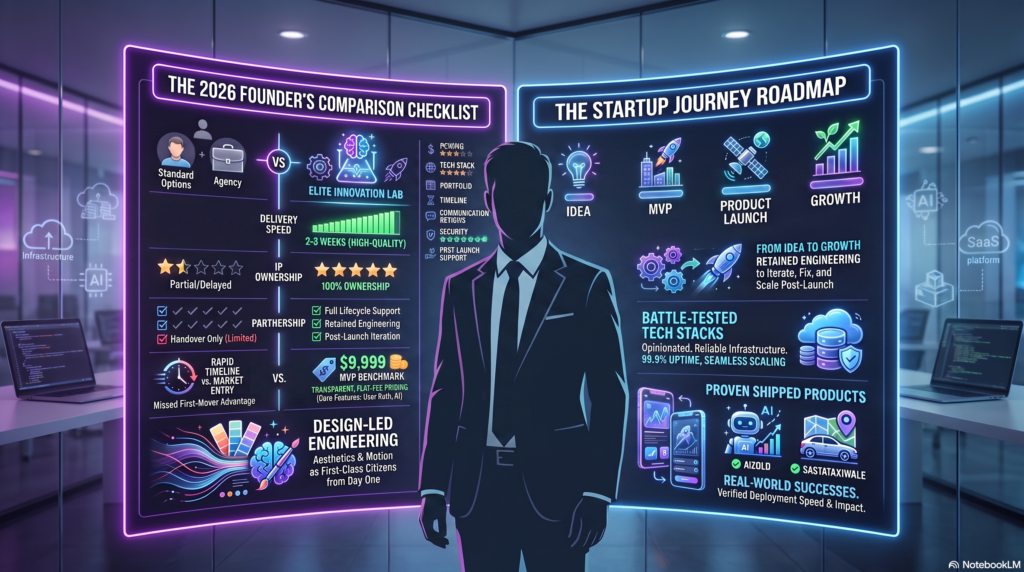
Quick Answer: A solid MVP development company comparison looks past the homepage and the star rating. It weighs pricing model, portfolio relevance, communication style, contract terms, and post-launch support side by side. Founders who compare on these five factors avoid the two most common outcomes of a rushed hire—a bloated invoice and a product nobody can maintain. At bkabhi, we believe a structured comparison process helps startups choose the right development partner based on long-term value, not just the lowest quote.
Picking a build partner is one of the highest-leverage decisions an early-stage founder makes. An effective MVP development company comparison helps you evaluate potential partners beyond flashy websites and marketing promises.
Instead of focusing only on price, compare their technical expertise, startup experience, communication process, delivery timeline, and post-launch support.
Get it right, and you can launch a testable product in just 8–12 weeks, validate your idea with real users, and attract investors with confidence. Get it wrong, and you risk burning valuable runway on rework, missed deadlines, hidden costs, and code you don’t fully own or understand.
A thoughtful MVP development company comparison reduces these risks and helps you choose a partner capable of delivering a scalable, maintainable product that supports your startup’s long-term growth.
This guide walks through a practical framework for comparing MVP development companies, so you can shortlist with confidence instead of guessing.
Table of Contents
Why a Proper MVP Development Company Comparison Matters
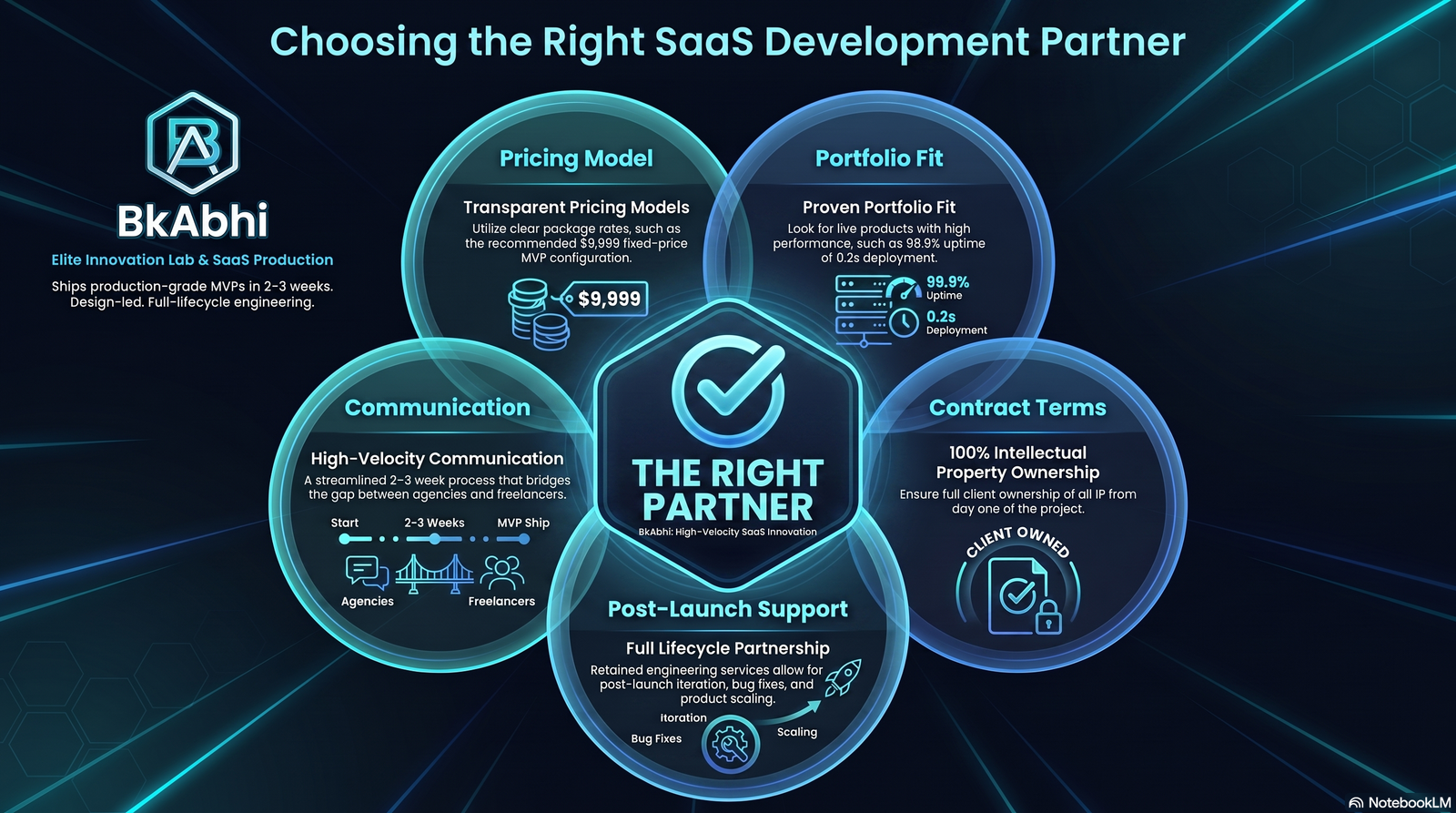
Most founders start their search with a Google query and a handful of directory listings. That’s a fine starting point, but directories rarely tell you how an agency actually works once the contract is signed.
A rushed decision is expensive. Industry data consistently shows that a large share of software project overruns trace back to scope creep and poor upfront alignment, not bad code.
That’s why taking time to perform an MVP development company comparison is one of the smartest investments a founder can make before signing a contract.
When you compare companies based on their discovery process, technical expertise, pricing transparency, communication, and long-term support, you’re far more likely to avoid costly surprises.
A well-planned MVP development company comparison helps you identify partners who ask the right questions, define clear project milestones, and deliver software that is scalable, maintainable, and aligned with your business goals.
A structured MVP development company comparison forces you to ask the right questions before money changes hands, not after.
The 5-Factor Framework for Comparing MVP Development Companies
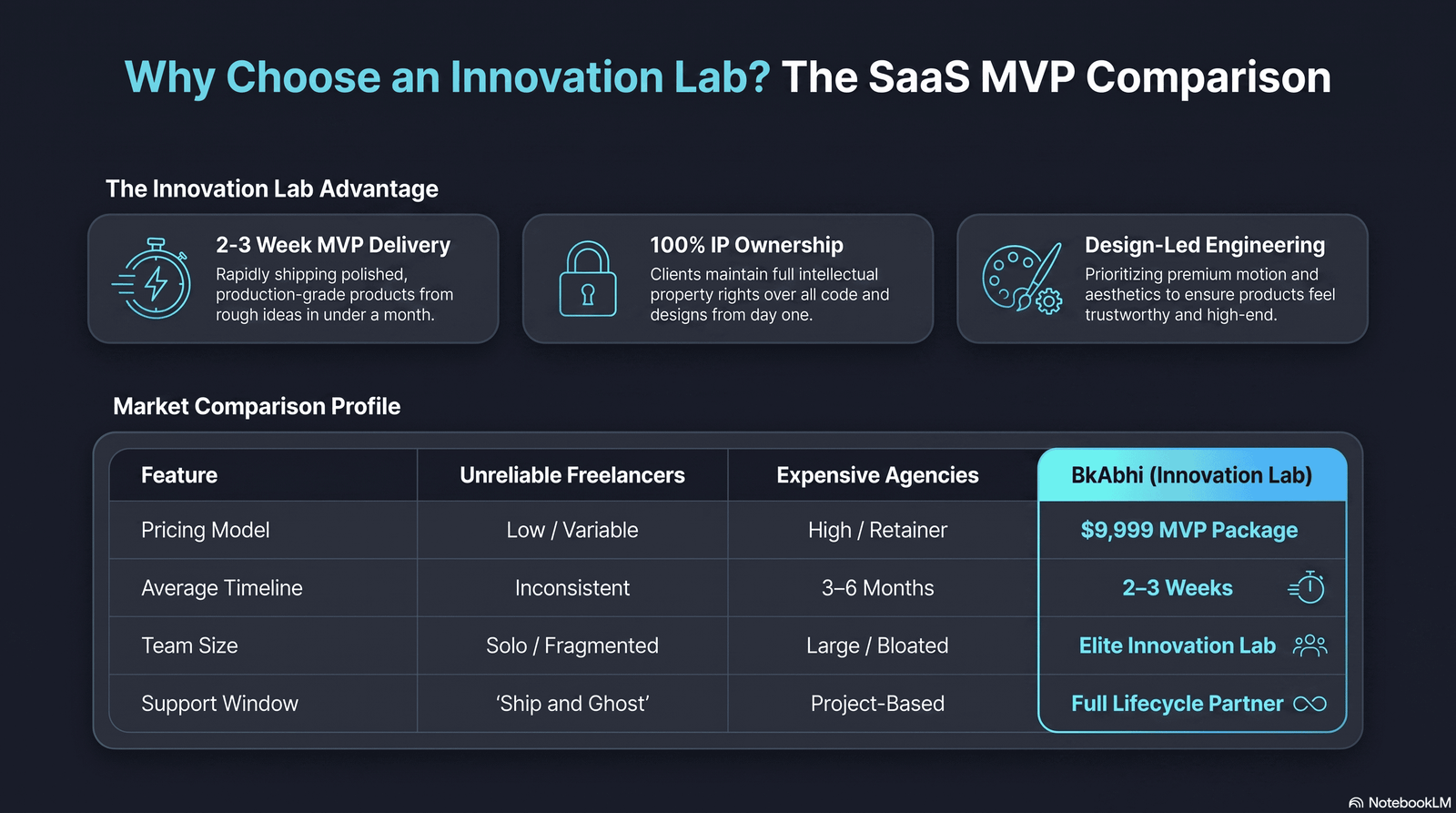
1. Pricing Model, Not Just the Number
A $25,000 fixed-scope quote and a $25,000 time-and-materials retainer are not the same commitment. Fixed-scope protects your budget; hourly billing protects the agency’s.
Ask each shortlisted company to walk you through exactly what’s included at their quoted price, and what triggers a change order. If you want the full breakdown of what different budgets actually buy, our MVP development cost guide covers the $10K-$150K range in detail.
2. Portfolio Relevance, Not Portfolio Size
A 200-project portfolio means little if none of those projects match your industry or complexity. A fintech MVP has compliance and security needs a marketplace app doesn’t.
Ask for two or three case studies in your specific vertical, and ask what went wrong on at least one of them. Agencies that only show wins are hiding the part you actually need to hear.
3. Communication Cadence and Process
The best technical team is worthless if you find out about a blocker three weeks late. Ask how often you’ll see working software, not just a status update.
Weekly demos, a shared project board, and a single point of contact are the baseline, not the bonus.
4. Contract Terms and IP Ownership
Every serious comparison needs a line-by-line look at the contract, especially IP ownership, milestone payments, and exit clauses.
This is one area founders skip because it feels like a formality — until it isn’t. We’ve laid out the twelve clauses worth reviewing in our MVP development contract checklist.
5. Post-Launch Support and Handoff
An MVP that launches and then has no one to fix the first production bug is a liability. Ask what happens in week one after launch, and whether documentation and codebase handoff are included by default.
Types of MVP Development Companies: A Quick Comparison
Not every provider fits every founder. Here’s how the main categories stack up before you go deeper on any single company.
| Type | Typical Cost | Best For | Trade-Off |
|---|---|---|---|
| Boutique MVP agency | $30K-$100K | Funded startups needing speed and process | Higher day-rate than freelancers |
| Freelancer or small team | $10K-$40K | Solo founders validating a single feature | Less process, higher key-person risk |
| Offshore development shop | $15K-$60K | Budget-constrained teams comfortable managing remotely | Timezone and communication overhead |
| Enterprise digital agency | $100K-$250K+ | Corporate innovation labs, not lean startups | Overkill for a true MVP |
| In-house hire | $8K-$15K/month per dev | Founders with runway for a long-term team | Slow to assemble, no built-in process |
If you’re still deciding between hiring internally versus outsourcing altogether, our in-house vs outsourced MVP development breakdown walks through the runway math for each path.
How to Actually Run the Comparison Process
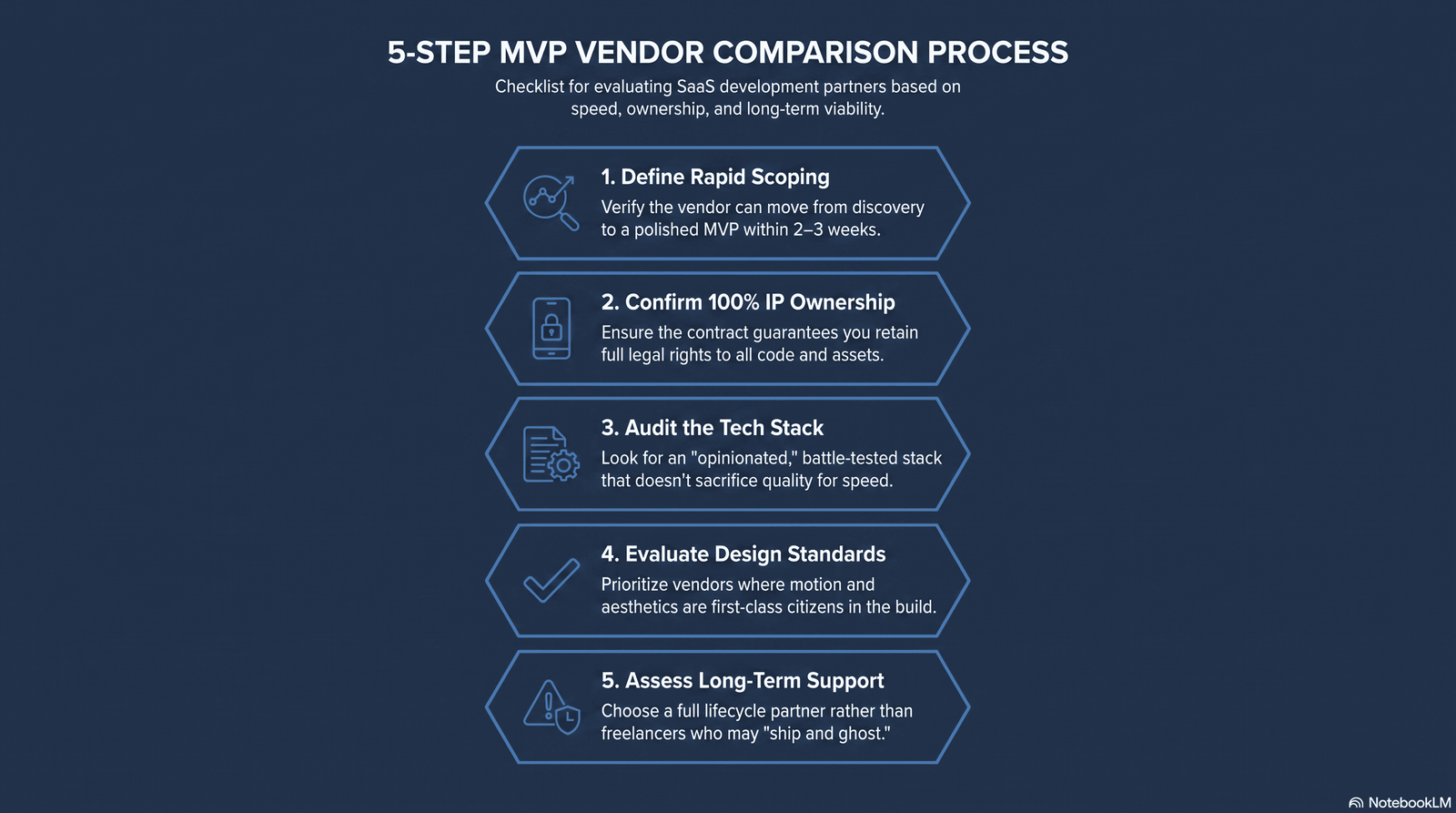
A comparison only works if it’s structured the same way across every candidate. Here’s a founder-tested sequence.
Step 1: Build a Shortlist of 4-6 Companies
Pull names from directories like Clutch and GoodFirms, but verify every listing independently — paid placement and review volume don’t equal quality fit. Our guide on vetting MVP development company rankings explains exactly how those directories can mislead you.
Step 2: Run the Same Discovery Call Script With Each
Ask identical questions across every call so answers are genuinely comparable. We’ve published the exact script, including follow-up questions, in our questions to ask an MVP development company guide.
Step 3: Request a Written Proposal, Not Just a Verbal Quote
A real proposal includes scope, timeline, payment milestones, and what’s explicitly excluded. If a company won’t put pricing in writing before a deposit, treat that as a signal.
Step 4: Check References Beyond the Provided List
Ask for one client reference the agency didn’t proactively offer. Most won’t have one ready, and that’s fine — but ask anyway, and listen for hesitation.
Step 5: Watch for Red Flags During the Sales Process
How a company behaves during the pitch is often how they’ll behave mid-project. We’ve documented the specific warning signs in our MVP development red flags checklist — vague timelines, pressure to sign fast, and refusal to name a technical lead are three of the biggest.
Where to Find Genuinely Strong Candidates
Directory rankings are a starting point, not a verdict. Once you understand how those rankings are compiled, it’s worth looking at curated shortlists that filter for startup-specific experience rather than general software development.
Our roundup of top MVP development companies for startups breaks down providers by budget tier and industry specialty, so you’re not starting your comparison from a blank page.
For a specifically US-focused budget breakdown, our MVP development cost in the USA guide is a useful companion piece.
Comparing Process, Not Just the Pitch: What a Real Build Looks Like
Most sales calls sound similar — “agile,” “transparent,” “founder-friendly.” The difference shows up in the actual seven-stage build process, from idea validation through post-launch iteration.
If a company can’t clearly walk you through their stage-by-stage process on the first call, that’s worth noting. Our full breakdown of the MVP development process is a useful benchmark to compare any agency’s pitch against.
At BkAbhi, we run fixed-scope, fixed-timeline engagements with weekly demos and milestone-based payments, specifically because founders comparing vendors need to see progress, not just promises. You can see how that approach is structured on the BkAbhi homepage.
Onshore, Offshore, or Hybrid: Factoring Location Into Your Comparison
Location changes more than the hourly rate. It changes overlap hours, response time on urgent bugs, and how easily you can jump on an ad-hoc call.
A hybrid model — a US or Europe-based lead paired with an offshore build team — is increasingly common because it balances cost against communication speed. Ask any offshore-heavy vendor how much daily overlap you’ll actually get with your core working hours.
Our detailed cost-versus-risk breakdown in the offshore vs onshore MVP development comparison is worth reading before you rule either option out based on price alone.
Comparing Design Quality, Not Just Engineering Output
Engineering gets most of the attention in vendor comparisons, but weak UI/UX is one of the fastest ways to sink an otherwise solid MVP. A functional product that’s confusing to use won’t get the user feedback you’re building it to collect.
When you’re reviewing portfolios, ask specifically to see design files or a Figma walkthrough, not just the finished screenshots. A team that can show you their design reasoning — not just the output — is usually stronger at solving problems you haven’t thought of yet.
Industry Context Changes the Comparison Too
A SaaS MVP and a healthtech MVP are not evaluated the same way. Compliance requirements, data handling, and integration complexity shift what “experienced” actually means for a given vendor.
Before finalizing a comparison, check whether your shortlisted companies have shipped in your specific industry. Our breakdown of MVP development across SaaS, fintech, and healthtech explains how the build differs by sector.
A Simple Scorecard for Your Comparison
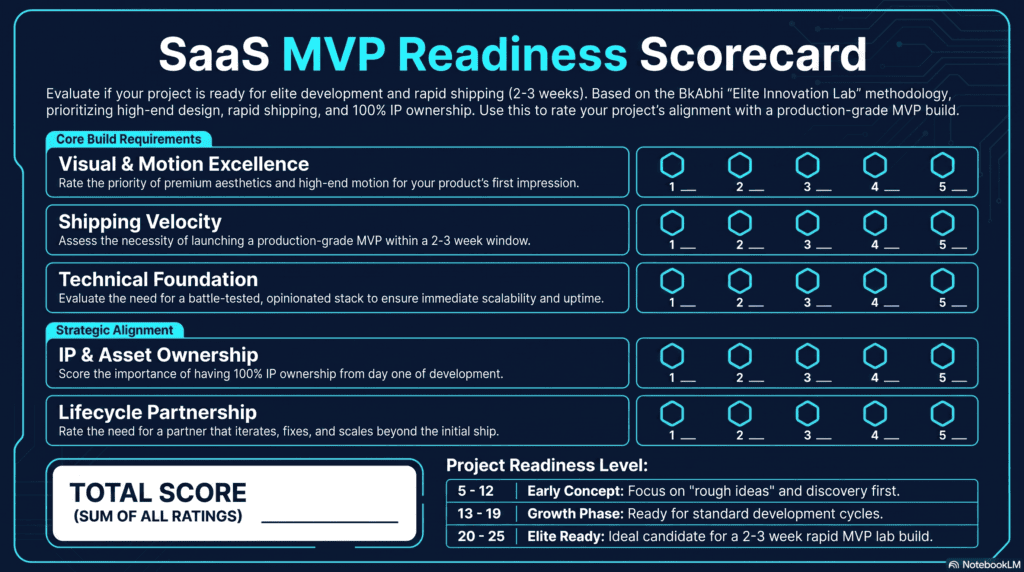
Scoring each vendor numerically removes gut-feeling bias from the final call. Rate every company 1-5 on each factor, then total the scores.
| Criteria | Weight | What “5” Looks Like |
|---|---|---|
| Pricing clarity | High | Written fixed-scope quote with named exclusions |
| Portfolio fit | High | 2+ shipped projects in your exact industry |
| Communication cadence | Medium | Weekly demos, single point of contact |
| Contract quality | High | Clear IP ownership, defined milestones |
| Post-launch support | Medium | Handoff docs and a defined support window |
A vendor scoring below 15 out of 25 rarely turns into a smooth engagement, even if the sales pitch was strong.
Common Mistakes Founders Make During the Comparison Process
Comparing quotes without comparing scope. A lower number often means fewer features, not better efficiency. Line up what’s actually included before ranking by price.
Skipping the technical interview. Sales calls are run by sales people. Ask to speak with the engineer or lead who will actually build your product before signing anything.
Ignoring timezone and communication overlap. A great offshore team with zero overlapping working hours can quietly add weeks to your timeline through delayed feedback loops.
Treating the first proposal as final. Most agencies expect negotiation on scope and payment terms. Push back once before accepting.
Not reading the exit clause. Every contract should specify what happens if either side wants out mid-project, including who owns the code at that point.
How Long Should a Proper Comparison Take?
Most founders can run a complete comparison — shortlist, discovery calls, proposals, reference checks — in two to three weeks. Rushing this to a few days usually means skipping the reference check, which is where the most useful red flags surface.
Stretching it beyond a month tends to burn calendar time without adding new information. Once you’ve spoken to four or five vendors using the same script, additional calls rarely change the outcome.
What to Expect After You Choose a Partner
Once you’ve picked a company, the relationship should start with a written kickoff document restating scope, timeline, and payment milestones — not just a Slack invite. If that document doesn’t show up before the first payment, it’s a signal worth revisiting.
A well-run MVP build should give you visibility into progress every week, not just at the end of each month. That visibility is what separates a comparison that paid off from one that didn’t.
Frequently Asked Questions
How many MVP development companies should I compare before deciding? Four to six is usually enough. Fewer than three limits your data points; more than six slows the decision without meaningfully improving it.
Is the cheapest MVP development company ever the right choice? Rarely on its own. Low price paired with vague scope is the most common source of budget overruns once a project starts.
Should I compare offshore and onshore companies together? Yes, as long as you weight communication overhead and timezone overlap into the comparison, not just the hourly rate.
What’s the single biggest mistake founders make when comparing vendors? Comparing only price and timeline while skipping contract terms and IP ownership — the two things that matter most if the relationship goes wrong.
Do MVP development company rankings on Clutch or GoodFirms reflect real quality? Partially. Review volume and paid placement both influence rankings, so they’re a starting filter, not a final verdict.
Should I sign with the first MVP development company that impresses me on a call? Only if you’ve already run at least two other discovery calls using the same questions. A single strong impression isn’t a comparison.
How much should a discovery call reveal about pricing? A credible company should give you a realistic budget range on the first call, even before a formal proposal — vague non-answers here are a red flag worth noting.
Is it worth paying more for a company with a longer track record? Sometimes. Track record matters most when your product has compliance, security, or scale requirements a newer team hasn’t handled before.
A Realistic Timeline for Going From Comparison to Kickoff
Week one is shortlisting and initial outreach. Week two is discovery calls and proposal requests. Week three is reference checks, contract review, and negotiation. By the start of week four, most founders are ready to sign.
Trying to compress this into a few days usually means one of the five factors — most often the contract review — gets skipped entirely. That’s the one that tends to matter most if something goes wrong six weeks into the build.
If a vendor pressures you to sign within 48 hours of your first call, treat that urgency itself as a data point in the comparison, not a reason to skip steps.
Final Thoughts
A good MVP development company comparison isn’t about finding the agency with the most five-star reviews. It’s about matching pricing model, process, and contract terms to your specific stage and industry.
Run the same five-factor framework across every candidate, ask for a written proposal, and don’t skip the contract review. That combination catches most of the expensive mistakes before they happen.
If you’re ready to talk through your specific MVP scope and budget, you can start that conversation on the BkAbhi homepage.
Author Bio
Jeevesh Tripathi is a startup product researcher who has spent years evaluating software vendors, build partners, and MVP delivery models for early-stage founders. His work focuses on helping non-technical founders make informed, low-risk decisions when comparing MVP development companies.
Contact: jeevesh@bkabhi.com
This article is reviewed for accuracy and updated periodically to reflect current market pricing and industry practices, in line with Google’s guidance on producing helpful, people-first content.