
A SaaS product can have an attractive interface, paying customers and a working application while hiding technical problems that create serious risks later. Unmanaged dependencies, poor documentation, vulnerabilities and ambiguous ownership can impact product stability and make future development expensive. This can also impact the business value.
These issues may not be highlighted during a product demo and are often identified when looking at the software deeper by investors, potential buyers, enterprise customers or tech advisors.
Using a SaaS Technical Due Diligence Checklist will help founders and assessors identify technical risks associated with the application. The checklist includes looking at architecture, source code, infrastructure, security, data handling and development processes.
This is not about ensuring all applications are using the latest technology. It’s to establish whether the existing software is maintainable, secure, reliable and capable of supporting the company’s business plans.
This guide explains what to review, which documents to prepare, what warning signs to investigate and how to organize findings before a technical assessment.
Table of Contents
What Is SaaS Technical Due Diligence?
SaaS technical due diligence is a structured assessment of a software product’s technology, engineering practices and operational capabilities.
Does the product offer sustainable functionality without introducing any unacceptable technical, financial or security risks?
Technical due diligence looks at the architecture of the different components of the software including the applications, databases, infrastructure, integrations, security framework, development processes and any relevant intellectual property.
This may be requested by multiple parties:
- Investors – Understanding if the technology will support the company’s growth objectives and whether there are any engineering risks that could impact investment.
- Potential acquirers: To identify technical liabilities, ownership problems, maintenance requirements and integration challenges before purchasing a SaaS business.
- Enterprise customers: To evaluate security, reliability, data protection and operational dependencies before adopting the software.
- Founders: To understand the current condition of their product before fundraising, expanding into new markets or making significant engineering investments.
Imagine a start-up with 500 paying customers and a growing subscription model. The application performs well but the backend uses an old framework. Database backups have never been recovered in a test environment and only one developer knows how it’s deployed.
These issues will be highlighted during a technical due diligence review and help you understand how much work is required to fix them.
The evaluation should also show you what is definitely an issue, what could be an issue and any recommendations. For example, if a document isn’t present this doesn’t necessarily mean there isn’t a security control in place.
Why Is Technical Due Diligence Important for SaaS Companies?
These technical challenges can have an effect on your customers, cost of operations, enterprise sales and time-to-market.
Having a structured review will help stakeholders gain clarity around these issues so they can make key business decisions.
1. Identify Hidden Technical Debt
Technical debt occurs when you have taken short cuts in your solution, dependencies that are old or architectural constraints. A lot of technical debt is acceptable in the beginning stages of building a product. Issues occur when there is no documentation and plan to resolve these short cuts.
Reviewers should identify:
- Outdated frameworks and libraries.
- Duplicate or unnecessarily complex code.
- Missing automated tests.
- Poorly structured database queries.
- Hardcoded configuration values.
- Unmaintained third-party integrations.
- Components that are difficult to modify.
This should give an understanding of the business impact.
2. Evaluate Security and Data Protection
SaaS applications often store customer information, business records, payment-related information and other sensitive data.
A security issue can lead to customer data being accessed without authorisation and cause legal and contractual issues.
During technical due diligence, we will look at how you authenticate, authorise, encrypt, control access to your data, manage any vulnerabilities and respond to incidents.
3. Understand Future Scalability
A system that works well for a small amount of users may have scalability issues.
It’s important to understand how well your current architecture will cope with the traffic, database size, background processes and extra integrations you expect to see.
Not every start-up will need a microservices architecture.
This doesn’t mean every startup needs a microservices architecture. A well-organized monolithic application may be sufficient for many products.
Is your architecture suitable for your current needs? Can it easily be adjusted for future changes?
4. Verify Software Ownership
A company should be able to establish that it has the necessary rights to use, modify and commercially operate its software.
Reviewing employment contracts, contractors, licences and ownership of key parts of the code.
Having unclear IP rights can make raising funding, acquisition talks and enterprise partnerships complex.
5. Estimate Future Engineering Costs
An application may appear inexpensive to operate because the company hasn’t yet addressed its maintenance requirements.
A technical review can highlight what future costs you may have for upgrading infrastructure, fixing security issues, optimising databases, test automation and modernising legacy systems.
This helps to give founders a realistic idea of what the engineering costs are going to be.
SaaS Technical Due Diligence Checklist: 10 Important Areas
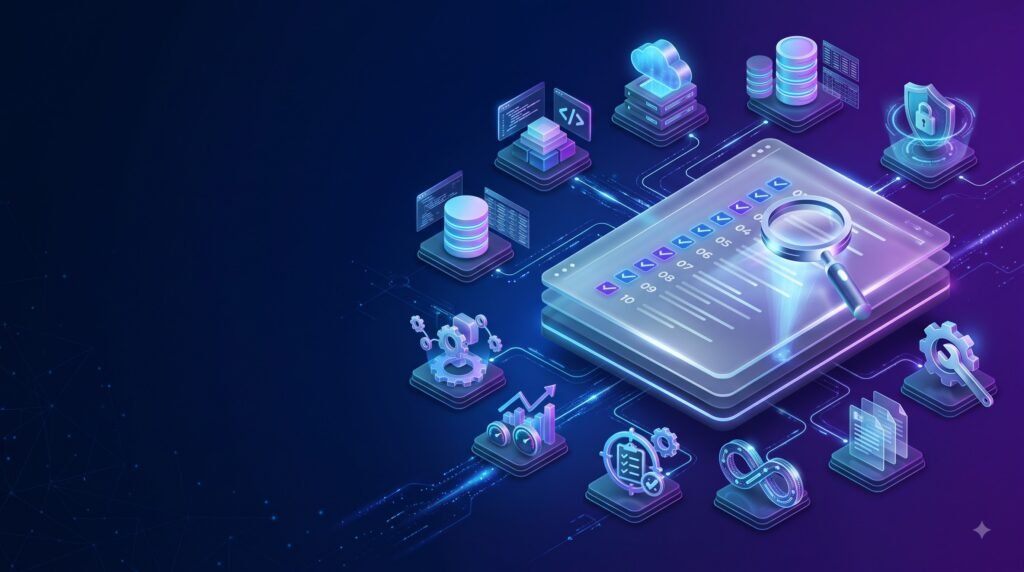
The following checklist covers the main technical areas that founders, investors and engineering reviewers should examine.
1. Software Architecture and System Design
Architecture determines how the application’s components communicate, store information and handle business operations.
Reviewers should understand the overall system before examining individual files or functions.
What to check:
- Application architecture diagrams.
- Frontend and backend separation.
- API structure and communication methods.
- Database architecture.
- Third-party service dependencies.
- Background jobs and asynchronous processing.
- Authentication and authorization design.
- Multi-tenant architecture.
- Environment separation between development, staging and production.
- Documented architectural decisions.
Documents and evidence to request:
- Current system architecture diagram.
- API documentation.
- Database relationship diagrams.
- Infrastructure diagrams.
- Architecture decision records.
- List of external integrations.
Warning signs:
- No reliable architecture documentation.
- Business logic distributed inconsistently across components.
- Critical functionality depending on undocumented services.
- Database access patterns that create unnecessary dependencies.
- No clear separation between customer-facing and administrative functionality.
A useful assessment compares the architecture documentation with the actual deployed application. Diagrams alone cannot prove that the system operates as described.
2. Source Code Quality and Maintainability
Source code quality affects how easily a development team can maintain, troubleshoot and extend a SaaS product.
A product doesn’t need perfectly formatted code to be commercially useful. However, developers should be able to understand important functionality without depending entirely on the original author.
What to check:
- Repository structure and organization.
- Coding conventions.
- Naming and documentation practices.
- Duplicate functionality.
- Complex or tightly coupled modules.
- Error handling.
- Configuration management.
- Code review procedures.
- Unused dependencies and abandoned packages.
- Recent development activity.
Documents and evidence to request:
- Source code repository access.
- Repository contribution guidelines.
- Recent pull requests.
- Code review records.
- Dependency manifests and lockfiles.
- Technical debt register.
- Development documentation.
Warning signs:
- No meaningful code review process.
- Important business logic exists only in undocumented modules.
- Production configuration is hardcoded.
- Critical code is maintained outside the company’s controlled repositories.
- Developers cannot reproduce the application from the available instructions.
Review a representative sample of important application flows rather than judging the entire codebase from a few isolated files.
3. Application Security and Vulnerability Management
Security should be assessed through implemented controls and available testing evidence, not simply statements that the application is secure.
The OWASP Application Security Verification Standard provides a structured reference for evaluating application security requirements. Its current stable version, ASVS 5.0.0, was published in May 2025.
What to check:
- Authentication and password management.
- Multi-factor authentication where appropriate.
- Role-based access control.
- API authorization.
- Input validation.
- Protection against common web vulnerabilities.
- Encryption in transit and at rest.
- Secret and credential management.
- Dependency vulnerability scanning.
- Security logging.
- Vulnerability remediation procedures.
- Penetration testing records.
Documents and evidence to request:
- Security assessment reports.
- Vulnerability scan results.
- Penetration testing reports.
- Security policies.
- Authentication and authorization documentation.
- Dependency scanning reports.
- Incident response procedures.
- Security remediation records.
Warning signs:
- Exposed API keys or credentials.
- Excessive administrative privileges.
- Unpatched critical vulnerabilities.
- Missing authorization checks.
- Sensitive information appearing in application logs.
- No documented process for responding to security incidents.
Security testing should be proportionate to the product’s risk, the information it processes and the customers it serves.
4. Database Design and Data Management
Databases are central to most SaaS applications. Poor database design can affect application performance, data integrity and the ability to introduce new functionality.
Reviewers should examine how information is stored, accessed, protected and recovered.
What to check:
- Database schema and relationships.
- Indexing strategies.
- Query performance.
- Data validation.
- Database access permissions.
- Data encryption.
- Backup schedules.
- Recovery procedures.
- Data retention and deletion.
- Data export and portability.
- Database migration history.
For multi-tenant SaaS products, tenant isolation deserves particular attention.
A customer should not be able to access another customer’s information by changing an identifier in a URL, modifying an API request or manipulating application parameters.
Documents and evidence to request:
- Database schema diagrams.
- Data flow documentation.
- Backup configuration.
- Backup restoration test results.
- Database performance reports.
- Data retention policies.
- Data deletion procedures.
- Tenant isolation test results.
Warning signs:
- Unrestricted database access.
- Missing backup restoration tests.
- Inconsistent customer data separation.
- Slow queries affecting common workflows.
- No documented data deletion process.
Reviewers should verify actual restoration and access-control tests instead of relying only on written policies.
5. Infrastructure, Cloud Hosting and Deployment
Infrastructure determines how the SaaS application is hosted, deployed and maintained.
A product might work correctly in development but behave differently in production because of configuration problems, resource limitations or inconsistent environments.
What to check:
- Cloud hosting architecture.
- Server and database configurations.
- Network security.
- Environment variables and secrets.
- Containerization where applicable.
- Deployment automation.
- Infrastructure monitoring.
- Resource utilization.
- Scaling configurations.
- Backup and disaster recovery arrangements.
- Infrastructure access permissions.
Documents and evidence to request:
- Cloud architecture diagrams.
- Infrastructure configuration files.
- Deployment documentation.
- CI/CD pipeline configuration.
- Infrastructure access policies.
- Cloud billing records.
- Backup and disaster recovery documentation.
Warning signs:
- Manual production deployments without reliable records.
- No staging environment for important changes.
- Shared credentials across multiple developers.
- Uncontrolled cloud resource consumption.
- No recovery plan for critical infrastructure failures.
The reviewer should also examine whether infrastructure access is controlled and whether changes to production systems can be traced to authorized individuals.
6. Scalability and Application Performance
Scalability is the ability of a system to handle increasing usage without unacceptable degradation in performance or reliability.
It should be evaluated against realistic growth expectations rather than hypothetical millions of users.
What to check:
- API response times.
- Database query performance.
- Concurrent user capacity.
- Background job processing.
- Caching implementation.
- Application resource consumption.
- Load testing results.
- Error rates.
- Performance bottlenecks.
- Third-party API rate limits.
Documents and evidence to request:
- Load testing reports.
- Performance monitoring dashboards.
- Application performance monitoring records.
- Database performance reports.
- Historical incident records.
- Capacity planning documentation.
Warning signs:
- Application slowdowns during normal usage peaks.
- Database bottlenecks.
- Uncontrolled background job queues.
- No performance testing.
- Critical functionality depending on a single overloaded service.
A practical assessment should test representative user journeys and identify what happens when demand increases.
7. Testing, QA and Release Management
A SaaS product requires a repeatable process for introducing changes without breaking existing functionality.
Testing is particularly important when the application has multiple user roles, subscription plans, integrations and customer-specific configurations.
What to check:
- Unit testing.
- Integration testing.
- End-to-end testing.
- Automated regression testing.
- API testing.
- Security testing.
- Performance testing.
- User acceptance testing.
- Release approvals.
- Rollback procedures.
- Production bug tracking.
Documents and evidence to request:
- Test strategy.
- Automated test reports.
- Test coverage reports.
- Regression test suites.
- Release notes.
- Bug tracking records.
- Deployment history.
- Rollback documentation.
Warning signs:
- Production releases without adequate testing.
- Critical workflows lacking automated regression tests.
- Repeated bugs after deployments.
- No rollback procedure.
- Testing performed only by the developer who wrote the feature.
Reviewers should examine recent changes and trace them from development through testing and production deployment.
8. Third-Party Integrations and Software Dependencies
Most SaaS products depend on external services for payments, authentication, communication, analytics, hosting or AI functionality.
These integrations can introduce operational dependencies and additional security or licensing risks.
What to check:
- Third-party APIs.
- Payment gateway integrations.
- Authentication providers.
- Email and communication services.
- Analytics platforms.
- AI model providers.
- Open-source dependencies.
- Software licence obligations.
- API rate limits.
- Vendor pricing and contract terms.
- Service replacement options.
Documents and evidence to request:
- Third-party service inventory.
- Dependency manifests.
- Software bill of materials where available.
- Open-source licence inventory.
- Vendor agreements.
- API integration documentation.
- Dependency vulnerability reports.
Warning signs:
- Critical functionality depending on one external provider without a fallback plan.
- Unmaintained libraries.
- Unknown software licence obligations.
- Vendor agreements that restrict intended commercial use.
- Integrations relying on unsupported API versions.
For AI-powered SaaS applications, reviewers should also examine model-provider terms, customer data handling, model evaluation practices and the cost of inference.
9. Intellectual Property and Software Ownership
Intellectual property ownership is an important part of technical due diligence, particularly during fundraising and acquisition.
A company should be able to demonstrate that it has the necessary rights to its software and other important digital assets.
What to check:
- Employee intellectual property assignment agreements.
- Contractor agreements.
- Software development contracts.
- Open-source licence obligations.
- Proprietary code ownership.
- Third-party software restrictions.
- Commercial software licences.
- Repository ownership and administrative access.
- Documentation and design asset ownership.
- AI-generated code review and provenance procedures.
Documents and evidence to request:
- Employment agreements.
- Contractor IP assignment agreements.
- Development vendor contracts.
- Open-source software inventory.
- Commercial licence records.
- Repository ownership documentation.
- IP-related legal records.
Warning signs:
- Former contractors retaining unclear ownership rights.
- Critical source code stored in personal accounts.
- Missing intellectual property assignments.
- Licence obligations that conflict with the intended distribution model.
- Unclear ownership of important third-party components.
Legal counsel should review ownership agreements and licence obligations. A technical reviewer can identify dependencies and missing evidence, but should not independently determine complex legal rights.
10. Engineering Team, Documentation and Operational Readiness
A product’s long-term maintainability depends partly on the people responsible for developing and operating it.
An application can have good architecture and still carry operational risk if only one developer knows how it works.
What to check:
- Engineering team structure.
- Code ownership.
- Technical documentation.
- Developer onboarding.
- Incident management responsibilities.
- Release responsibilities.
- Knowledge sharing.
- On-call arrangements.
- Contractor dependencies.
- Technical decision-making processes.
Documents and evidence to request:
- Engineering team structure.
- Technical onboarding documentation.
- System runbooks.
- Incident reports.
- Release procedures.
- Responsibility assignments.
- Development workflow documentation.
Warning signs:
- Single-person dependency for critical systems.
- Missing onboarding documentation.
- No clear production incident ownership.
- Unrecorded architectural decisions.
- Developers unable to maintain systems created by former team members.
A useful review includes conversations with engineers who work on the product regularly, not only senior management.
Technical Due Diligence Checklist for AI-Powered SaaS Products
AI-powered SaaS applications introduce additional technical considerations because their functionality depends on models, training or reference data, external providers and automated decision-making.
This may not be captured in a regular software evaluation.
If there are any AI features within your product consider the following:
1. AI Model and Provider Dependencies
- Identify every model and AI provider used.
- Document model and API versions
- Ensure there is clarity on provider terms and data processing agreements
- Are customer details provided to third party providers?
- Are there any rate limiting requirements from providers?
- What are the alternatives if model provider changes their pricing or terms?
2. AI Data Management
- Identify the data used for retrieval, processing or fine-tuning.
- Audit Data Collection & Usage Permissions
- Audit Customer Data Isolation
- Audit Document Ingestion & Deletion
- Audit Access to Embeddings and Vector Databases
- Audit that Sensitive Information is not Exposed in Prompts or Logs
3. Model Evaluation and Monitoring
- Review AI evaluation datasets.
- Examine test results for important use cases.
- Check how prompt and model changes are validated.
- Review hallucination and output-quality monitoring.
- Identify human review requirements.
- Examine procedures for handling inaccurate or harmful outputs.
4. AI Application Costs
- Review token consumption and inference expenses.
- Calculate approximate cost per AI-enabled workflow.
- Examine model usage limits.
- Identify unusually expensive customer workloads.
- Caching / Optimising Requests
- Consider how using more will impact gross margins.
5. AI-Generated Code and Development Practices
If your engineering team are using AI coding tools, make sure you’re checking the validation of any code generated by these tools.
Are developers validating the code? Are they running automated tests, scanning dependencies and ensuring security focused features are correct before deployment?
AI-generated code should be treated like other externally assisted code: it requires engineering review, testing and clear ownership records.
These checks are particularly relevant when a SaaS product uses generative AI as a core part of its customer-facing functionality.
How to Prepare for a SaaS Technical Due Diligence Review
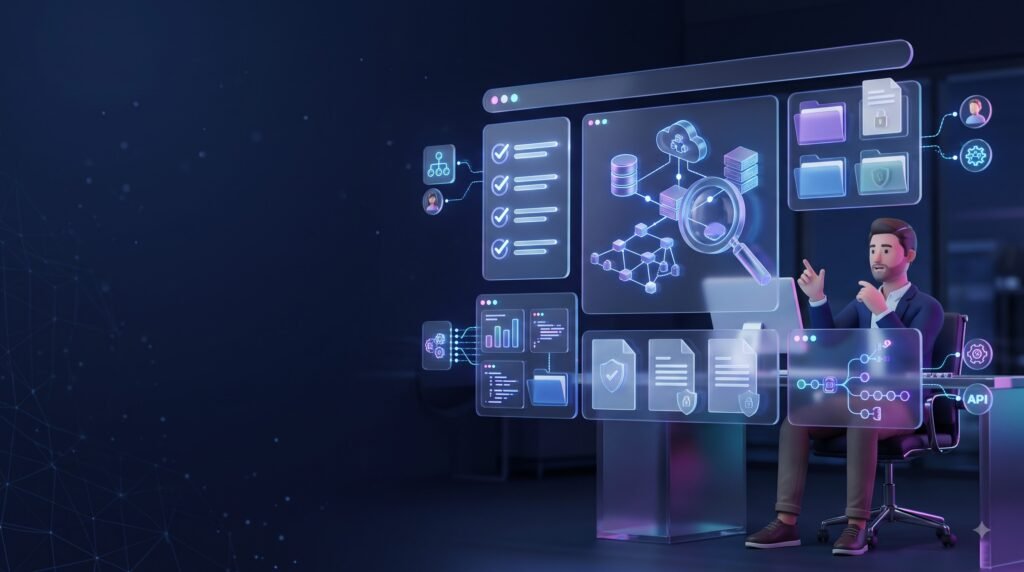
A technical assessment becomes easier to manage when the company prepares its documentation and engineering evidence in advance.
Founders don’t need to fix every technical issue before the review. They do need a clear understanding of the product’s current condition.
Step 1: Define the Purpose of the Review
This will depend on the type of person carrying out the review. Investors may want to know about the scalability, technical debt and roadmap. Enterprise customers may be interested in knowing about security, availability and data. An acquisition team may ask more about software licensing and integration.
Create a short document explaining:
- Purpose of the assessment.
- Systems included in the review.
- Important business assumptions.
- Relevant technical stakeholders.
- Expected timeline.
- Required deliverables.
Step 2: Organize a Technical Data Room
Set up a central place to house your technical documents. This should be restricted to those who need access.
A practical structure could include:
Folder 1: Architecture
- Architecture diagrams.
- Technology stack.
- API documentation.
- Database diagrams.
Folder 2: Source Code
- Repository information.
- Development guidelines.
- Dependency inventories.
- Code review records.
Folder 3: Security
- Security policies.
- Vulnerability reports.
- Penetration testing results.
- Incident response documentation.
Folder 4: Infrastructure
- Cloud architecture.
- Deployment procedures.
- CI/CD configuration.
- Backup and recovery records.
Folder 5: Testing and Performance
- Automated testing reports.
- Load testing results.
- Performance monitoring.
- Release history.
Folder 6: Legal and Ownership
- IP assignment agreements.
- Contractor agreements.
- Open-source licence records.
- Third-party software agreements.
Folder 7: Engineering Operations
- Team responsibilities.
- Onboarding documents.
- Runbooks.
- Incident records.
Where possible everything should be set to read only. Don’t share any live credentials, customer data or admin access in order to make the process easier.
Step 3: Conduct an Internal Technical Assessment
Before an external reviewer begins, ask the engineering team to examine the major areas of the application.
Focus on any areas that may impact on customer data, live availability, licensing or any key functionality.
Useful activities include:
- Running dependency vulnerability scans.
- Reviewing application permissions.
- Testing database restoration.
- Examining important application workflows.
- Reviewing infrastructure configurations.
- Checking deployment automation.
- Identify any legacy dependencies.
- Review technical documents.
Document what you find.
Step 4: Interview the Engineering Team
The technical documentation will show how things should work but by interviewing the engineering team you can identify how they actually work.
Ask them questions such as:
- What parts of the application are hardest to maintain?
- What happens if the main database goes down?
- Which external services are critical to the product?
- How are production releases tested and approved?
- What technical debt could affect the next development phase?
- Which systems depend heavily on one developer?
- How are security incidents detected and handled?
The objective is to understand actual engineering practices rather than receive idealized descriptions.
Step 5: Prepare a Remediation Roadmap
Not every issue requires immediate attention.
Create a remediation plan that identifies the business impact, severity, responsible person, estimated effort and expected completion date.
For example, a missing backup restoration test might require immediate attention if customer data is business-critical. Refactoring an older internal module may be scheduled for a later development cycle if it creates limited operational risk. A structured SaaS technical due diligence checklist can help teams identify critical technical gaps, assess potential risks, and prioritize improvements before making investment or development decisions.
This approach gives reviewers a realistic picture of the company’s ability to manage technical risks.
Common Technical Due Diligence Red Flags
Some issues deserve closer attention because they can create significant risks for a SaaS business.
| Technical red flag | Why it matters | Recommended action |
| Missing source code ownership records | Creates uncertainty about software rights | Review employee and contractor agreements |
| Exposed credentials | May allow unauthorized system access | Rotate secrets and improve access controls |
| No tested backups | Recovery capability is uncertain | Conduct restoration exercises |
| Poor tenant isolation | May expose one customer’s data to another | Perform authorization and isolation tests |
| Outdated dependencies | May introduce vulnerabilities and maintenance risks | Inventory and prioritize upgrades |
| No automated regression tests | Changes can break existing functionality | Introduce tests for critical workflows |
| Uncontrolled cloud spending | Infrastructure costs may increase unpredictably | Establish resource and cost monitoring |
| Missing deployment documentation | Releases may depend on individual knowledge | Document and automate deployment |
| Single-developer dependency | Creates operational continuity risks | Improve documentation and knowledge sharing |
| Undocumented AI dependencies | Creates uncertainty around cost, data and provider risk | Document models, contracts and evaluation processes |
A red flag doesn’t automatically mean that an investment or acquisition should stop.
Its significance depends on the likelihood of the problem, its potential impact, the cost of remediation and whether the company has a credible plan to address it.
How to Prioritize Technical Due Diligence Findings
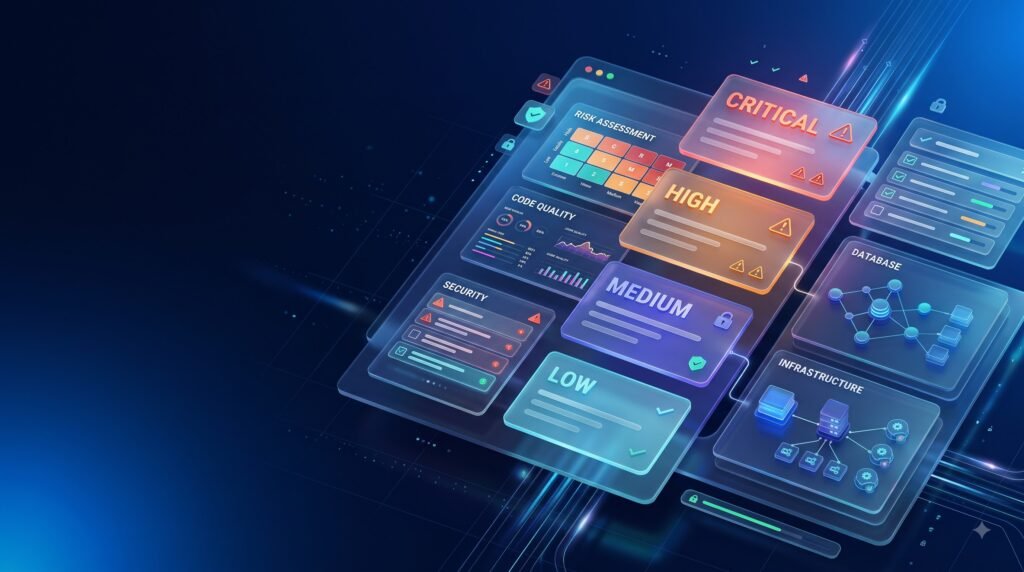
A technical review can produce dozens of observations. Decision makers should have a consistent process to determine what should be acted upon.
A good way to do this is by categorising issues into four risk categories.
Critical Risk
These findings may create immediate or severe exposure.
Examples:
- Unauthorized access to sensitive customer information.
- Exposed production credentials.
- Confirmed Critical Vulnerabilities in production systems
- Lack of ownership rights to key proprietary software.
Action: Should be investigated, mitigated and assessed to see if it impacts on the investment/transaction decision.
High Risk
These findings may have a significant impact on reliability, security and future development.
Examples:
- No reliable disaster recovery process.
- Serious multi-tenant isolation weaknesses.
- Major outdated dependencies with relevant security exposure.
- Important production systems with no operational backup.
Recommended response: Prepare a remediation plan with an accountable owner and a defined deadline.
Medium Risk
These issues create maintainability or operational concerns but may not require immediate intervention.
Examples:
- Incomplete architecture documentation.
- Limited automated regression testing.
- Poorly documented third-party integrations.
- Repeated performance bottlenecks in non-critical workflows.
Recommended response: Add the work to the engineering roadmap and monitor progress.
Low Risk
These are improvements with limited immediate business impact.
Examples:
- Minor code duplication.
- Non-critical documentation gaps.
- Inconsistent naming conventions.
- Small internal tooling improvements.
Recommended Action: Create a remediation plan with ownership and a timescale.
Medium Risk
These are issues that could impact on maintainability or cause an issue, however do not necessarily need to be resolved immediately.
Practical Questions to Ask During SaaS Technical Due Diligence
Founders can use these questions to prepare for conversations with investors, technical advisors and potential acquirers.
Architecture
- Can the current architecture support the company’s next growth stage?
- Which components create the greatest technical dependencies?
- Are key architectural decisions documented?
Security
- How are customer accounts and permissions managed?
- How are security issues identified and resolved?
- When was the last security assessment?
Infrastructure
- How are production deployments managed?
- When was the last successful backup restoration test?
- What happens if a key cloud service goes down?
Development
- How much of the critical application functionality has automated test coverage?
- Can another developer support the application with little help?
- How are production bugs investigated and resolved?
Ownership
- Does the company have documented ownership rights over its source code?
- Are contractor agreements and software licences available?
- Are important third-party dependencies documented?
This identifies areas that require further investigation. Provide evidence, technical examples or third party confirmation to back up your answers.
How BKABHI Fits Into SaaS Product Engineering
Preparing a SaaS application for technical assessment requires attention to architecture, development quality, security and long-term maintainability.
BkAbhi Innovations Lab describes its work around MVP development, SaaS architecture, mobile experiences, AI integration and product engineering.
Its homepage also describes a retained engineering model for continued product development after launch.
These capabilities are relevant to founders who need to build and improve their software foundations as their products evolve.
For example, a startup preparing for a technical review may need to examine its application architecture, improve testing practices, organize technical documentation or address maintainability concerns.
The appropriate engineering work depends on the application’s actual condition. A technical assessment should identify the problems before recommending whether to refactor, optimize, modernize or rebuild particular components.
You can explore BkAbhi’s software development and product engineering capabilities to understand its approach to building and supporting SaaS products.
Conclusion
A SaaS technical due diligence review is about understanding the actual condition of a software product, not simply checking whether it uses modern technologies.
Architecture, code quality, security, infrastructure, scalability, data management, intellectual property and engineering processes all contribute to the long-term reliability of a SaaS business.
Using a structured SaaS technical due diligence checklist helps founders organize evidence, identify weaknesses and prepare realistic remediation plans before investors, acquirers or enterprise customers request them.
The most useful approach is to investigate issues based on their business impact, verify important claims with technical evidence and document how identified risks will be addressed.
A product doesn’t need to be technically perfect. It needs to be understandable, maintainable and supported by an engineering foundation that matches its business requirements.
Frequently Asked Questions
1. What is included in a SaaS technical due diligence checklist?
A typical SaaS technical due diligence checklist might consist of the following:
Software Architecture, Code Quality, Security, Database Design, Cloud Infrastructure, Scalability, Testing, 3rd Party Integrations, IP Ownership and Engineering Best Practices.
Depending on the purpose of the due diligence (raising funds, acquiring a business, enterprise onboarding or planning), this will change slightly.
2. Why would Investors perform Technical Due Diligence?
Investors will want to understand how the software is in the company and what the risks are.
The may look at technical debt, software ownership, security issues, scalability issues, cost of infrastructure and if the engineering team can support the product.
3. How long does SaaS technical due diligence take?
There is no universal timeline. The duration depends on the size of the application, the number of services, the depth of the review, available documentation and the speed at which the engineering team can provide evidence.
Overall, a narrow technical review will take less time than reviewing more complex services, integrations and regulated customer data.
4. What documentation is required?
Commonly requested documents include:
- Software architecture diagrams.
- Source code repository information.
- API documentation.
- Database diagrams.
- Security assessment reports.
- Infrastructure configuration.
- Deployment and CI/CD documentation.
- Automated testing reports.
- Backup and recovery records.
- Software licence agreements.
- Employee and contractor IP assignment agreements.
Depending on the scope of the review, extra documentation may be requested.
5. What are the biggest technical red flags in a SaaS company?
Red flags would include: Unclear code ownership, exposed credentials, outdated vulnerability dependencies, low customer data segregation, no backup and recovery procedures, no documentation and high dependency on 1 developer.
However, it is important to consider how severe these issues actually are.
6. Is technical due diligence the same as a software code audit?
No. An audit of source code will look at how good the code is.
A technical due diligence will look at more areas such as infrastructure, security, scalability, data handling, IP, third-party dependencies and engineering operations.
A code audit can be one component of a larger technical due diligence assessment.
7. Should startups undertake technical due diligence?
Yes. It can be very useful to carry out an assessment internally prior to fundraising.
This will allow founders to highlight any architectural issues, structure source code documentation, review security and collate evidence around their engineering processes.
This doesn’t guarantee investment, but it helps founders understand and explain the technical condition of their product.
8. How is AI-specific technical due diligence different?
AI-specific technical due diligence includes additional checks for model-provider dependencies, data permissions, model evaluation, inference costs, output monitoring and AI-generated code.
Reviewers need to understand how AI features function, the customer data they work with and how the company can cope with model performance and provider changes.
9. What happens if technical due diligence identifies any issues?
Issues will be recorded, ranked and assessed.
Any critical issues may need to be resolved immediately. Other issues may be resolved within an engineering roadmap, through additional contractual assurances or agreed investment post-acquisition.
It is important to ensure that you are being honest and transparent with your assessment and providing a clear plan going forward.
10. Can a SaaS startup pass technical due diligence without microservices?
Yes. Microservices are not a requirement for tech due diligence.
As long as the application is designed with a good architecture, it can be maintained, secured and scaled as a modular monolith.
Focus on whether the architecture is of high quality and suitable. There isn’t necessarily an architectural approach that will always be better than others.
Author Bio
Author: Jeevesh Tripathi
Email: jeevesh@bkabhi.com
Jeevesh Tripathi writes research-based articles on technology, AI, software development and SaaS. His work focuses on practical explanations, technical comparisons and evidence-based insights that help founders and businesses make informed product and engineering decisions.