
Table of Contents
Quick Answer
LegalTech software development is the process of designing and building technology that improves legal workflows such as contract management, case management, legal research, document automation, compliance, client intake, billing, and e-discovery.
Depending on the case, the right option can be different. If the software to be designed is not going to differentiate the user from competitors, the best choice may be to use an existing LegalTech SaaS platform. Meanwhile, when the process, data model, integrations, or even a particular application of artificial intelligence is going to be the main selling point, custom development should be considered. For businesses evaluating these options, BkAbhi can help frame the decision around product requirements, workflow complexity, and long-term scalability.
For startups the safest bet is to avoid designing a complete legal platform. Usually, it would be better to home in on one legal workflow, develop an MVP around it, design around the correct security, permissions, and get it approved by users before looking to scale.
What Is LegalTech Software Development?
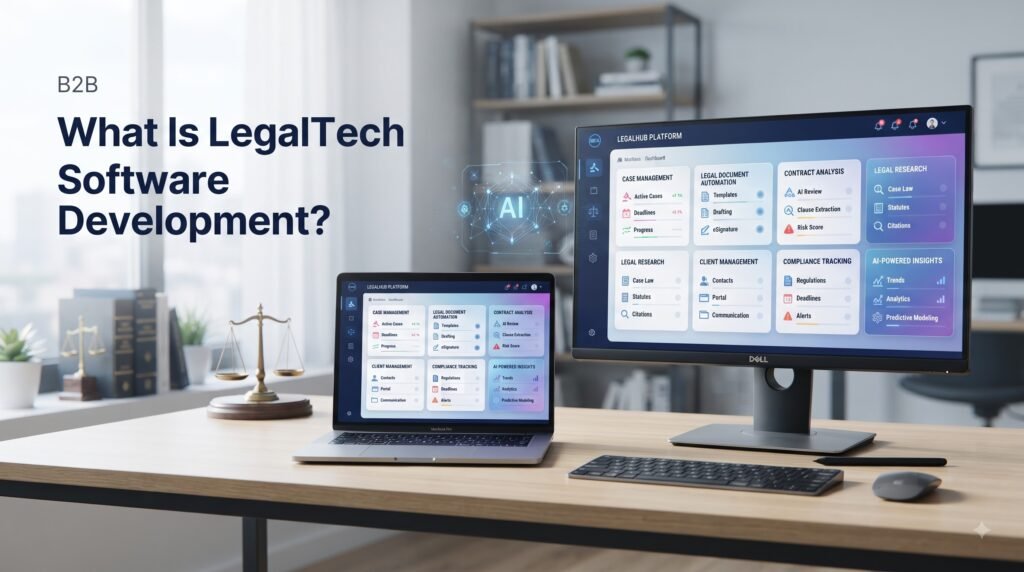
LegalTech software development combines software engineering with the operational requirements of legal work.
A LegalTech product might help a law firm organize matters, automate document generation, manage contracts, search legal information, collect client information, monitor compliance requirements, or coordinate litigation workflows.
The important distinction is that legal software isn’t simply ordinary SaaS with a legal-themed interface.
Legal systems often handle confidential documents, personally identifiable information, privileged communications, sensitive business information, deadlines, approvals and records that need to remain traceable.
That changes how the product should be designed.
For example, a generic document application may only need user accounts and file storage. A matter-management application may need users to see only the matters they’re authorized to access, maintain an audit trail of important actions, preserve document versions, and connect activities to a specific client or case.
That’s why LegalTech development should begin with the legal workflow rather than a generic feature list.
Choose the Legal Workflow Before Choosing Features
A founder might start with a list like:
- AI chatbot
- Dashboard
- Document upload
- Search
- Notifications
- Analytics
- Mobile app
That list doesn’t tell a development team what problem the product actually solves.
Instead, start with the workflow.
Example: Contract review
A simple workflow could be:
- User uploads a contract.
- System extracts the document text.
- Irrelevant clauses are highlighted.
- The system reviews these against the provided playbook.
- Possible areas of deviation are indicated.
- A lawyer reviews the findings.
- Approved changes are then documented
- The final document is stored with its version history.
That defines the true technical requirements:
- Document processing
- OCR where needed
- Secure storage
- Searching
- AI or rules-based analysis
- User permissions
- Review interfaces
- Audit trails
- Version control
- Export / integration options
The feature set is subordinate to the workflow.
Core Types of LegalTech Software
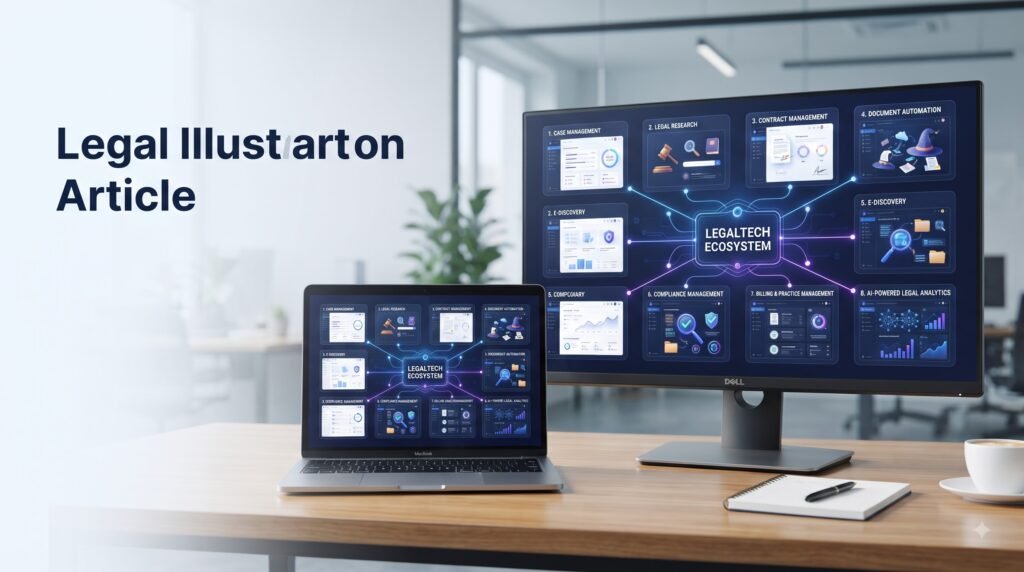
LegalTech is a broad category rather than a single product type.
Contract Lifecycle Management
CLM platforms manage contracts across stages such as creation, review, approval, execution, renewal and obligation tracking.
A startup building a focused CLM product doesn’t necessarily need to reproduce every enterprise feature. It might begin with one specific problem, such as clause review or renewal tracking.
Legal Case and Matter Management
These systems organize information around clients, matters, deadlines, documents, tasks, communications and case activity.
Matter-level access is particularly important because different users may have different authorization levels.
Legal Document Automation
Document automation turns structured information into standardized legal documents.
Potential use cases include:
- NDAs
- Employment agreements
- Client forms
- Standardized notices
- Internal legal templates
- Contract amendments
The value comes from reducing repetitive work while retaining appropriate review and control.
Legal Research Software
Legal research products can combine search, document retrieval, summarization, citation handling and knowledge-management functionality.
AI can assist with discovery and summarization, but legal research systems require strong controls around source quality and verification.
E-Discovery Software
E-discovery platforms help legal teams collect, organize, search, review and analyze large volumes of electronic information.
These systems can become technically complex because data volume, search performance, permissions, processing pipelines and auditability all matter.
Compliance and Regulatory Software
Compliance platforms can monitor obligations, collect evidence, assign tasks, track controls and produce reports.
For regulated customers, integrations and auditability can be just as important as the interface.
Client Intake and Legal Service Platforms
These products can automate:
- Lead capture
- Intake forms
- Appointment scheduling
- Document collection
- Matter creation
- Status updates
- Client communication
For an MVP, automating one bottleneck may be more valuable than building a complete practice-management platform.
What Should a LegalTech MVP Include?
A LegalTech MVP should validate one important assumption.
It doesn’t need to contain every feature a mature legal platform might eventually offer.
A focused MVP could include:
- Secure authentication
- User roles
- One core legal workflow
- Document upload or structured data input
- Basic search
- Core dashboard
- Activity history
- Essential notifications
- Basic administrative controls
- Required integrations
- Audit logging for sensitive actions
AI should be included only when it contributes directly to the core workflow.
For example, if the product’s value proposition is contract-risk detection, AI-assisted clause analysis may belong in the MVP.
If the product is primarily a client intake platform, adding a general-purpose legal chatbot may only increase scope without proving the main hypothesis.
The objective is not to make the MVP look small.
The objective is to make the learning loop small.
Core Architecture for LegalTech SaaS
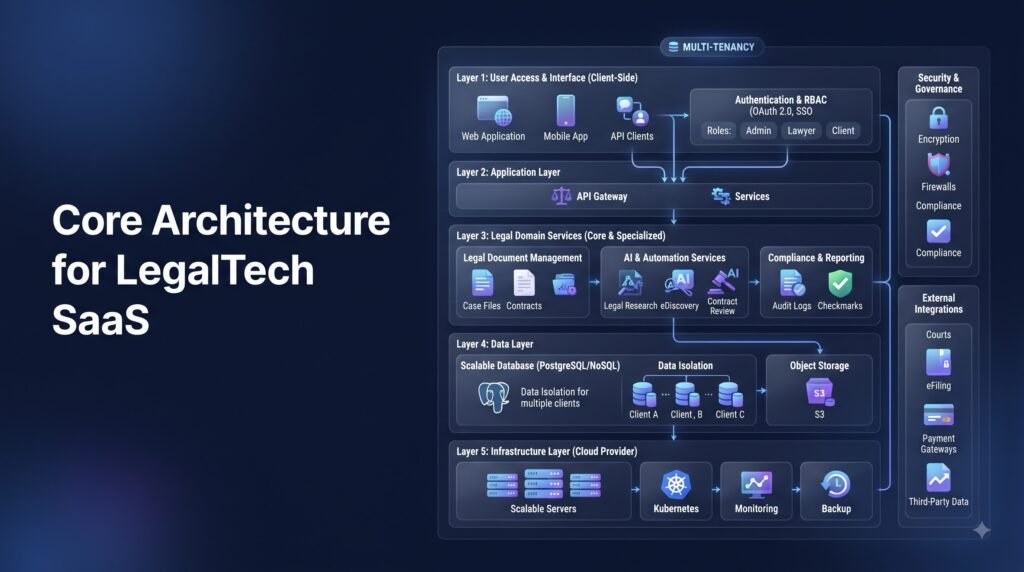
A typical LegalTech SaaS architecture may include:
Frontend → API/backend → database → document storage → search/AI services → integrations → monitoring
But legal applications usually need additional controls around those components.
Identity and access
Use authentication plus authorization.
Authorization should answer questions such as:
- Which organization does this user belong to?
- Which matters can they access?
- What actions can they perform?
- Can they download documents?
- Can they approve changes?
- Can administrators access everything?
- Should outside counsel have restricted access?
For multi-tenant LegalTech SaaS, tenant isolation needs to be designed deliberately rather than treated as a UI-level feature.
Database
Relational databases such as PostgreSQL can be suitable when the product contains structured relationships between organizations, users, matters, clients, documents and workflows.
Document-oriented databases may fit other workloads.
The choice should follow the data model rather than a trend.
Document storage
Legal applications commonly need reliable document handling.
Design decisions include:
- File encryption
- Versioning
- Metadata
- Retention
- Access permissions
- Download controls
- Virus/malware scanning
- Backup and recovery
- Audit records
Search
Legal users often need to find specific information quickly.
Depending on the product, search may involve:
- Metadata filtering
- Full-text search
- Semantic search
- Vector search
- Hybrid search
A LegalTech product should make it clear what source produced an answer rather than presenting an opaque result.
AI in LegalTech: Where It Helps and Where It Creates Risk
AI is becoming an important part of LegalTech.
Microsoft’s LegalTech analysis highlights document review, legal research, contract analysis and agentic automation as significant use cases.
Other legal technology research also shows a movement toward legal-specific, matter-aware AI embedded inside broader workflows rather than disconnected chat interfaces.
Potential applications include:
- Contract summarization
- Clause extraction
- Document classification
- Legal research assistance
- Timeline generation
- Intake assistance
- Draft generation
- Knowledge retrieval
- Compliance monitoring
- Workflow automation
But AI introduces another layer of engineering risk.
OWASP’s current GenAI security guidance includes risks such as prompt injection, sensitive-information disclosure, excessive agency, misinformation and weaknesses involving retrieval systems.
A safer LegalTech AI architecture
A practical architecture can include:
User → Permission check → Retrieval → Relevant legal data → AI model → Validation → Human review → Audit log
The model should not automatically gain unrestricted access to every document in the system.
The AI layer should inherit the application’s authorization model.
For example, if a lawyer cannot access Matter A, an AI assistant operating on that lawyer’s behalf shouldn’t retrieve Matter A simply because it exists in the company’s database.
Human review matters
The American Bar Association’s Formal Opinion 512 states that lawyers using generative AI need to consider professional obligations including competence, protection of client information, communication, supervision and reasonable fees.
That doesn’t mean every LegalTech application needs the same review workflow.
It does mean developers should avoid treating generated legal output as automatically authoritative.
For high-risk use cases, a human-in-the-loop workflow can provide:
- Source citations
- Confidence or uncertainty indicators
- Review queues
- Approval actions
- Change history
- Feedback mechanisms
- Output logging
The goal is not simply to generate text.
The goal is to create a workflow in which users can verify what the system produced and why.
Security, Privacy and Compliance Considerations
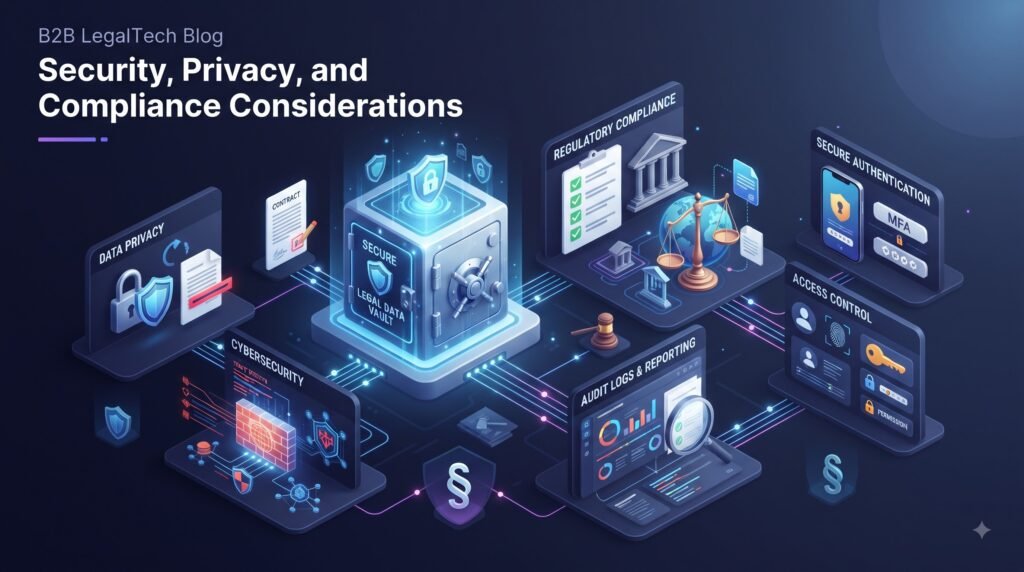
Legal software can handle unusually sensitive information.
Security should therefore be part of product architecture rather than a launch-week checklist.
Important controls include:
- Encryption in transit
- Encryption at rest
- Role-based access control
- Tenant isolation
- Secure authentication
- Audit logging
- Backup and recovery
- Secrets management
- Secure API design
- Vulnerability testing
- Monitoring
- Data-retention controls
- Access reviews
The exact regulatory requirements depend on where the product operates, what data it processes and who its customers are.
For products operating in India, the Digital Personal Data Protection Act, 2023 is an important legal reference concerning digital personal data processing. MeitY has also published the Digital Personal Data Protection Rules, 2025.
For AI risk management, NIST’s AI Risk Management Framework provides a voluntary framework for managing risks across AI design, development, deployment and use, while its Generative AI Profile addresses risks associated specifically with generative AI.
The important point is that compliance cannot be reduced to adding a badge to a website.
The actual architecture, contracts, data flows, access controls and operating procedures need to match the applicable requirements.
LegalTech Software Development Process
A practical development process can look like this.
1. Define the legal workflow
Identify the specific problem.
Don’t start with “we need an AI legal platform.”
Start with:
“Corporate legal teams spend too much time identifying non-standard clauses in supplier contracts.”
That statement gives the team something testable.
2. Define the user and decision
Identify:
- Who uses the product?
- What are they doing today?
- What is slow or error-prone?
- What information do they need?
- What action should the software help them take?
3. Define the MVP
Separate:
Must have: required to test the core workflow.
Useful later: improves the product but doesn’t prove the initial hypothesis.
Not now: attractive features that create significant scope without validating the main product.
4. Design the data model
Map:
- Organizations
- Users
- Roles
- Clients
- Matters
- Documents
- Tasks
- Events
- Permissions
- Audit records
The exact model depends on the product.
5. Design the UX
Legal users often work with information-heavy interfaces.
Prioritize:
- Search
- Filtering
- Document context
- Clear status
- Familiar navigation
- Review states
- Action history
- Minimal unnecessary interaction
6. Choose the architecture
Select the stack based on:
- Product requirements
- Team skills
- Data model
- AI requirements
- Integration needs
- Security
- Expected scale
- Maintenance
BkAbhi’s current public technology information lists React.js, Next.js, Node.js, TypeScript, PostgreSQL and MongoDB among its web-development technologies.
Those technologies can support many SaaS architectures, but a LegalTech project should still receive a product-specific architecture decision rather than an assumed stack.
7. Build the core workflow
Development should focus on the critical path.
For example:
Upload contract → analyze → flag clauses → review → approve → store
Everything that doesn’t improve that flow should be questioned.
8. Test security and reliability
Test:
- Authorization boundaries
- Tenant isolation
- Document access
- API security
- Authentication
- Failure handling
- AI prompt manipulation
- Sensitive information exposure
9. Deploy and monitor
Production monitoring should cover:
- Errors
- API performance
- AI failures
- Integration failures
- Authentication issues
- Storage problems
- Unusual access patterns
10. Learn after launch
The MVP should generate evidence.
Measure:
- Workflow completion
- Time saved
- User errors
- Feature usage
- AI correction rates
- Drop-off points
- Support requests
- Retention
Then decide what deserves the next development cycle.
Build vs Buy vs No-Code vs In-House
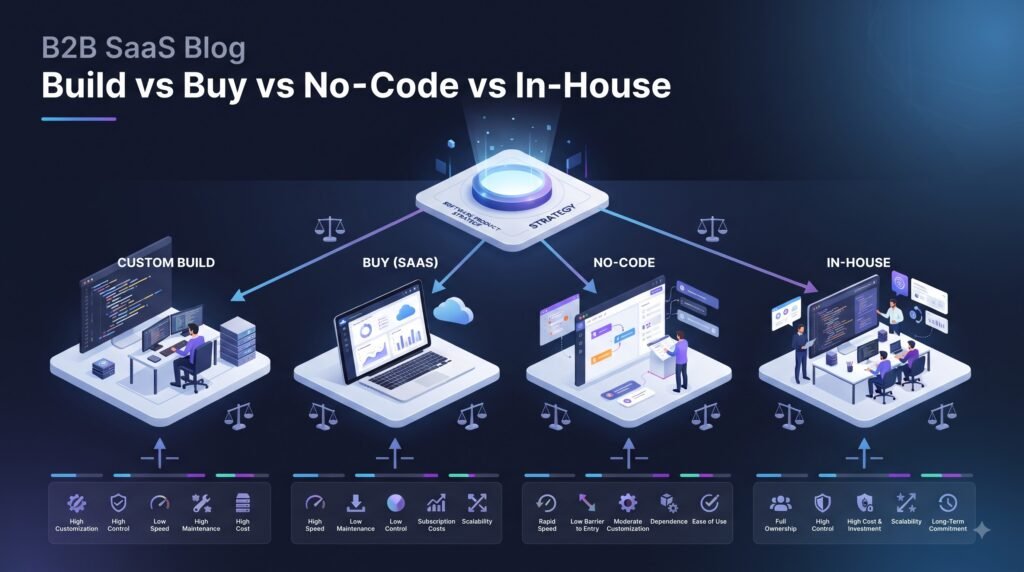
There isn’t one correct approach.
Existing legal SaaS
Choose this when your workflow is close to an existing product and customization isn’t central to your competitive advantage.
Best for: standard practice management, billing, document management or established workflows.
Limitation: you’re constrained by the platform’s capabilities and integrations.
Custom LegalTech development
Choose this when your workflow is differentiated.
Best for: proprietary processes, specialized AI, unique integrations or new LegalTech products.
Limitation: greater responsibility for architecture, security, maintenance and product management.
No-code or low-code
Useful when the primary goal is early validation.
Best for: simple internal workflows, prototypes and straightforward administrative applications.
Limitation: complex permission models, high-volume document processing, sophisticated AI and specialized integrations can expose platform constraints.
In-house development
Makes sense when a company already has strong engineering resources and expects software to become a core long-term capability.
Best for: organizations that need continuous internal control.
Limitation: hiring, management, engineering leadership and ongoing infrastructure become the company’s responsibility.
Development partner
A development partner can be useful when the company needs product engineering without immediately building a full internal team.
The key is to evaluate the partner against the actual LegalTech requirements, not simply its general software portfolio.
How Much Does LegalTech Software Development Cost?
There is no reliable universal price for “a LegalTech application.”
A basic workflow automation product and an enterprise legal intelligence platform may both be called LegalTech while having completely different engineering requirements.
Major cost drivers
Number of platforms
Web-only is usually less complex than web + iOS + Android.
User roles
A product with lawyers, clients, administrators, reviewers and external collaborators needs more authorization logic than a simple single-role application.
Document processing
OCR, document conversion, indexing, versioning and large-file processing can increase complexity.
AI
Using an existing AI API is different from building a sophisticated retrieval, evaluation and orchestration layer.
AI cost also continues after development because model usage can create recurring infrastructure or API expenses.
Integrations
Examples include:
- E-signature
- Cloud storage
- Microsoft 365
- CRM
- Billing
- Identity providers
- Legal research databases
- Practice-management platforms
Each integration introduces development and maintenance work.
Security requirements
Enterprise customers may require additional controls, documentation, testing and operational processes.
Compliance
Applicable regulatory and contractual requirements can affect architecture, data handling and development processes.
BkAbhi pricing: what is publicly verified?
BkAbhi’s current homepage publicly displays an illustrative MVP estimator. One configuration currently shows a $2,999 MVP package and approximately 2.2 weeks, while the site explicitly says the estimator is illustrative and that final scope and timeline are confirmed during discovery. As LegalTech development increasingly incorporates AI, automation, analytics, and secure cloud technologies, these factors can also influence the scope and architecture of a software project. Microsoft’s overview of AI and cloud innovation in LegalTech
That should not be interpreted as the price or timeline for a LegalTech platform.
A LegalTech project involving sensitive documents, advanced permissions, AI, integrations or compliance requirements needs to be scoped separately.
How Long Does LegalTech Development Take?
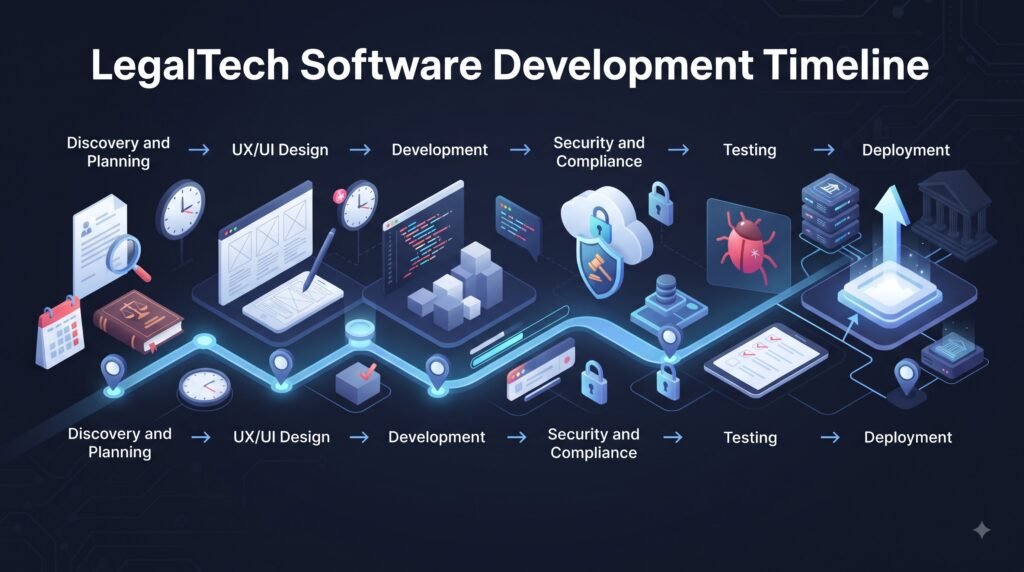
The timeline depends more on scope than on the label “LegalTech.”
A focused MVP may well need significantly fewer resources than a multilevel platform.
A project involving:
- Contract AI
- Multi-tenant SaaS
- Complex document processing
- Multiple integrations
- Mobile applications
- Advanced permissions
- Enterprise security
will naturally require more engineering than a simple legal intake application.
A good approach to estimating time is to break down the project into phases:
Discovery → UX → Architecture → Core development → Integrations → QA/security → Deployment → Post-launch iteration
Avoid being given a timeline that fails to deliver on what is actually being built.
How to Choose a LegalTech Software Development Partner
A general software agency isn’t automatically the right LegalTech partner.
Ask these questions before signing.
1. Can they explain your workflow?
If the team starts talking frameworks before understanding the legal workflow it’s a red flag
2. How will permissions be managed?
Ask specifically about:
- Organizations
- Roles
- Matters
- Documents
- External users
- Administrative access
3. How will AI output be validated?
Ask:
- What sources does the model use?
- How is retrieval controlled?
- Can users see citations?
- What happens in the case of low confidence
- Can users correct the output?
- Are actions logged?
4. Who owns the code?
Ownership should be explicitly stated in the contract.
BkAbhi’s current homepage publicly states 100% IP ownership as part of its positioning.
For any engagement, however, the final contractual terms should control.
5. What happens after launch?
Clarify:
- Bug fixes
- Monitoring
- Infrastructure
- Security updates
- AI model changes
- Third-party API changes
- Feature development
- Support responsibilities
6. Can they explain the architecture?
You don’t need to be a developer.
You should still receive a clear explanation of:
- Frontend
- Backend
- Database
- Storage
- APIs
- AI layer
- Authentication
- Hosting
- Monitoring
7. Can they reduce the MVP?
A good development partner should be able to tell you which features aren’t necessary yet.
If everything you suggest is approved for implementation it’s not product guidance.
Where BkAbhi Fits
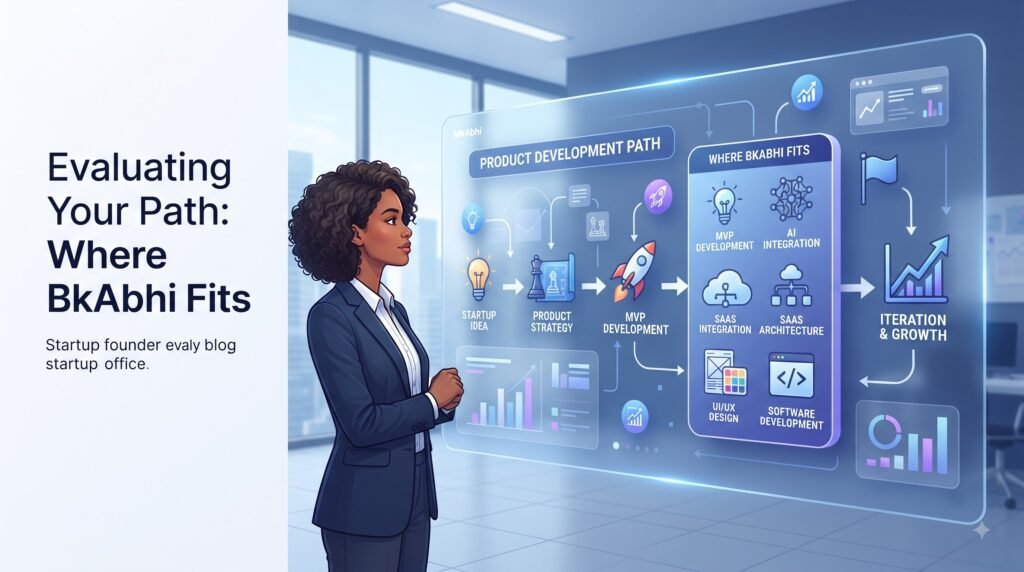
BkAbhi’s current public positioning is centered on building and shipping MVPs. Its website describes web development, mobile applications, SaaS development, AI and automation, API integrations, backend/cloud infrastructure and related capabilities.
Its public SaaS capabilities include authentication, subscription management, payment integration, analytics dashboards, multi-tenant architecture, APIs and cloud deployment.
That makes BkAbhi potentially relevant when the requirement is a custom SaaS/MVP build with web, mobile, AI, automation or integration requirements.
However, BkAbhi’s current public pages do not establish LegalTech as a dedicated industry specialization.
For a LegalTech project, a prospective customer should therefore ask BkAbhi—or any other development partner—for project-specific evidence around:
- Legal workflows
- Sensitive-data handling
- Permission architecture
- Document processing
- AI evaluation
- Auditability
- Compliance requirements
- Integration requirements
- Post-launch support
That is a better selection method than assuming that general SaaS capability automatically equals LegalTech expertise.
Common LegalTech Development Mistakes
Building an AI chatbot before defining the workflow
A chatbot is an interface, not a product strategy.
Giving AI too much access
AI should not automatically have access to every document or matter.
Treating generated output as authoritative
Legal AI should be designed around verification appropriate to the use case.
Ignoring auditability
For important legal workflows, users may need to know who changed what and when.
Building every module at once
A complete practice-management platform can require a huge scope.
A focused MVP is usually easier to validate.
Choosing technology before defining requirements
The best database or framework depends on the product.
Treating compliance as a marketing badge
Compliance involves architecture, processes, contracts, access control and operational practices.
Ignoring integrations
Legal teams often already use other systems.
A beautiful standalone application can struggle if it doesn’t fit the existing workflow.
Failing to plan for post-launch AI changes
Models, APIs and AI security practices change.
The architecture should allow important components to be evaluated and replaced without rebuilding the entire product.
Who Should Build Custom LegalTech Software?
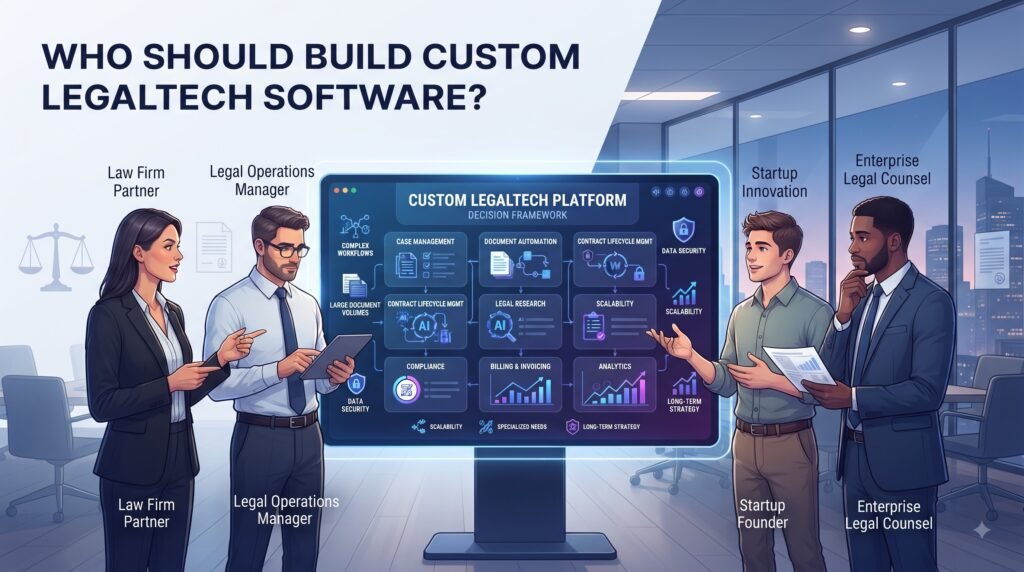
Custom development is most compelling when at least one of these is true:
- Your workflow is genuinely different.
- Existing platforms cannot support an important requirement.
- Your software itself is the business.
- You need proprietary integrations.
- Your AI workflow is a differentiator.
- You need control over the product roadmap.
- You need a specific multi-tenant architecture.
- You need a specialized client or lawyer experience.
If your requirements are mostly standard practice-management functions, an existing LegalTech product may be faster and less expensive.
Final Decision Framework
Use this simple test:
Choose existing LegalTech SaaS if:
Your workflow is standard and speed of adoption matters more than customization.
Choose custom development if:
Your workflow or technology is part of your competitive advantage.
Choose no-code/low-code if:
You’re validating a relatively simple workflow and don’t yet need complex architecture.
Choose in-house if:
You already have the engineering capability and expect software to remain a core internal function.
Choose a development partner if:
You need custom product engineering but don’t want to build a full engineering organization immediately.
For a startup, the most important question isn’t:
“How many features can we build?”
It’s:
“What is the smallest reliable legal workflow that proves someone needs this product?”
That question should drive the architecture, budget, AI strategy and development roadmap.
Author Bio
Jeevesh Tripathi
Email: jeevesh@bkabhi.com
Jeevesh Tripathi writes research-based content covering technology, AI, software, SaaS, and creator/business tools. His work focuses on practical comparisons, evidence-based evaluation, and explaining technology decisions in clear terms.
The goal is to distinguish verified information from analysis and recommendations so readers can make better-informed product and technology decisions.