
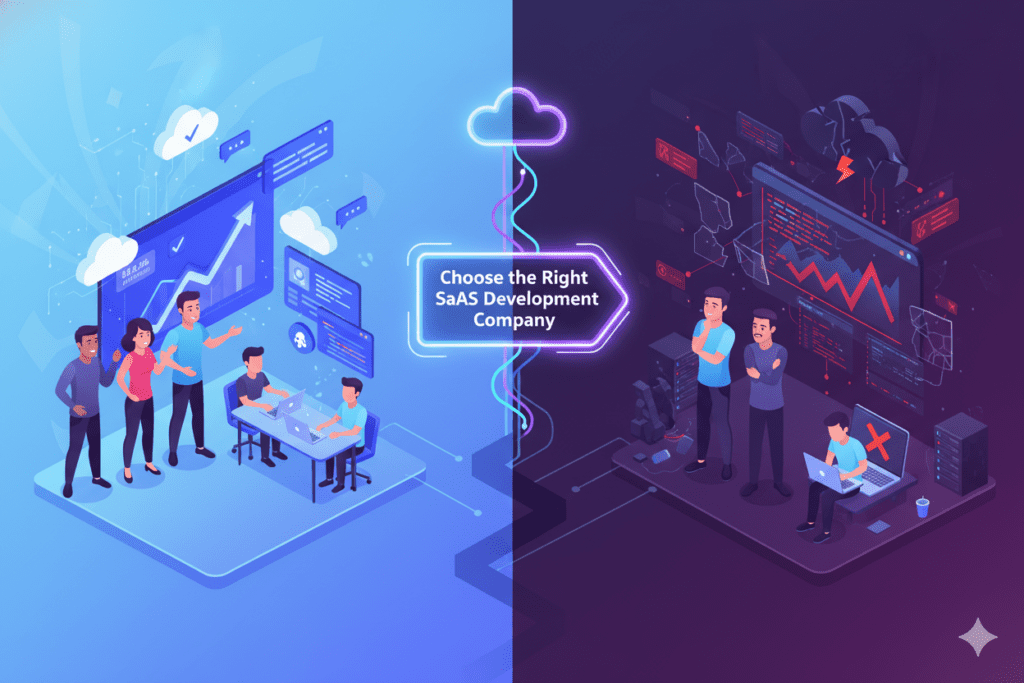
It was 2 AM when Sarah finally closed her laptop. For the third time that month, her “revolutionary” SaaS idea had been rejected by yet another development team. “Too complex,” they said. “Not our expertise,” others claimed. The one company that showed interest? They quoted her $250,000 and a 14-month timeline for an MVP.
Sound familiar?
Here’s the uncomfortable truth: the success of your SaaS product depends less on your brilliant idea and more on whether you partner with the right SaaS development company. I’ve seen founders burn through six-figure budgets building products nobody uses, while others launch lean MVPs that scale to million-dollar ARR within 18 months. The difference? They knew exactly what to look for in a development partner.
What Exactly Does a SaaS Development Company Do? (And Why You Can’t Just Hire Any Developer)
Let’s cut through the jargon. A SaaS development company doesn’t just write code—they architect cloud-based solutions that thousands of users can access simultaneously without your servers melting down. They’re the difference between a working prototype and a scalable business.
Think of traditional software like building a house that you own. SaaS is like constructing an entire apartment complex that needs to serve multiple tenants, handle constant foot traffic, maintain security for everyone, and upgrade facilities without kicking anyone out. That requires specialized expertise.
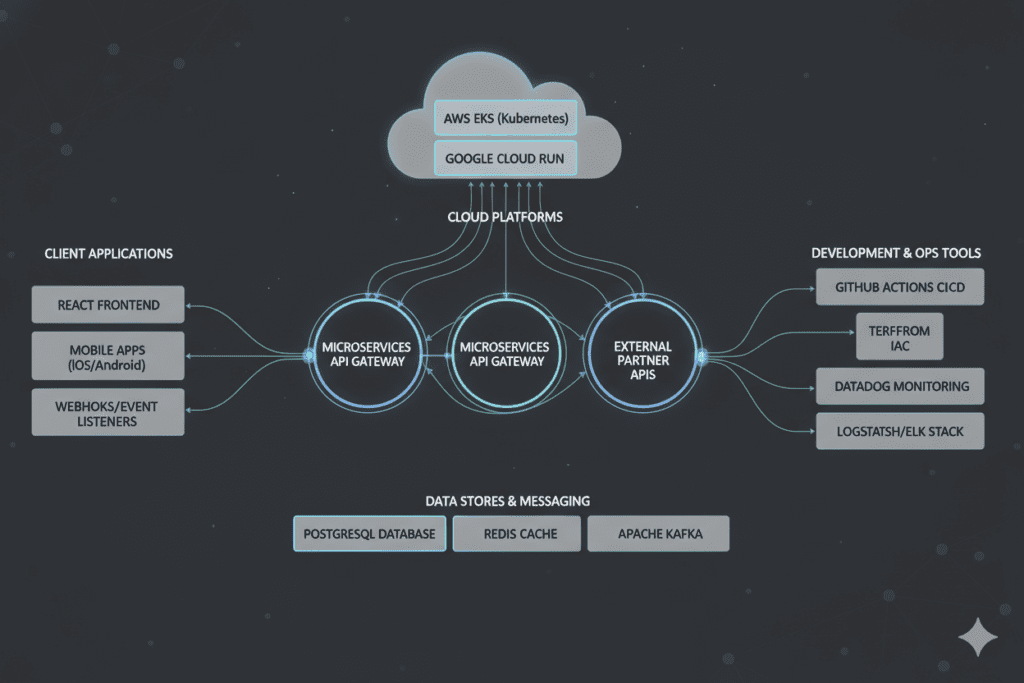
A professional SaaS development company handles:
Architecture Planning – They design systems that can grow from 10 users to 10,000 without rebuilding everything. This means choosing the right database structures, implementing proper caching strategies, and planning for horizontal scaling from day one.
Multi-Tenancy Magic – Your platform needs to serve multiple customers while keeping their data completely isolated. One customer’s spike in usage shouldn’t crash everyone else’s experience. This requires sophisticated architecture that most generalist developers have never built.
Security That Actually Works – When you’re handling customer data across industries, security isn’t optional. The right SaaS development company implements encryption, secure authentication, regular security audits, and compliance with regulations like GDPR, HIPAA, or SOC 2 depending on your industry.
Cloud Infrastructure Expertise – AWS, Google Cloud, or Azure? Serverless or container-based? Auto-scaling configurations? These decisions impact your monthly costs and system reliability. A specialized SaaS development company knows which architecture fits your specific use case and budget.
The Hidden Cost of Choosing the Wrong SaaS Development Company
Here’s what the comparison sites won’t tell you: the cheapest quote usually becomes the most expensive mistake.
Marcus learned this the hard way. He hired a low-cost SaaS development company in early 2023 for his project management tool. Six months and $80,000 later, he had a product that worked—barely. It crashed when more than 50 users logged in simultaneously. The database queries were so inefficient that simple reports took 30 seconds to load. Customer churn hit 60% within the first two months.
He eventually had to rebuild everything from scratch with a proper SaaS development company, spending another $120,000 and losing an entire year of market opportunity. His competitors, who launched with solid architecture from day one, already had thousands of paying customers.
The real cost isn’t just money—it’s trust. Every time your platform crashes, every sluggish page load, every data breach sends customers running to competitors who got their infrastructure right from the start.
7 Non-Negotiable Things Every SaaS Development Company Must Provide
After reviewing hundreds of SaaS projects across industries, here’s what separates the exceptional from the merely adequate:
1. Proven Multi-Tenant Architecture Experience
Ask to see live examples of SaaS products they’ve built that serve multiple customers. Don’t accept promises—demand proof. How do they handle data isolation? What’s their approach to tenant-specific customizations? If they can’t articulate their multi-tenancy strategy clearly, walk away.
2. Cloud-Native Development Mindset
The best SaaS development companies don’t just host your app in the cloud—they build it to leverage cloud capabilities. This means microservices architecture, containerization with Docker and Kubernetes, serverless functions where appropriate, and intelligent use of managed services to reduce operational overhead.
3. API-First Development Approach
Your SaaS product will need to integrate with other tools. Stripe for payments. SendGrid for emails. Salesforce for CRM. Your SaaS development company should build every feature with API accessibility in mind, making future integrations straightforward rather than painful retrofits.
4. Real-Time Monitoring and Analytics Integration
How will you know if your application is performing well? A professional SaaS development company builds in observability from day one—error tracking, performance monitoring, user analytics, and business metrics dashboards that give you actionable insights.
5. Automated Testing and CI/CD Pipelines
Manual testing doesn’t scale. Your SaaS development company should implement automated testing frameworks and continuous integration/deployment pipelines that catch bugs before they reach production. This means faster feature releases and fewer 2 AM emergency calls.
6. Scalability Roadmap Beyond MVP
Most founders focus only on getting their MVP launched. Smart SaaS development companies think three steps ahead. They architect systems that can handle your current 100 users and your future 100,000 users without requiring expensive rewrites.
7. Post-Launch Support That Actually Responds
What happens when your payment processor throws an error at 9 PM on Sunday? Or when a customer reports a critical bug affecting their workflow? The right SaaS development company provides clear support SLAs and actually sticks to them.
Why BkAbhi Takes a Different Approach to SaaS Development
At BkAbhi, we’ve seen too many founders suffer through the wrong development partnerships. That’s why our approach focuses on building SaaS products that don’t just launch—they scale, evolve, and generate sustainable revenue.
We don’t believe in one-size-fits-all solutions. A SaaS platform for healthcare providers has completely different requirements than one for e-commerce analytics. Our team takes time to understand your industry, your users’ workflows, and your business model before writing a single line of code.
Real-World Example: From Concept to 5,000 Users in 6 Months
When Dev, a SaaS founder building a customer feedback platform, came to us, he’d already been burned by two development teams. His previous MVP cost $95,000 and couldn’t handle more than 200 concurrent users. The codebase was so tangled that adding new features required weeks of work.
We rebuilt his platform with proper microservices architecture, implemented Redis caching for frequently accessed data, and deployed on AWS with auto-scaling configurations. Within six months, his platform was serving 5,000 users across 200 companies with 99.9% uptime.
More importantly, because we built the architecture right from the start, adding new features now takes days instead of months. His development costs dropped by 60% while his feature velocity increased by 300%.
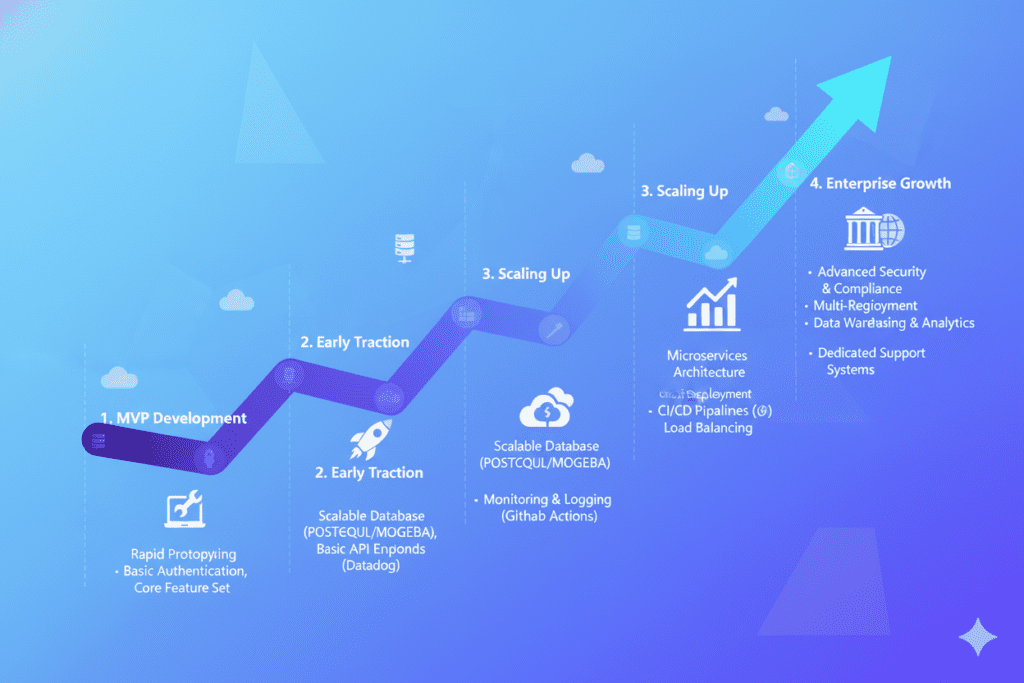
SaaS Development for Different Business Stages: What You Actually Need
For First-Time Founders (Pre-Revenue)
You don’t need everything on day one. A skilled SaaS development company helps you identify your core value proposition and build an MVP that validates your idea without burning your entire budget. Focus on one workflow that delivers immediate value, implement basic but solid architecture that can scale later, and get real users testing within 8-12 weeks, not 8-12 months.
For Growing Startups (100-1,000 Users)
This is where technical debt catches up with you. If your initial development was rushed, now’s the time to refactor before problems become catastrophic. Your SaaS development company should focus on implementing proper monitoring and alerting, optimizing database queries and API performance, building admin tools for your support team, and establishing security protocols as you handle more sensitive data.
For Scaling Companies (1,000+ Users)
At this stage, you need a SaaS development company that thinks like an engineering team, not just contractors. They should help you implement advanced caching strategies, database sharding, load balancing and redundancy planning, and building features that drive expansion revenue.
The Tech Stack Question: What Your SaaS Development Company Should Actually Use
Walk into any development meeting and someone will ask: “What’s your tech stack?” Here’s the truth most SaaS development companies won’t admit—the stack matters less than how it’s implemented.
That said, modern SaaS products typically benefit from:
Frontend: React, Vue, or Angular for complex interfaces; Next.js or Nuxt for better SEO and performance
Backend: Node.js for real-time features; Python for data-heavy applications; Go for maximum performance
Database: PostgreSQL for complex queries; MongoDB for flexible schemas; Redis for caching
Cloud: AWS for comprehensive services; Google Cloud for AI/ML integration; Azure for enterprise Microsoft ecosystems
Infrastructure: Docker for containerization; Kubernetes for orchestration; Terraform for infrastructure as code
A competent SaaS development company doesn’t just pick technologies because they’re trendy. They choose based on your specific requirements, team expertise, and long-term maintainability.
Red Flags That Scream “Wrong SaaS Development Company”
Watch out for these warning signs:
They promise unrealistic timelines – Building a solid SaaS product takes time. If someone promises a feature-complete platform in 4 weeks, they’re either lying or planning to cut critical corners.
They can’t explain their scaling strategy – Ask how they’ll handle 10x user growth. If they give vague answers or say “we’ll figure it out when we get there,” you’ll be rebuilding everything in six months.
Their portfolio shows only landing pages and basic apps – SaaS development requires specialized expertise. If they’ve never built a multi-tenant application handling thousands of concurrent users, you’re their guinea pig.
They refuse to discuss technical debt – Every codebase accumulates some technical debt. Companies that claim their code is perfect are either inexperienced or dishonest.
They don’t ask about your business model – How you monetize affects architectural decisions. A usage-based pricing model requires different tracking than a flat subscription. If they don’t ask, they don’t understand SaaS.
Security, Compliance, and Why Your SaaS Development Company Must Care
Let’s talk about the thing that keeps SaaS founders awake at night: data breaches.
In 2024 alone, 73% of SaaS companies experienced at least one security incident. The average cost of a data breach hit $4.45 million. For startups, a single breach can mean bankruptcy.
Your SaaS development company must implement security as a foundation, not an afterthought:
Encryption everywhere – Data should be encrypted in transit (TLS/SSL) and at rest. Your development company should configure this by default, not as an optional add-on.
Authentication and authorization – Implementing proper OAuth, JWT tokens, role-based access control, and multi-factor authentication isn’t optional—it’s mandatory for any serious SaaS platform.
Regular security audits – Code should be scanned for vulnerabilities continuously. Dependencies should be updated promptly. Penetration testing should happen before launch and periodically afterward.
Compliance frameworks – Depending on your industry, you might need GDPR compliance, HIPAA certification, SOC 2 Type II, or PCI DSS compliance. A specialized SaaS development company knows how to architect systems that meet these requirements.
The Mobile Question: Does Your SaaS Need Native Apps?
Here’s the expensive mistake: building native iOS and Android apps before you validate your web product.
Unless your SaaS requires native device capabilities (camera access, GPS tracking, push notifications), start with a responsive web application. A skilled SaaS development company builds web apps that work beautifully on mobile browsers while you validate your market.
Once you’ve proven product-market fit and have users actively requesting native apps, then invest in mobile development. This approach saves you $50,000-$150,000 in initial development costs while giving you time to understand exactly what mobile features your users actually need.
Integration Ecosystem: How Your SaaS Development Company Prepares for Growth
Your SaaS product won’t exist in isolation. Customers will want it to connect with their existing tools—CRM systems, accounting software, communication platforms, analytics tools.
Smart SaaS development companies build integration capabilities into the architecture from day one:
Webhook systems – Allow other applications to receive real-time updates from your platform
OAuth 2.0 implementation – Enable secure authentication with third-party services
API documentation – Comprehensive, auto-generated docs that make integration straightforward
Rate limiting and throttling – Protect your infrastructure while still providing great API access
Marketplace readiness – Prepare for eventual listing on platforms like Zapier, Make, or app stores specific to your industry
The Economics of Partnering With a SaaS Development Company
Let’s talk money because that’s what you’re really wondering about.
Building a SaaS product typically costs between $50,000 and $250,000+ for an MVP, depending on complexity. Here’s what drives those numbers:
Number of user roles and permissions – A simple single-user-type SaaS costs less than one with admin, manager, team member, and client roles
Integration requirements – Each third-party integration adds development time and complexity
Data complexity – Simple CRUD operations are easier than building custom reporting engines with complex analytics
Compliance requirements – HIPAA or SOC 2 compliance adds significant development time
Custom features vs. standard functionality – Using existing component libraries saves time; building everything custom from scratch doesn’t
Here’s the framework smart founders use: Budget 70% for MVP development, 20% for post-launch fixes and improvements, and 10% for unexpected challenges (they always happen).
A reputable SaaS development company provides detailed estimates breaking down costs by feature and phase, not just a single lump-sum number that leaves you wondering where your money goes.
Why Most SaaS Projects Fail (And How to Beat the Odds)
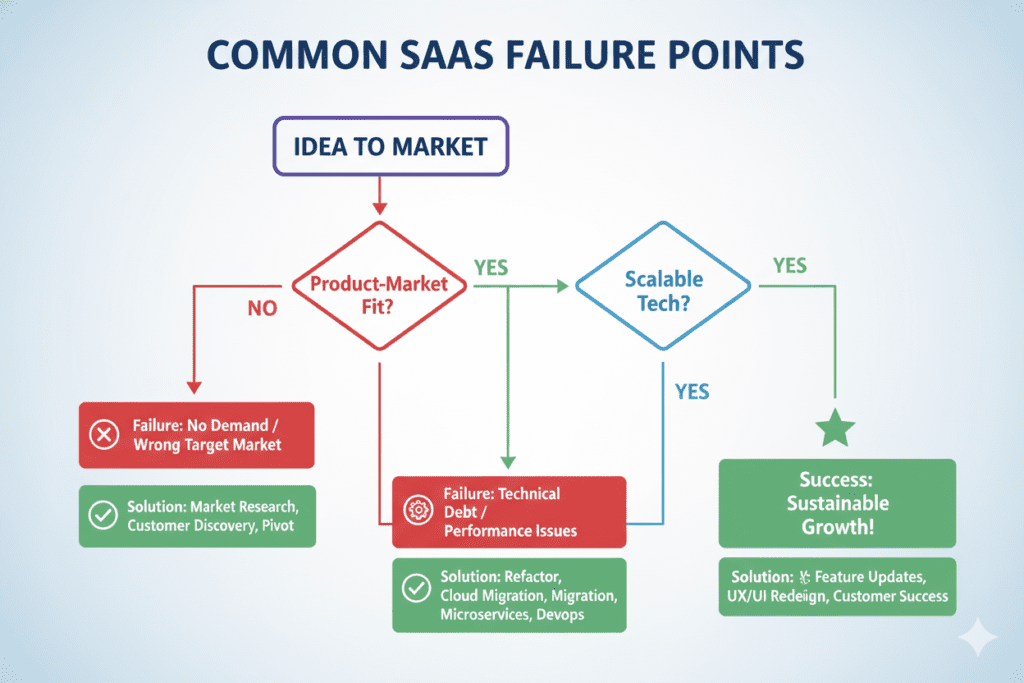
The statistics are brutal: 90% of SaaS startups fail. But here’s what those statistics don’t tell you—most failures happen because of technical problems that the right SaaS development company could have prevented.
Problem #1: Building for imaginary users – Founders spend months building features nobody wants. Solution: A good SaaS development company pushes you to validate assumptions before coding. They help you launch a minimal viable product, gather real user feedback, and iterate based on actual behavior, not hypothetical use cases.
Problem #2: Technical debt explosion – Rushed initial development creates problems that compound over time. Solution: Experienced SaaS development companies build architecture that accommodates change. They use design patterns that make refactoring straightforward and write code that’s actually maintainable.
Problem #3: Scaling catastrophes – What works for 100 users breaks spectacularly at 1,000. Solution: Professional SaaS development companies load test systems before launch, implement monitoring that catches issues before customers notice, and design architectures with growth in mind from day one.
Questions to Ask Every SaaS Development Company Before Signing
Stop asking about hourly rates. Start asking questions that reveal actual capability:
- “Show me three SaaS products you’ve built that are currently serving paying customers.” – Screenshots don’t count. You want live URLs and user numbers.
- “How do you handle database migrations on production systems with zero downtime?” – This question separates amateurs from professionals instantly.
- “What’s your approach to API versioning as the product evolves?” – If they haven’t thought about backward compatibility, you’ll break customer integrations with every update.
- “How do you structure pricing for projects where requirements might evolve?” – Rigid fixed-price contracts sound appealing until you realize they prevent necessary pivots.
- “What happens if a key developer leaves your team mid-project?” – Companies with proper processes barely skip a beat. Those depending on individual heroes will leave you stranded.
- “How do you measure and ensure code quality?” – Look for answers about code reviews, automated testing, continuous integration, and technical documentation.
- “What’s your typical response time for critical production issues?” – You need specifics, not vague promises of “we’re always available.”
The BkAbhi Advantage: Practical SaaS Development That Drives Results
What makes BkAbhi different as a SaaS development company? We’ve walked in your shoes.
Our team has launched SaaS products that failed, succeeded, pivoted, and scaled. That experience taught us what actually matters—not just writing code, but building businesses.
When you work with BkAbhi, you get:
Strategic guidance before technical execution – We challenge assumptions, validate ideas, and help you focus on features that drive revenue, not just check feature-list boxes.
Transparent communication throughout – No technical jargon designed to impress. We explain decisions in plain language, show you working prototypes early and often, and keep you involved in architectural choices that impact your business.
Code you actually own – Complete access to repositories and documentation that lets you transition smoothly if you eventually build an in-house team.
Post-launch partnership – Most SaaS development companies disappear after launch. We stick around for ongoing optimization, feature development, and scaling support as your user base grows.
Real Founders, Real Results
Priya’s Ed-Tech Platform – “We interviewed seven SaaS development companies before choosing BkAbhi. The difference? They actually understood our business model and asked questions others never thought of. Six months after launch, we’re at 2,000 active users with zero downtime incidents. Their architecture planning saved us countless headaches.”
Rohan’s Fintech SaaS – “Coming from a non-technical background, I needed a SaaS development company that could translate my vision into reality without making me feel stupid for asking questions. BkAbhi did exactly that. More importantly, they built our platform to handle the regulatory requirements we face in financial services—something our previous developers completely missed.”
Your Next Steps: From Idea to Launched SaaS Product
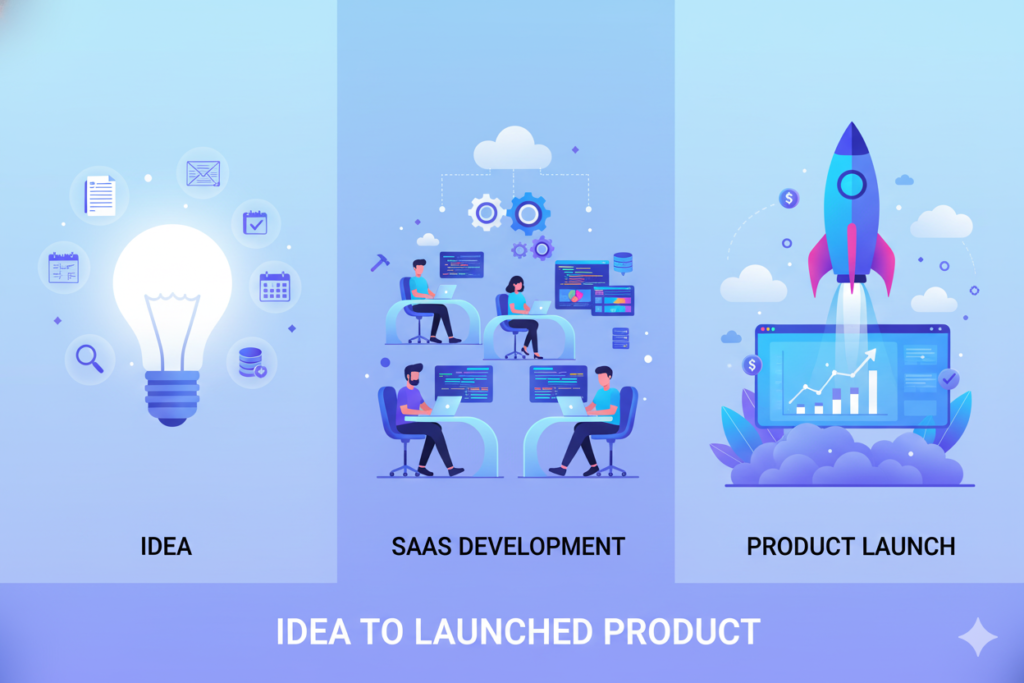
Ready to turn your SaaS idea into reality? Here’s your actionable roadmap:
Week 1-2: Validate Your Concept – Talk to 20 potential users. Understand their current workflow, their pain points, what they’d actually pay for. Document everything. Explore more insights on BkAbhi about effective validation strategies.
Week 3-4: Create a Detailed Product Brief – Write down your core value proposition, essential features for MVP, target user personas, initial pricing strategy, and rough timeline expectations. This becomes your North Star document.
Week 5: Interview SaaS Development Companies – Talk to at least three serious contenders. Ask the tough questions. Check references. Look at their actual work, not just their marketing.
Week 6-8: Finalize Partnership and Kick Off – Choose your SaaS development company based on expertise, not just cost. Review and approve detailed technical specifications. Set up communication protocols and project management systems.
Week 9-16: Development Sprint – Weekly demos of working features. Regular feedback sessions. Course corrections as needed. Stay involved without micromanaging.
Week 17-18: Testing and Refinement – User acceptance testing with beta users. Performance optimization. Security audits. Final polish.
Week 19: Launch – Soft launch to initial user group. Monitor everything obsessively. Gather feedback. Iterate quickly.
Week 20+: Scale and Optimize – Add features based on user demand. Optimize performance as traffic grows. Build the business around your now-validated product.
The Hard Truth About Timing
Here’s something uncomfortable: every month you delay finding the right SaaS development company, you’re giving competitors a head start.
The SaaS market is expected to surpass $900 billion by 2026. Thousands of founders are launching products right now. Some will dominate your market because they moved faster, executed smarter, Aizolo and partnered with the right development team.
The question isn’t whether you’ll build your SaaS product. It’s whether you’ll do it right the first time or learn expensive lessons the hard way.
Your SaaS Success Starts With the Right Partnership
Choosing a SaaS development company isn’t just a technical decision—it’s a strategic one that impacts every aspect of your business. The right partner brings more than coding skills; they bring experience preventing disasters, wisdom gained from building dozens of platforms, a process that turns ideas into profitable products, and the technical foundation that lets your business scale sustainably.
At BkAbhi, we’ve helped founders just like you transform ambitious ideas into thriving SaaS businesses. We’ve seen what works, what fails, and what makes the difference between a product that launches and one that scales.
Ready to build your SaaS product the right way? Start building smarter with BkAbhi and let’s turn your vision into a scalable reality. Schedule a free consultation where we’ll discuss your idea, assess technical requirements, provide honest feedback (even if it means suggesting a different approach), and outline a clear path from concept to launch.
Your SaaS success story starts with choosing the right development partner. Make it count.
Suggested Internal Links
- Link to “Custom Website Development” page when discussing MVP development
- Link to “Mobile App Development” section when covering native apps
- Link to any existing blog posts about web development, security, or scaling
- Link to services page when mentioning BkAbhi’s approach
Suggested External Links
- Link to Gartner’s SaaS statistics report (authoritative industry data)
- Link to AWS/Azure/Google Cloud documentation for cloud platform references
- Link to OWASP (Open Web Application Security Project) for security best practices
- Link to Statista’s SaaS market growth data
- Link to Stack Overflow Developer Survey for technology trends
- Link to Clutch or G2 for development company selection criteria