
Three years ago, Sarah, a passionate high school teacher, had a vision. She wanted to create an online platform where students could learn mathematics through interactive games and real-world problem-solving. She had the curriculum expertise, the teaching experience, and the drive to make it happen.
But six months into her EdTech platform development journey, Sarah hit a wall. Her platform crashed during a live session with 50 students. The video streaming stuttered. The quiz feature didn’t save student progress. Her mobile app looked nothing like the polished web version. Worst of all, she’d already spent $40,000 of her savings on developers who kept saying “that’s not possible” or “we’ll need to rebuild everything.”
Sarah’s story isn’t unique. It’s the reality for countless educators, entrepreneurs, and organizations venturing into EdTech platform development without understanding what separates successful learning platforms from expensive failures.
The global EdTech market is projected to exceed €350 billion by 2025, but the graveyard of failed educational platforms tells a sobering story: having a great educational concept isn’t enough. You need to understand the technical architecture, user psychology, scalability challenges, and practical realities of building software that serves diverse learners across different devices, locations, and learning styles.
This is where expert guidance becomes invaluable. At BkAbhi, we’ve helped founders, educators, and institutions navigate the complex landscape of EdTech platform development, transforming educational visions into robust digital realities. Our experience in custom website and mobile app development has given us unique insights into what works and what doesn’t in the educational technology space.
In this comprehensive guide, we’ll walk you through everything you need to know about EdTech platform development—from understanding your target audience to choosing the right tech stack, designing engaging learning experiences, and scaling your platform for growth.
Understanding EdTech Platform Development: More Than Just Digital Classrooms
EdTech platform development refers to the process of creating digital solutions that facilitate, enhance, and transform education through technology. But here’s what most people get wrong: EdTech isn’t about replicating traditional classrooms in a digital format. It’s about reimagining how learning happens.
When you approach EdTech platform development, you’re not just building software—you’re architecting learning experiences that need to:
- Engage learners who are competing for attention with Netflix, TikTok, and countless other digital distractions
- Personalize content for individual learning styles, paces, and preferences
- Scale seamlessly from 10 users to 100,000 without breaking
- Work everywhere across devices, operating systems, and varying internet speeds
- Measure progress accurately while providing actionable insights to educators
- Remain accessible to learners with different abilities and backgrounds
The challenge in EdTech platform development is balancing educational effectiveness with technical feasibility. You might want AI-powered personalized learning paths, gamified assessments, real-time collaboration tools, and immersive video content—but can your infrastructure support it? Can your budget accommodate it? Will your target users actually use it?
Why Most EdTech Platform Development Projects Fail (And How to Avoid Their Mistakes)
Before diving into how to build a successful EdTech platform, let’s understand why so many fail:
1. Building for Features, Not Outcomes
Many EdTech platform development projects focus on adding impressive features without asking: “Does this actually improve learning outcomes?” You end up with bloated platforms that confuse users rather than educate them.
The BkAbhi Approach: We start every EdTech platform development project by defining clear educational objectives. What should learners be able to do after using your platform? How will you measure success? Only then do we discuss features.
2. Ignoring Mobile-First Reality
Over 60% of EdTech users access educational content primarily through mobile devices. Yet many platforms are still designed desktop-first, with mobile as an afterthought.
During EdTech platform development, responsive design isn’t optional—it’s fundamental. At BkAbhi, our mobile app development services ensure that iOS and Android users get native-quality experiences that work flawlessly across screen sizes.
3. Underestimating Infrastructure Requirements
A platform that works beautifully with 50 beta users can collapse when you launch to 5,000. Live video streaming, real-time collaboration, and multimedia content require robust cloud architecture that many EdTech startups underestimate.
4. Neglecting the Educator Experience
Students aren’t your only users. Teachers, administrators, and parents interact with your platform too. EdTech platform development must account for multiple user types with different needs, technical abilities, and goals.
5. Skipping Market Research
Building what you think learners need rather than what they actually need is a recipe for failure. Successful EdTech platform development starts with understanding your market deeply.
The Four Categories of EdTech Platforms (Which One Are You Building?)
Not all EdTech platforms serve the same purpose. Understanding where your platform fits helps inform your EdTech platform development strategy:
1. Supplementary Content Platforms
Think Duolingo, Khan Academy, or Quizlet. These platforms provide additional learning content through videos, games, simulations, and quizzes. They complement traditional education rather than replace it.
Development Focus: Engaging content delivery, gamification, progress tracking, and adaptive learning algorithms.
2. Supplementary Technology Platforms
Platforms like Kahoot! and ClassDojo don’t provide educational content—they solve specific educational technology problems like classroom engagement, standardized testing, or behavior management.
Development Focus: Seamless integration with existing curricula, real-time interaction, and data analytics.
3. Primary Technology Platforms
Google Classroom and Canvas represent this category. These platforms became essential during the pandemic, handling the creation, distribution, and grading of assignments in distance learning contexts.
Development Focus: Comprehensive learning management, communication tools, assignment workflows, and integration with other educational tools.
4. Primary Content/Curriculum Platforms
Platforms like edX, Udemy, and Coursera provide complete courses and curriculum. They’re not supplementary—they are the primary educational experience.
Development Focus: Content management systems, payment processing, certification mechanisms, and scalable video delivery.
Understanding your category shapes every decision in your EdTech platform development journey—from technical architecture to monetization strategy.
The Essential Features Every EdTech Platform Development Project Must Consider
Based on our experience at BkAbhi developing custom solutions for diverse clients, here are the non-negotiable features for successful EdTech platform development:
User Management & Authentication
Your platform needs robust user management that handles:
- Multiple user roles (students, teachers, administrators, parents)
- Secure authentication and data privacy (especially critical for platforms serving minors)
- Profile management and customization
- Permission-based access controls
Technical Consideration: During EdTech platform development, implement OAuth 2.0 or similar secure authentication protocols. Consider single sign-on (SSO) integration with Google or Microsoft for easier adoption in educational institutions.
Content Management System (CMS)
Educators need to easily create, organize, and update educational content without touching code. Your CMS should support:
- Multiple content formats (text, video, audio, interactive elements)
- Versioning and content scheduling
- Easy navigation and search functionality
- Content categorization and tagging
Pro Tip: At BkAbhi, we’ve found that intuitive content management significantly improves platform adoption. Teachers won’t use platforms where uploading a simple PDF requires five steps and a developer’s help.
Interactive Learning Tools
Static content doesn’t engage modern learners. Your EdTech platform development must include:
- Video Integration: Seamless video playback with options for speed control, captions, and note-taking
- Interactive Assessments: Quizzes with immediate feedback, varied question types, and adaptive difficulty
- Gamification Elements: Points, badges, leaderboards, and progress visualization
- Discussion Forums: Peer learning opportunities and community building
Real-Time Communication
Education happens through interaction. Include:
- Live video conferencing for virtual classrooms
- Real-time chat and messaging
- Screen sharing and collaborative whiteboards
- Breakout rooms for group activities
Technical Deep Dive: When developing EdTech platforms, choose proven video infrastructure like WebRTC for real-time communication. Building custom video solutions from scratch is expensive and unnecessary when reliable APIs exist.
Progress Tracking & Analytics
Both learners and educators need visibility into progress:
- Detailed learning analytics and performance dashboards
- Personalized recommendations based on learning patterns
- Completion certificates and achievement tracking
- Exportable reports for institutional requirements
Mobile Accessibility
Your EdTech platform development strategy must prioritize mobile:
- Responsive web design that adapts to any screen size
- Native mobile apps for iOS and Android (when appropriate)
- Offline learning capabilities for areas with poor connectivity
- Touch-optimized interfaces for tablets
At BkAbhi, our mobile app development services specialize in creating high-performance apps that make learning accessible anywhere, anytime.
The EdTech Platform Development Process: From Concept to Launch
Let’s walk through the proven EdTech platform development process we use at BkAbhi to turn educational visions into successful platforms:
Phase 1: Discovery & Market Research (2-4 weeks)
Define Your Niche
The EdTech space is vast. Are you building for:
- Preschoolers needing visual and audio-rich content?
- K-12 students requiring comprehensive curriculum coverage?
- Higher education with advanced courses and certifications?
- Corporate training for professional development?
- Language learning for global audiences?
Each audience demands different approaches to EdTech platform development.
Competitive Analysis
Study existing platforms in your space. What are they doing well? Where are the gaps? What frustrations do users express in reviews?
Target Audience Research
Create detailed user personas. Understand:
- Their technical proficiency
- Their primary pain points
- Their device preferences
- Their budget constraints
- Their learning goals and motivations
Technical Feasibility Assessment
Can your idea actually be built within your budget and timeline? This honest assessment saves thousands in wasted development costs.
Phase 2: Strategic Planning & Architecture (3-6 weeks)
Define Success Metrics
Before writing a single line of code, establish how you’ll measure success:
- Course completion rates
- User engagement metrics
- Learning outcome improvements
- Platform adoption rates
- Revenue targets (if applicable)
Choose Your Tech Stack
Your EdTech platform development technology choices impact everything. Here’s what we recommend at BkAbhi:
Frontend Development:
- React.js or Vue.js for dynamic, responsive interfaces
- React Native or Flutter for cross-platform mobile apps
- HTML5 and CSS3 with WCAG compliance for accessibility
Backend Development:
- Python with Django for rapid development and data-intensive features
- Node.js with Express for real-time functionality
- GraphQL for efficient data querying
Database Solutions:
- PostgreSQL or MySQL for structured data
- MongoDB for flexible, unstructured content
- Redis for caching and performance optimization
Cloud Infrastructure:
- AWS, Google Cloud, or Azure for scalable hosting
- CDN integration for global content delivery
- Cloud storage for multimedia files
Video & Multimedia:
- Vimeo or YouTube API for video hosting
- Kaltura for comprehensive video management
- WebRTC for live streaming
The BkAbhi Advantage: Our development team has expertise across these technologies, allowing us to recommend the optimal stack for your specific EdTech platform development needs rather than forcing you into a one-size-fits-all solution.
Phase 3: Design & Prototyping (4-8 weeks)
Create Wireframes
Visualize your platform’s structure and user flows before investing in full design. This identifies usability issues early when they’re cheap to fix.
Design User Interfaces
Your EdTech platform development must prioritize user-centric design:
- Clean, intuitive navigation that doesn’t overwhelm
- Consistent visual language across all pages
- Age-appropriate design elements
- Accessibility features for learners with disabilities
- Performance-optimized graphics and animations
Develop Interactive Prototypes
Allow stakeholders to “use” the platform before development begins. This validates assumptions and prevents costly mid-development changes.
At BkAbhi, our talented design team crafts visually appealing interfaces grounded in user research, ensuring every interaction is meaningful and drives engagement.
Phase 4: Development & Integration (12-24 weeks)
This is where your EdTech platform development vision becomes reality.
Agile Development Approach
We recommend iterative development with regular milestones:
- Sprint 1-2: Core infrastructure and user authentication
- Sprint 3-4: Content management system
- Sprint 5-6: Learning modules and assessment tools
- Sprint 7-8: Communication and collaboration features
- Sprint 9-10: Analytics and reporting
- Sprint 11-12: Mobile app development
- Sprint 13-14: Integrations and optimization
API Integration
Connect your platform with essential third-party services:
- Payment gateways for monetization
- Analytics tools for insights
- Email and notification services
- Calendar integration
- Social media sharing
Security Implementation
EdTech platforms handle sensitive data. Your development must include:
- Data encryption (both at rest and in transit)
- Regular security audits
- GDPR, COPPA, and FERPA compliance (depending on your market)
- Backup and disaster recovery systems
Phase 5: Testing & Quality Assurance (4-6 weeks)
Rigorous testing separates successful EdTech platform development from expensive failures:
Functional Testing: Does everything work as intended?
Performance Testing: Can your platform handle peak loads? What happens when 1,000 students submit assignments simultaneously?
Usability Testing: Real users from your target audience test the platform and provide feedback.
Compatibility Testing: Verify functionality across browsers, devices, and operating systems.
Security Testing: Penetration testing to identify vulnerabilities.
Accessibility Testing: Ensure compliance with WCAG guidelines.
Phase 6: Deployment & Launch (2-3 weeks)
Soft Launch Strategy
Rather than launching to everyone simultaneously, start with a limited beta group. This allows you to:
- Identify real-world issues in a controlled environment
- Gather feedback for improvements
- Build testimonials and case studies
- Refine your onboarding process
App Store Submission
If you’ve developed mobile apps, navigate Apple App Store and Google Play Store requirements, including:
- App description and screenshots
- Privacy policies and terms of service
- Age ratings and content descriptions
- Review process management
Infrastructure Scaling
Ensure your hosting can handle growth. Nothing kills an EdTech platform faster than crashing during launch week.
Phase 7: Post-Launch Optimization (Ongoing)
EdTech platform development doesn’t end at launch. Successful platforms continuously evolve:
Monitor Analytics
Track user behavior, identify bottlenecks, and understand what features get used (and ignored).
Gather Feedback
Create channels for users to report issues and suggest improvements.
Regular Updates
- Bug fixes and performance improvements
- New features based on user requests
- Content updates to keep material fresh
- Security patches and compliance updates
Scale Strategically
As your user base grows, continuously optimize infrastructure to maintain performance without overspending.
Real-World EdTech Platform Development: Use Cases Across Industries
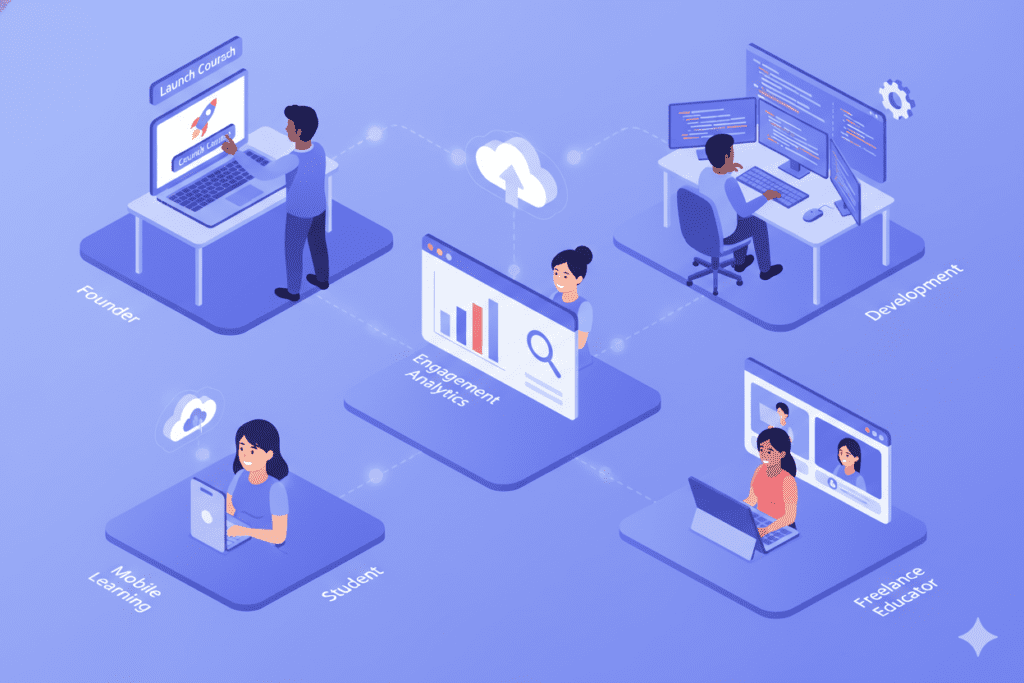
For Founders: Building Your EdTech Startup
The Challenge: You have educational expertise and a compelling vision, but limited technical knowledge and budget constraints.
The BkAbhi Solution: Our end-to-end EdTech platform development services take you from concept to launch. We help you:
- Validate your idea through market research
- Build an MVP (Minimum Viable Product) that proves your concept
- Scale progressively based on user feedback and available funding
- Avoid expensive mistakes that sink EdTech startups
Real Impact: Starting with a focused MVP rather than building everything at once can reduce initial development costs by 60-70%, getting you to market faster with less financial risk.
For Developers: Technical Excellence in EdTech
The Challenge: Building educational platforms requires understanding both software architecture and learning science—a rare combination.
The BkAbhi Approach: When developers partner with us for EdTech platform development, they gain:
- Access to proven architecture patterns for educational software
- Best practices for handling multimedia content at scale
- Strategies for implementing real-time collaboration features
- Security protocols for protecting learner data
Pro Tip: The biggest technical challenge in EdTech platform development is usually video delivery and live streaming. Use established APIs like Vimeo or YouTube rather than building custom solutions—your users won’t care about the underlying infrastructure; they care about smooth playback.
For Marketers: Building Platforms That Convert
The Challenge: Driving user acquisition and engagement in a crowded EdTech market.
The BkAbhi Insight: EdTech platform development must consider marketing from day one:
- SEO-friendly architecture for organic discovery
- Built-in analytics for tracking conversion funnels
- Social sharing features for viral growth
- Referral systems and promotional tools
- A/B testing capabilities for optimization
Marketing Advantage: Platforms designed with data-driven marketing in mind can reduce customer acquisition costs by up to 40% compared to platforms where marketing is an afterthought.
For Students: Accessing Quality Education
The Challenge: Traditional education often can’t accommodate diverse learning styles, paces, or schedules.
The Platform Opportunity: Well-designed EdTech platforms offer:
- Self-paced learning that fits busy schedules
- Multimodal content (video, text, interactive) for different learning preferences
- Immediate feedback on assessments
- Global access to expert instructors
- Affordable alternatives to traditional education
When BkAbhi approaches EdTech platform development, we always ask: “Would this genuinely improve a student’s learning experience, or are we just adding technology for technology’s sake?”
For Freelancers: Monetizing Expertise
The Challenge: Subject matter experts want to share knowledge and generate income but lack platforms that make this easy.
The Solution: EdTech platform development specifically for course creators should include:
- Intuitive course building tools (no coding required)
- Integrated payment processing
- Student management and communication tools
- Analytics showing which content resonates
- Marketing tools to promote courses
Revenue Impact: Freelancers on well-designed EdTech platforms report 3-5x higher course completion rates compared to basic platforms, directly impacting their earning potential through better reviews and repeat customers.
For SaaS Builders: EdTech as a Business Model
The Challenge: Building a sustainable SaaS business in education requires balancing user value with profitable unit economics.
The BkAbhi Framework: Successful EdTech SaaS platform development requires:
- Subscription models that align value with pricing
- Freemium tiers that convert to paid
- Enterprise features for institutional clients
- Usage analytics to optimize pricing
- Churn reduction through engagement features
Business Insight: EdTech SaaS platforms with strong community features see 40% lower churn rates than those focused purely on content delivery. Community keeps users engaged even between active learning periods.
Critical Mistakes to Avoid in EdTech Platform Development
Mistake #1: Choosing Low-Code/No-Code for Complex Platforms
While no-code builders promise quick EdTech platform development, they come with severe limitations:
- Slow performance as complexity increases
- Difficulty integrating payment gateways and advanced features
- Generic designs that don’t differentiate your brand
- Limited customization as your needs evolve
- Vendor lock-in with no code portability
When to Use No-Code: Simple informational sites or extremely basic course delivery. For anything requiring custom features, real-time interaction, or scale, invest in proper development.
Mistake #2: Building Everything In-House Without Expertise
An in-house team gives you control, but building an EdTech platform requires expertise in:
- Frontend development (web and mobile)
- Backend architecture
- Database design
- Cloud infrastructure
- Security and compliance
- UI/UX design
- Quality assurance
Hiring and managing this team is expensive and time-consuming. Many EdTech startups spend 12-18 months building what experienced development partners could deliver in 4-6 months.
The BkAbhi Advantage: Our full-stack development team brings years of experience across technologies, allowing us to deliver faster while avoiding common pitfalls that inexperienced developers encounter.
Mistake #3: Skimping on User Experience Design
Beautiful interfaces aren’t optional in EdTech platform development—they directly impact learning outcomes. Students abandon platforms that frustrate them, no matter how good the content.
Poor UX manifests as:
- Confusing navigation that makes finding content difficult
- Slow load times that break concentration
- Inconsistent design that feels unprofessional
- Mobile experiences that don’t match web quality
- Accessibility barriers for learners with disabilities
Investment Insight: Allocating 15-20% of your EdTech platform development budget to design typically yields 2-3x ROI through improved user retention and satisfaction.
Mistake #4: Underestimating Ongoing Maintenance
Many EdTech platform development budgets only account for initial building costs, ignoring that platforms require continuous maintenance:
- Security updates and patches
- Operating system and browser compatibility updates
- Content management and moderation
- Bug fixes and performance optimization
- Feature enhancements based on user feedback
Plan for 15-25% of your initial development cost annually for maintenance and improvements.
Mistake #5: Ignoring Analytics from Day One
If you don’t measure how users interact with your platform, you’re flying blind. Your EdTech platform development must include:
- User behavior tracking
- Learning outcome measurement
- Performance monitoring
- Engagement metrics
- Conversion funnel analysis
These insights drive informed decisions about what to improve and where to invest development resources.
The Cost of EdTech Platform Development: What to Expect
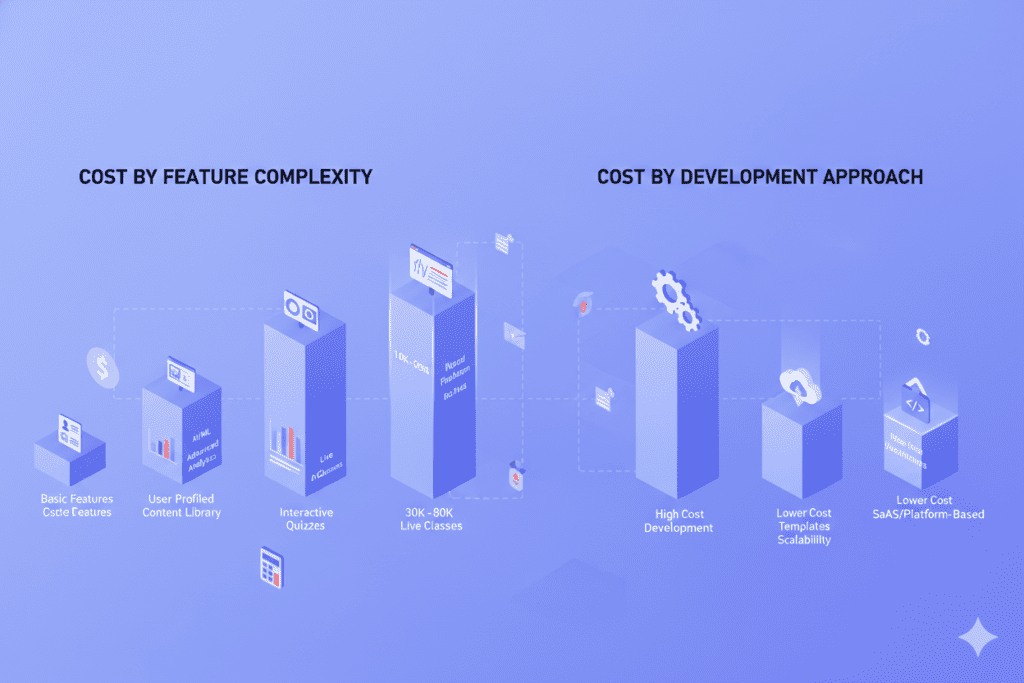
One of the first questions we hear at BkAbhi is: “How much will my EdTech platform cost to develop?”
The honest answer: it depends. But here’s a realistic framework:
Simple Educational App: $15,000 – $40,000
Features:
- Basic content delivery (videos, text, quizzes)
- User authentication and profiles
- Simple progress tracking
- Responsive web design
- Basic analytics
Timeline: 2-4 months
Best For: Individual educators, small-scale courses, MVP testing
Medium-Complexity Platform: $40,000 – $100,000
Features:
- Comprehensive content management
- Interactive assessments and gamification
- Live video integration
- Mobile apps (iOS and Android)
- Advanced analytics and reporting
- Payment processing
- Discussion forums
Timeline: 4-8 months
Best For: EdTech startups, growing course platforms, institutional solutions
Enterprise EdTech Platform: $100,000 – $300,000+
Features:
- AI-powered personalization
- Advanced collaboration tools
- Custom integrations with institutional systems
- Multi-tenancy for different organizations
- Comprehensive admin controls
- Advanced security and compliance
- Native mobile apps with offline capabilities
- Real-time data synchronization
Timeline: 8-16 months
Best For: Large educational institutions, comprehensive EdTech SaaS products, enterprise training platforms
Factors That Influence EdTech Platform Development Costs
Design Complexity: Custom, innovative designs cost more than template-based approaches but significantly improve user engagement.
Third-Party Integrations: Each integration with external services (payment processors, video APIs, analytics tools) adds development time and cost.
Platform Coverage: Supporting web, iOS, and Android increases costs but expands your potential user base.
Custom Features: Unique functionality built from scratch is more expensive than using existing libraries and frameworks.
Team Location: Development costs vary significantly by geography. At BkAbhi, we offer competitive rates while maintaining high-quality standards.
Testing Requirements: More rigorous testing increases upfront costs but dramatically reduces expensive post-launch fixes.
Why Partner with BkAbhi for EdTech Platform Development
Building an educational platform is a significant investment. You need a development partner who understands both technology and education, who can guide you through complex decisions, and who’s committed to your long-term success.
Our EdTech Platform Development Expertise
At BkAbhi, we specialize in creating custom websites and mobile applications that reflect our clients’ unique visions. Our development process focuses on user experience, ensuring platforms are both visually stunning and functionally robust.
What Sets Us Apart:
End-to-End Solutions: From initial concept and market research through design, development, deployment, and ongoing support, we’re with you at every stage of your EdTech platform development journey.
User-Centric Design: Our talented design team crafts visually appealing and intuitive interfaces grounded in user research. We ensure every interaction is meaningful and drives engagement—critical in educational contexts where user experience directly impacts learning outcomes.
Scalable Architecture: We build platforms that grow with you. Whether you’re starting with 50 beta users or planning for 500,000, we architect infrastructure that scales seamlessly without requiring expensive rebuilds.
Mobile Excellence: Our mobile app development services deliver high-performance apps for iOS and Android, ensuring learners can access your platform anywhere, anytime, on any device.
E-Commerce Integration: If your EdTech platform includes course sales or subscriptions, our end-to-end e-commerce solutions create seamless, secure payment experiences that optimize conversions.
Real-World Experience: We’ve worked with diverse clients across industries, giving us insights into what actually works in EdTech platform development versus what sounds good in theory.
Our Development Philosophy
We believe successful EdTech platform development starts with asking the right questions:
- What problem are you solving for learners?
- Who are your users, and what are their constraints?
- How will you measure educational success?
- What’s your go-to-market strategy?
- How will your platform evolve over time?
Only after understanding your educational vision do we discuss technology. Our approach ensures technology serves learning goals rather than dictating them.
Beyond Development: Strategic Partnership
When you work with BkAbhi, you’re not just hiring developers—you’re gaining strategic partners invested in your success. We:
- Challenge assumptions that could lead to expensive mistakes
- Recommend cost-effective alternatives to expensive custom features
- Help prioritize features for maximum impact within your budget
- Provide ongoing guidance as your platform evolves
- Stay current with EdTech trends and emerging technologies
The Future of EdTech Platform Development
The EdTech landscape continues to evolve rapidly. Here’s what we’re seeing:
AI-Powered Personalization: Adaptive learning systems that adjust content and pacing based on individual student performance and preferences.
Immersive Technologies: VR and AR creating experiential learning opportunities impossible in traditional classrooms.
Microlearning: Bite-sized content modules that fit modern attention spans and busy schedules.
Blockchain Credentials: Verifiable, portable certifications that travel with learners throughout their careers.
Social Learning: Platforms emphasizing peer interaction, collaborative projects, and community building.
Accessibility First: Universal design principles ensuring education reaches learners with diverse abilities.
The platforms that thrive will be those that embrace these trends while maintaining focus on what ultimately matters: helping people learn effectively.
Getting Started with Your EdTech Platform Development Journey
Building an educational platform is ambitious, challenging, and potentially transformative—for both your business and the learners you’ll serve.
If you’re ready to turn your educational vision into reality, here’s how to begin:
Step 1: Define Your Vision Clearly articulate the problem you’re solving and for whom. The more specific your vision, the better we can help you achieve it.
Step 2: Research Your Market Understand your competitors and your target users. What exists? What’s missing? What would users pay for?
Step 3: Start with Discovery Before committing to full development, invest in a discovery phase. This validates your idea, identifies technical requirements, and creates a realistic development roadmap.
Step 4: Build Progressively Start with an MVP that proves your core concept, then expand based on user feedback and market response.
Step 5: Partner with Experts EdTech platform development requires expertise across technology, design, education, and business strategy. The right development partner accelerates your timeline and improves your outcomes.
Conclusion: Building EdTech Platforms That Transform Education
Sarah’s story—the teacher whose EdTech platform crashed and burned—had a different ending than you might expect. After her initial failure, she partnered with experienced developers who understood both education and technology. They rebuilt her platform from the ground up, focusing on core features that genuinely improved learning outcomes.
Two years later, her platform serves 15,000 students across 200 schools. The interface is intuitive. The mobile app works flawlessly. Videos stream smoothly. Student data is secure. Teachers love how easy it is to create and update content. Most importantly, learning outcomes have measurably improved—the ultimate success metric for any EdTech platform development project.
The difference wasn’t her vision—that remained constant. The difference was approaching EdTech platform development with realistic expectations, expert guidance, and a commitment to building something that truly serves learners.
Your educational vision deserves to succeed. Whether you’re an educator with a transformative teaching method, an entrepreneur seeing market opportunities, or an institution modernizing your learning infrastructure, the right approach to EdTech platform development can turn your vision into reality.
Ready to start building? Explore more insights on BkAbhi where we share practical guides on web and mobile development, startup strategy, and building digital products that make a difference.
Want to discuss your EdTech platform development project? Read more expert guides on BkAbhi to understand the development process, get cost estimates, and see how we’ve helped others bring their educational visions to life.
The future of education is being built right now, one platform at a time. Make sure yours is built to last.
Suggested External Links
- Django Official Documentation (https://www.djangoproject.com/) – When discussing backend frameworks
- React.js Documentation (https://react.dev/) – When discussing frontend development
- WCAG Accessibility Guidelines (https://www.w3.org/WAI/WCAG21/quickref/) – When discussing accessibility
- EdTech Market Report – Link to a credible market research report about EdTech growth (Statista, HolonIQ, or similar)
- WebRTC Official Site (https://webrtc.org/) – When discussing real-time communication technologies
- AWS Education Resources (https://aws.amazon.com/education/) – When discussing cloud infrastructure options
- COPPA Compliance Guide (https://www.ftc.gov/business-guidance/resources/complying-coppa-frequently-asked-questions) – When discussing data privacy for educational apps