
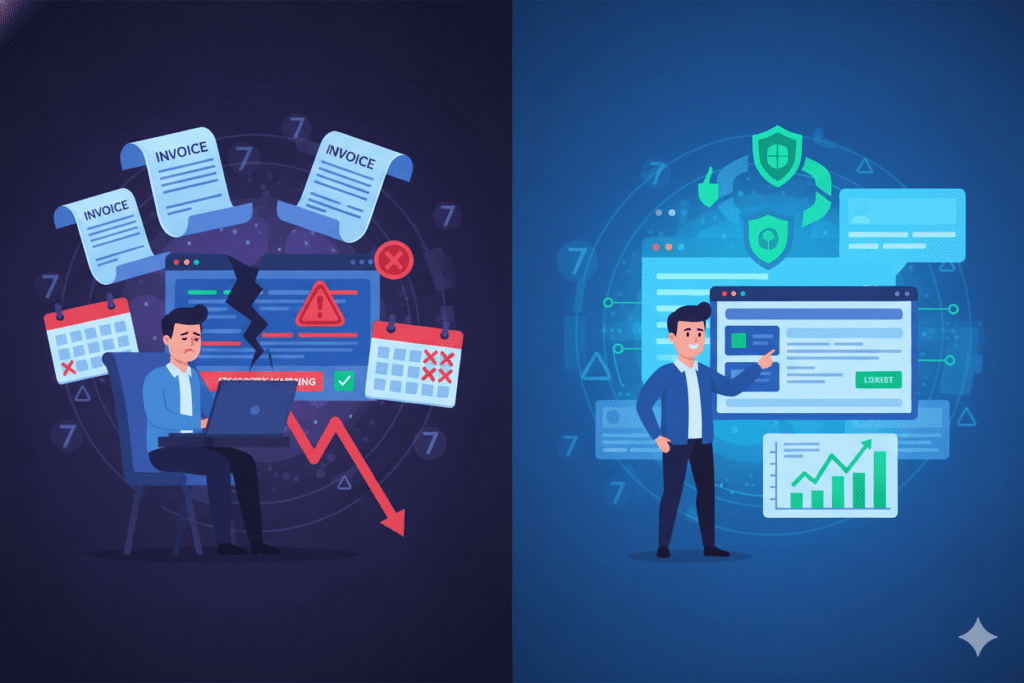
Three months into his startup journey, Rohan had burned through two developers and $15,000. His e-commerce platform was half-built, riddled with bugs, and completely unusable on mobile devices. The problem wasn’t a lack of budget or ambition—custom web application development company it was choosing the wrong custom web application development company.
Sound familiar?
If you’re a founder, developer, marketer, or entrepreneur looking to build a web application that actually solves real problems, you’re in the right place. This isn’t another generic guide filled with buzzwords. This is the honest truth about what separates exceptional custom web application development companies from the rest—and how to make the right choice for your business.
The Real Problem: Why Most Businesses Struggle with Custom Web Development
Here’s what nobody tells you: finding a custom web application development company isn’t about browsing portfolios or comparing hourly rates. It’s about finding a partner who understands your vision, challenges your assumptions, and builds solutions that scale.
Most businesses fall into three traps:
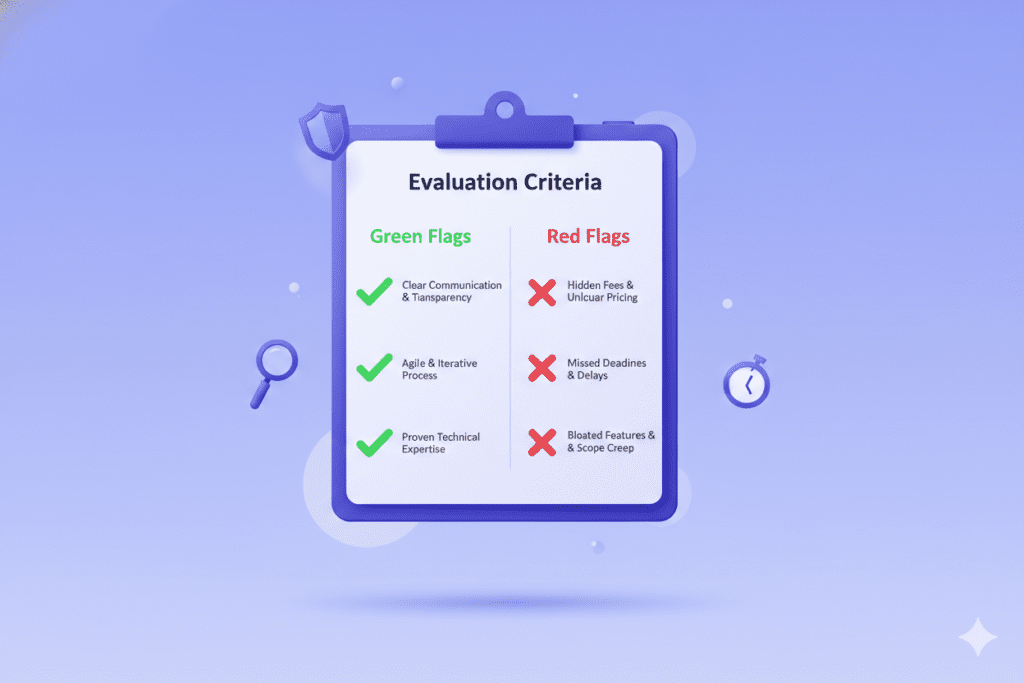
The “Cheapest Bid” Trap: You go with the lowest quote, only to discover hidden costs, missed deadlines, and subpar code that needs rebuilding from scratch.
The “Feature Bloat” Trap: You request every feature imaginable, resulting in an over-engineered product that nobody actually needs or uses.
The “Communication Black Hole” Trap: You sign a contract, make a payment, and then… silence. Updates are sparse, questions go unanswered, and your project drifts aimlessly.
The result? Wasted time, burned budgets, and missed market opportunities.

What Actually Defines an Exceptional Custom Web Application Development Company?
After working with dozens of startups and enterprises, I’ve learned that the best custom web application development company shares five critical qualities:
1. They Ask the Hard Questions First
Before writing a single line of code, top-tier development companies dig deep into your business model. At BkAbhi, we don’t just ask “What do you want to build?” We ask:
- Who is your target user, and what problem keeps them up at night?
- What’s the minimum viable product that delivers real value?
- How will this application generate or save money for your business?
- What happens when you scale from 100 to 10,000 users?
This discovery phase isn’t billable fluff—it’s the foundation that prevents expensive pivots later.
2. They Balance Innovation with Practicality
Every founder dreams of building “the Uber of X” or “the Netflix of Y.” A skilled custom web application development company helps you separate ambition from reality.
Here’s what that looks like in practice:
Founder Says: “I want AI-powered recommendations, blockchain integration, and real-time collaboration.”
Smart Developer Says: “Let’s start with a solid user authentication system, a clean dashboard, and reliable data storage. Once we validate user engagement, we’ll layer in the advanced features.”
At BkAbhi, we’ve seen firsthand how this approach saves clients 40-60% in initial development costs while delivering a product that actually ships on time.
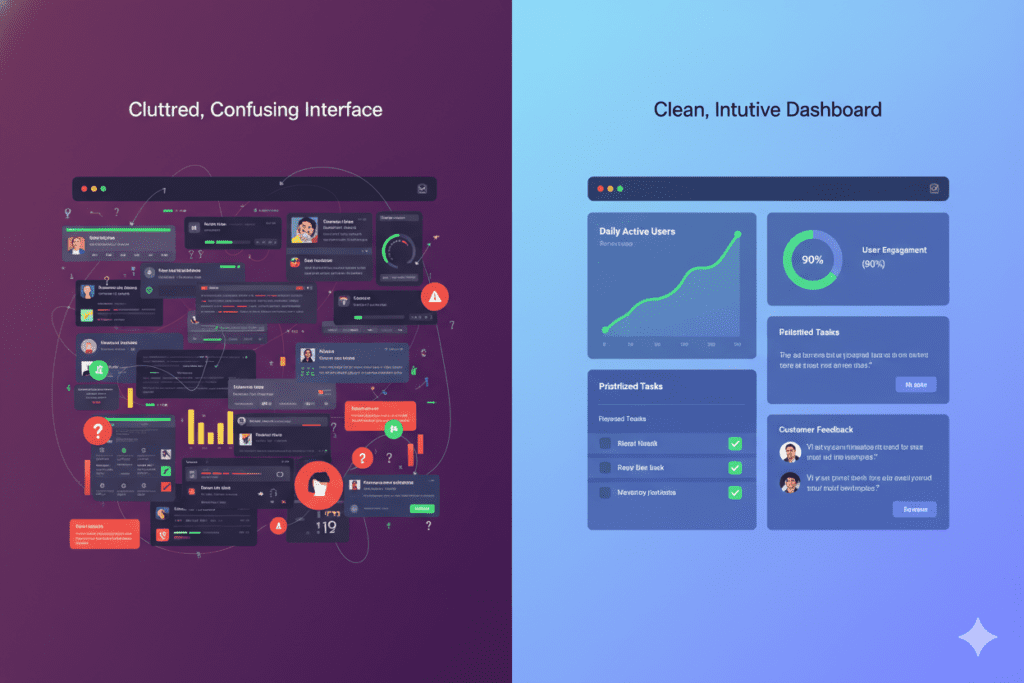
3. They Prioritize User Experience Over Aesthetics
Beautiful design means nothing if users can’t figure out how to complete basic tasks. The best custom web application development company obsesses over user flows, load times, and accessibility.
Consider these real-world scenarios:
For SaaS Builders: Your dashboard needs to load in under 2 seconds, even with thousands of data points. Every extra second costs you 7% in conversion rates.
For E-commerce Platforms: Your checkout process should never exceed three steps. Amazon’s one-click ordering exists for a reason—friction kills sales.
For Enterprise Solutions: Your application must work seamlessly for both the 22-year-old tech-savvy intern and the 58-year-old department head who still prints emails.
The Technology Stack That Actually Matters
Let’s talk about tech stacks—but not in the way most articles do.
You don’t need to understand every JavaScript framework or database type. What you need to know is that your custom web application development company makes technology choices based on your specific requirements, not what’s trendy on developer forums.
Frontend Technologies: What Users See and Touch
Modern web applications demand responsive, fast-loading interfaces. Here’s what separates professional work from amateur hour:
React, Vue.js, or Angular: These frameworks create dynamic, app-like experiences in the browser. Your choice depends on your team’s expertise and project complexity.
Progressive Web Apps (PWAs): These offer mobile-app features without app store dependencies. Perfect for businesses targeting users with limited storage or inconsistent internet connections.
Tailwind CSS or Styled Components: These tools ensure your application looks consistent across devices while maintaining clean, maintainable code.
At BkAbhi, we evaluate your target audience before selecting frontend technologies. Building for rural markets in India? Performance and offline-first capabilities trump flashy animations.
Backend Architecture: The Engine Room
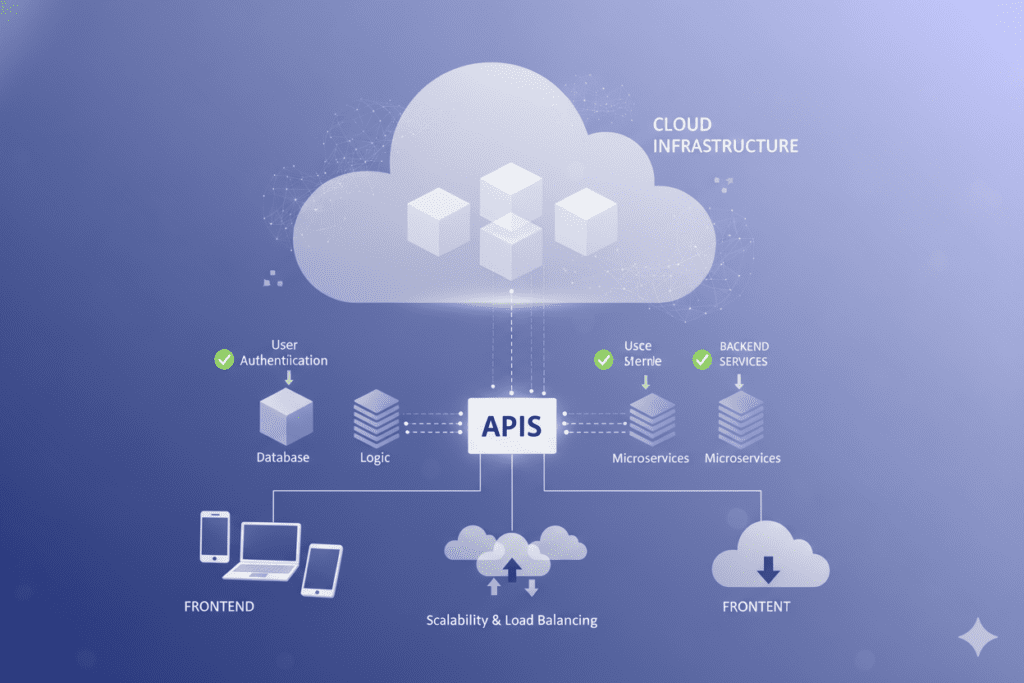
Your backend handles data processing, business logic, and integrations. Here’s where expertise truly matters:
API-First Architecture: This approach lets you serve web, mobile, and third-party applications from a single backend. Essential for growth.
Scalable Database Design: Whether you choose PostgreSQL, MongoDB, or MySQL, your database schema must handle growth without expensive migrations later.
Cloud Infrastructure: AWS, Google Cloud, or Azure provide the reliability and scalability that on-premise servers simply can’t match.
A competent custom web application development company architects your backend for the business you want to become, not just the business you are today.
Real-World Use Cases: How Different Businesses Leverage Custom Web Applications
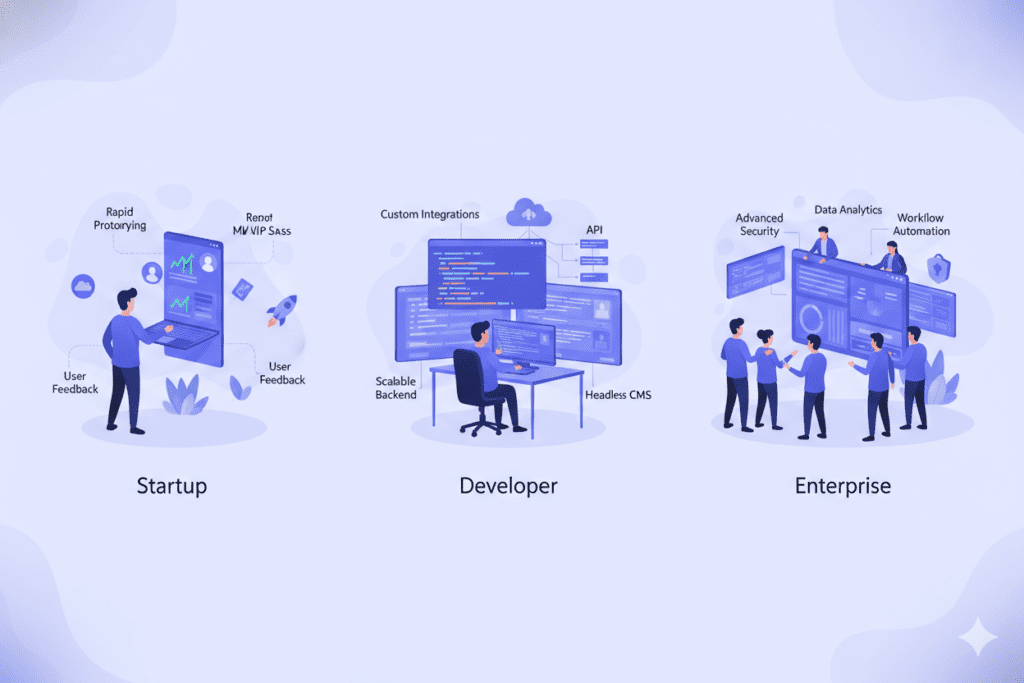
Let’s ground this in reality. Here’s how custom web applications solve specific business problems:
For Startup Founders: Building an MVP That Actually Validates Your Idea
You have limited runway and need to test your hypothesis quickly. A custom web application development company should help you:
- Identify your core value proposition and build only that
- Implement analytics to track real user behavior
- Create a feedback loop for rapid iteration
- Plan for scalability without over-engineering
Example: A fintech startup partnered with BkAbhi to build a peer-to-peer lending platform. Instead of building a complex credit scoring algorithm from day one, we started with manual verification and basic matching. This approach validated demand, secured seed funding, and provided data to build the AI model properly.
For Developers: Scaling from Side Project to Production
You’ve built a proof of concept that works on your laptop. Now you need it to handle real users, real data, and real money. You need:
- Code refactoring for security and performance
- Proper deployment pipelines and version control
- Database optimization for query performance
- Infrastructure monitoring and error tracking
Example: A solo developer created a project management tool for designers. When it started gaining traction, the application crashed under load. BkAbhi helped migrate from a shared hosting environment to a containerized architecture on AWS, implementing caching, load balancing, and proper error handling. The application now serves 10,000+ users without hiccups.
For Enterprise Teams: Automating Legacy Processes
Your business runs on spreadsheets, manual data entry, and email chains. You need custom software that integrates with existing systems while gradually modernizing workflows.
Requirements include:
- Integration with legacy databases and CRM systems
- Role-based access control for different departments
- Audit trails and compliance features
- Training and change management support
Example: A manufacturing company spent countless hours manually tracking inventory across three facilities. BkAbhi built a custom web application that integrated with their existing ERP system, automated reorder points, and provided real-time visibility. The result? 30% reduction in inventory carrying costs and zero stockouts.
The Hidden Costs Nobody Talks About
When evaluating a custom web application development company, most businesses focus solely on the development quote. That’s a mistake.
Here are the real costs to consider:
Poor Code Quality = Technical Debt
Cheap development often means cutting corners on code quality. Six months later, you’ll pay 3-4x more to fix the mess than it would have cost to build it properly from the start.
Red Flags to Watch For:
- No code reviews or testing procedures
- Reluctance to provide documentation
- Single developer with no backup or knowledge transfer
- Proprietary frameworks or non-standard architectures
Inadequate Security = Data Breaches
A single security breach can destroy your business. GDPR fines alone can reach €20 million or 4% of annual revenue—whichever is higher.
Essential Security Requirements:
- Encrypted data transmission (HTTPS/SSL)
- Secure authentication (OAuth 2.0, JWT tokens)
- SQL injection and XSS protection
- Regular security audits and penetration testing
Lack of Scalability = Expensive Rebuilds
Your application might work fine with 100 users. What about 1,000? 10,000? 100,000?
A competent custom web application development company plans for growth from day one:
- Load balancing and auto-scaling infrastructure
- Database indexing and query optimization
- Caching strategies for frequently accessed data
- CDN implementation for global performance
At BkAbhi, we’ve helped clients avoid expensive rebuilds by implementing scalable architecture from the start—even when current traffic doesn’t justify it yet.
How to Actually Evaluate a Custom Web Application Development Company
Forget the polished sales pitches. Here’s how to assess whether a development company knows their stuff:
1. Request a Technical Architecture Document
Ask them to outline how they’d build your application. A qualified custom web application development company should provide:
- System architecture diagrams
- Technology stack justification
- Security implementation plan
- Scalability considerations
- Third-party integration approach
If they can’t explain their technical decisions in plain language, run.
2. Check Their Problem-Solving Process
Present a real challenge you’re facing. How do they respond?
Bad Answer: “We can build anything you want.”
Good Answer: “Here’s how we’d approach this problem, here are three potential solutions with trade-offs for each, and here’s what we’d recommend based on your constraints.”
The best custom web application development company acts as a strategic partner, not just an order-taker.
3. Evaluate Communication and Project Management
Development is 30% coding and 70% communication. Ask about:
- How often will you receive updates?
- What project management tools do they use?
- Who will be your primary point of contact?
- How do they handle change requests or scope adjustments?
- What happens if you’re unhappy with the delivered product?
At BkAbhi, we maintain transparency through regular sprint reviews, shared project boards, and direct access to the development team—no communication black holes.
The BkAbhi Approach: Building Web Applications That Matter
At BkAbhi, we’ve distilled our experience into a proven process that turns ideas into production-ready applications:
Phase 1: Discovery and Planning
We spend the first week deeply understanding your business, users, and goals. This includes:
- Stakeholder interviews
- Competitive analysis
- User journey mapping
- Technical requirements documentation
- Project timeline and budget finalization
Phase 2: Design and Prototyping
Before writing production code, we create interactive prototypes that let you experience the application. This phase eliminates expensive changes later and ensures alignment.
Phase 3: Iterative Development
We build in two-week sprints, delivering working features you can test and provide feedback on. No surprises at the end—you see progress continuously.
Phase 4: Testing and Quality Assurance
Every feature undergoes rigorous testing:
- Unit tests for individual components
- Integration tests for system interactions
- User acceptance testing with real users
- Performance testing under load
- Security vulnerability scanning
Phase 5: Deployment and Support
Launching is just the beginning. We handle:
- Production deployment and monitoring
- User training and documentation
- Post-launch optimization
- Ongoing maintenance and support
Why Experience in Your Industry Matters
Not all custom web application development companies are created equal. Industry experience makes a massive difference:
Healthcare: HIPAA compliance, EHR integration, telemedicine features Fintech: PCI DSS compliance, fraud detection, secure payment processing E-commerce: Inventory management, payment gateways, shipping integrations Education: LMS integration, video streaming, collaborative tools SaaS: Multi-tenancy, subscription billing, analytics dashboards
At BkAbhi, we bring domain expertise that generic development shops simply don’t have. We understand the regulatory requirements, user expectations, and technical nuances that define each industry.
The Future of Custom Web Application Development
The landscape is evolving rapidly. Here’s what forward-thinking businesses are focusing on:
AI and Machine Learning Integration
Custom web applications increasingly incorporate AI for:
- Personalized user experiences
- Predictive analytics
- Automated customer support
- Content recommendations
But here’s the truth: you don’t need AI on day one. Start with solid data collection and user analytics. Layer in intelligence once you have real usage patterns to analyze.
Progressive Web Apps (PWAs)
PWAs offer the best of both worlds—web accessibility with native app features. They’re particularly valuable for:
- Markets with limited smartphone storage
- Users with unreliable internet connections
- Businesses wanting to avoid app store fees
Low-Code Integration
Modern custom web application development companies leverage low-code tools for rapid prototyping and non-critical features, reserving custom code for core functionality and unique requirements.
At BkAbhi, we stay ahead of these trends, helping clients adopt new technologies that provide real business value—not just impressive demos.

Common Mistakes to Avoid When Hiring a Custom Web Application Development Company
Learn from others’ expensive mistakes:
Mistake #1: Choosing Based on Price Alone
The cheapest bid is rarely the best value. Focus on total cost of ownership, including maintenance, scalability, and potential rebuilds.
Mistake #2: Skipping the Discovery Phase
Jumping straight into development without proper planning guarantees scope creep, missed deadlines, and wasted budgets.
Mistake #3: Ignoring Post-Launch Support
Your application needs ongoing maintenance, security updates, and feature enhancements. Ensure your custom web application development company provides long-term support.
Mistake #4: Not Owning Your Code
Always ensure you have complete ownership of your source code and intellectual property. Some companies hold code hostage, forcing you to continue paying for basic updates.
Mistake #5: Overlooking Cultural Fit
You’ll work closely with your development team for months. Personality clashes, communication barriers, or misaligned work ethics can derail even technically sound projects.
Making the Decision: What Questions Should You Ask?
Before signing any contract, ask your potential custom web application development company:
About Their Process:
- How do you handle changing requirements mid-project?
- What happens if we’re unhappy with the delivered product?
- How do you ensure code quality and maintainability?
About Technology:
- Why would you choose this tech stack for our project?
- How will you ensure our application can scale?
- What security measures will you implement?
About Communication:
- Who will be our day-to-day contact?
- How often will we receive progress updates?
- Can we access the code repository and project management tools?
About Post-Launch:
- What ongoing support do you provide?
- How do you handle bug fixes discovered after launch?
- What does your maintenance agreement include?
The quality of their answers will tell you everything you need to know.
The Bottom Line: Investing in Quality Pays Off
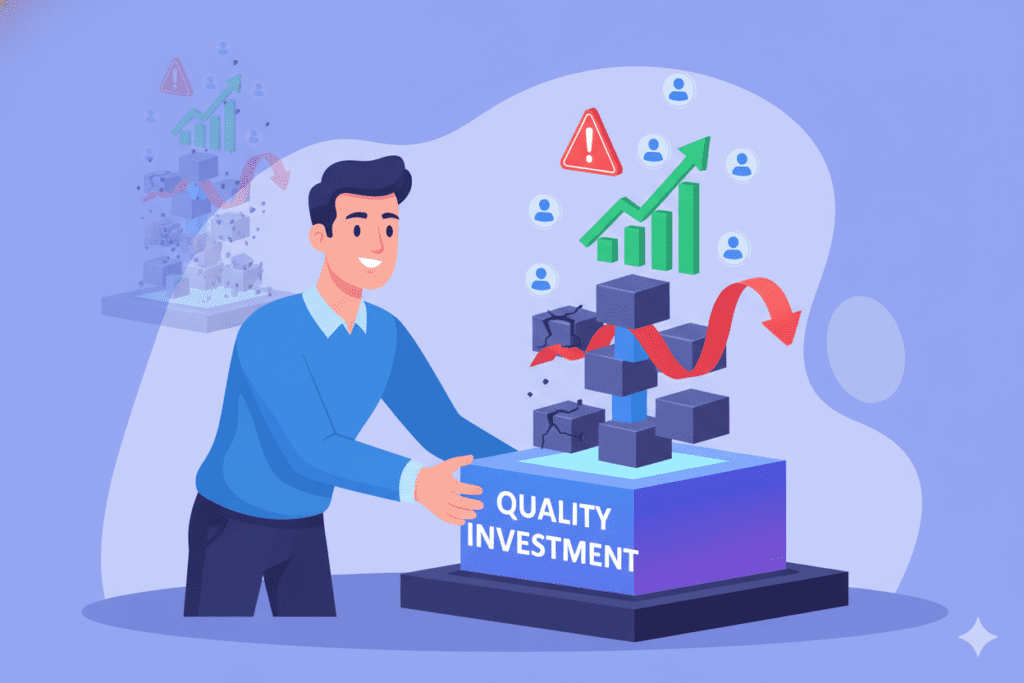
Here’s what I’ve learned after years in this industry: the right custom web application development company doesn’t cost more—they save you money in the long run.
They prevent expensive rebuilds, eliminate scope creep through proper planning, deliver on time (reducing opportunity costs), and build scalable solutions that grow with your business.
At BkAbhi, we’ve helped founders turn ideas into funded startups, developers scale side projects into sustainable businesses, and enterprises modernize legacy systems that transform operations.
The difference isn’t just technical expertise—it’s the ability to translate business goals into elegant technical solutions that real people actually want to use.
Ready to Build Something Great?
If you’re ready to work with a custom web application development company that treats your project like it’s our own, explore more insights on BkAbhi or read more expert guides on BkAbhi about web development best practices, startup technology strategies, and real-world case studies.
Your next great application isn’t just a dream—it’s a strategic decision away.
Start building smarter with BkAbhi. Whether you’re validating an MVP, scaling an existing platform, or modernizing enterprise systems, we bring the technical expertise and business acumen to turn your vision into reality.
Follow BkAbhi for practical tech & startup insights that cut through the noise and deliver actionable advice from real-world experience.
Suggested Internal Links
- BkAbhi Services – Learn about our comprehensive web and app development services
- BkAbhi Blog – Explore more insights on web development, mobile apps, and digital transformation
- Custom Website Development – How BkAbhi creates tailored web solutions (if this article exists on the blog)
Suggested External Links
- MDN Web Docs – Web Application Architecture – Official documentation for web development fundamentals
- AWS Well-Architected Framework – Industry standards for cloud application architecture
- OWASP Top Ten Security Risks – Essential security considerations for web applications
- Google Web Vitals – Performance metrics that matter for user experience
- State of JavaScript Survey – Current trends in JavaScript frameworks and tools